
In November 2024, Dong Hui could not grip a cup. Eleven months later, he wrote his own name, using China’s brain-computer chip, a coin-sized implant sitting on the surface of his brain.
That same device is now the first of its kind anyone can legally buy. On March 13, 2026, China’s National Medical Products Administration cleared the NEO system for commercial medical use, making it the first invasive brain implant approved anywhere outside a research trial.
Most coverage framed this as a race won against Neuralink and the FDA. The quieter question matters more. What does it actually mean to be one of the first people living with a brain implant, when the safety record behind it runs to months, not decades?
What China’s Brain-Computer Chip Actually Does
Start with the hardware, because it explains most of what follows.
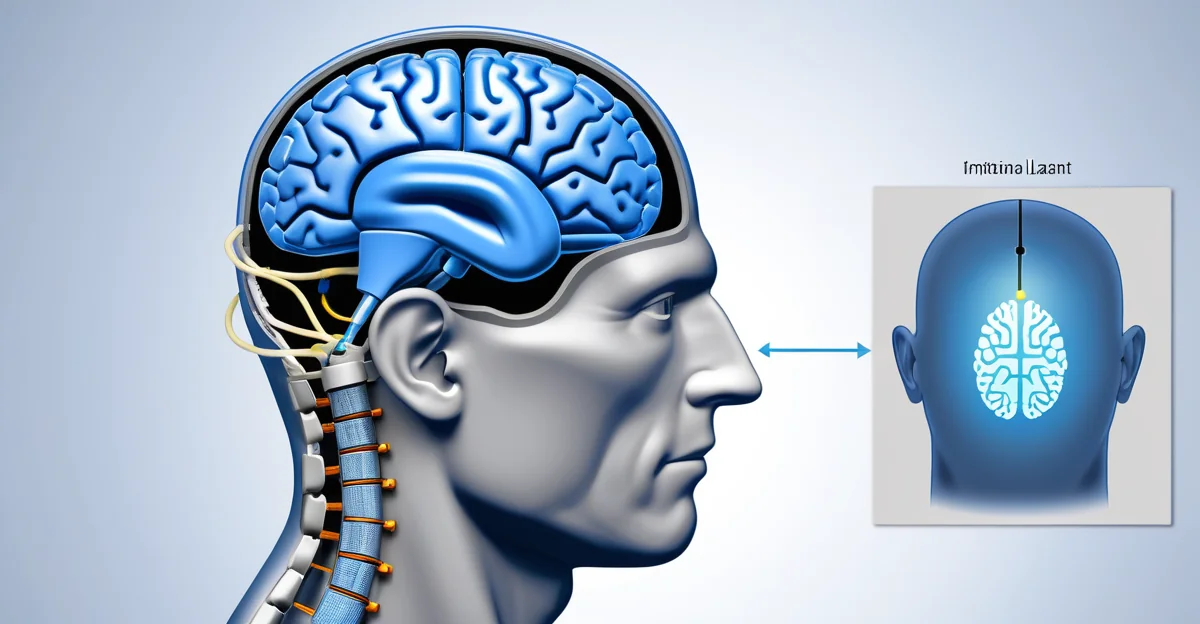
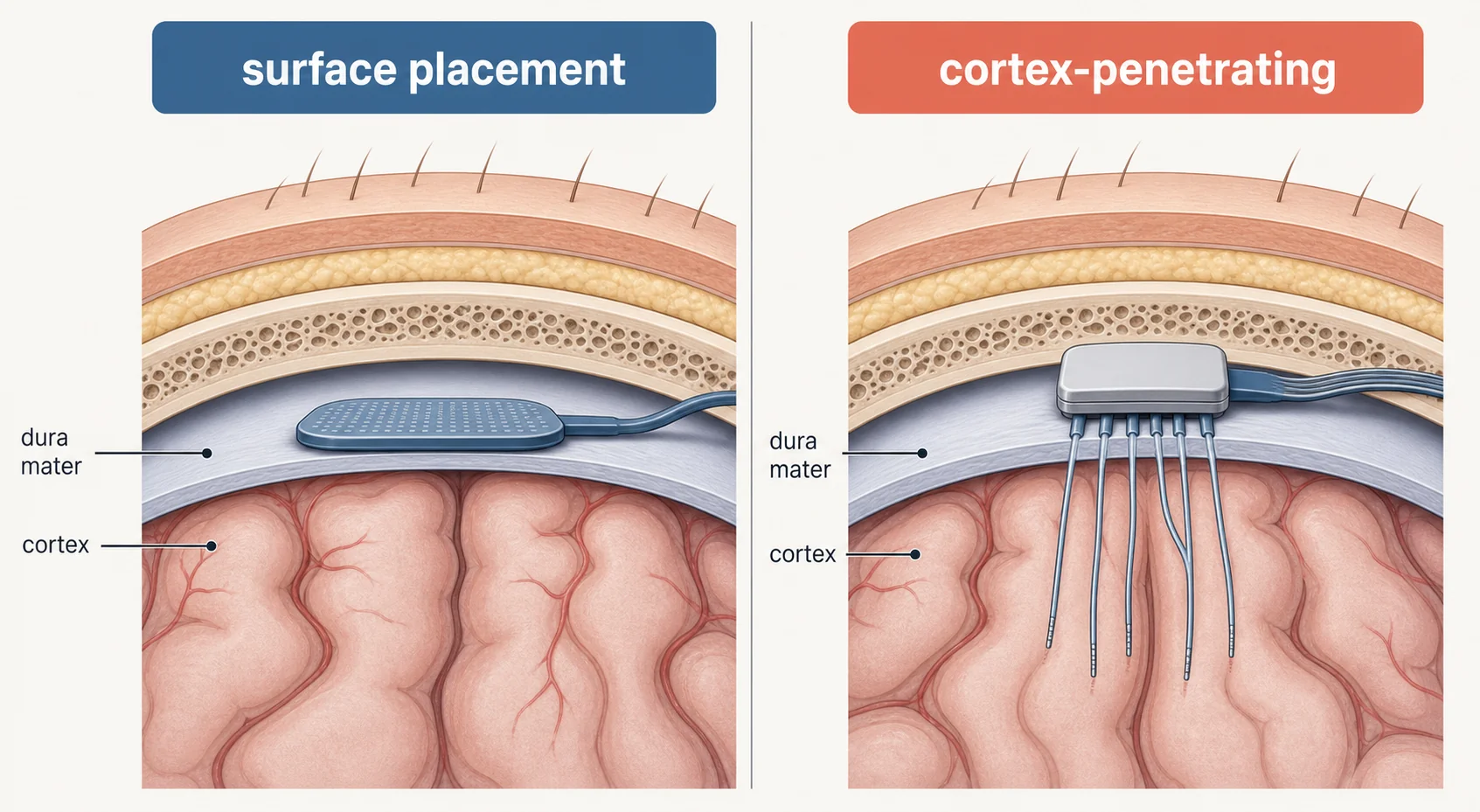
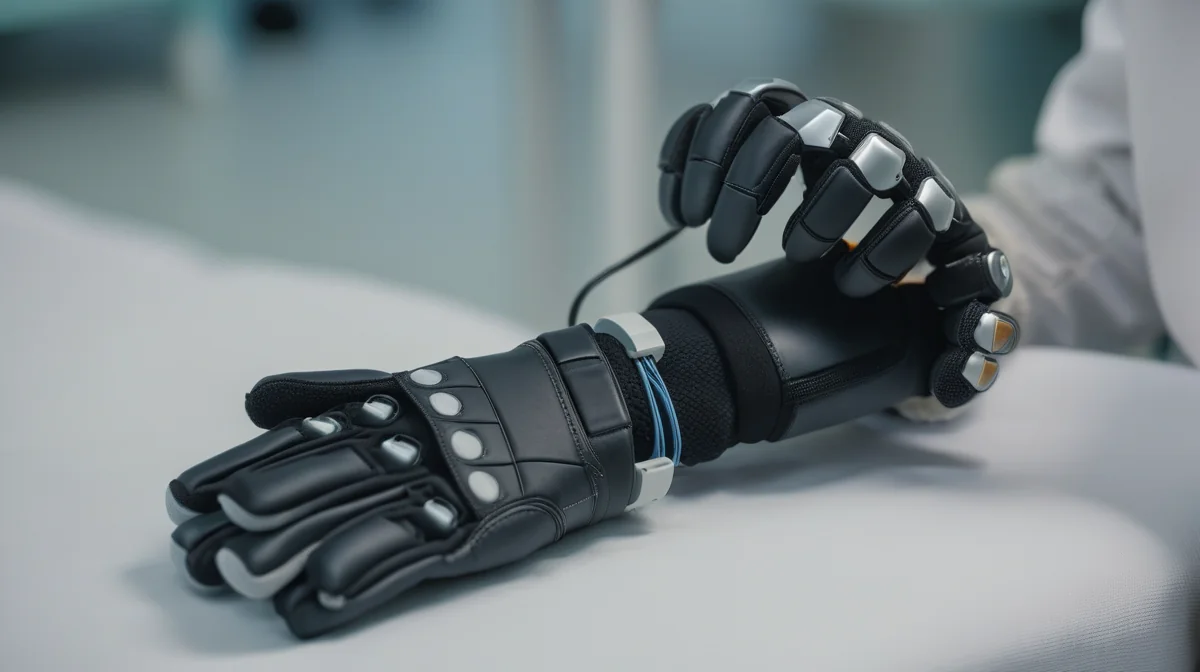
NEO comes from Neuracle Technology, a Shanghai company, built with researchers at Tsinghua University. The implant is titanium, about the size of a coin. It rests on the dura mater, the tough outer membrane that wraps the brain, and it does not push electrodes into brain tissue. Eight sensors sit over the motor cortex, read the electrical activity there, and beam it wirelessly through the skin to an external decoder. That decoder drives a soft robotic glove the patient wears.
So the chip doesn’t move a paralyzed hand directly. It reads the intention to move. Then the glove does the gripping, and the brain relearns the loop through practice.
The approval rests on a small clinical base. Neuracle ran 36 implant procedures (four early feasibility cases and 32 multicenter confirmatory ones), with 18 months of follow-up. Every participant reportedly regained some grasping ability.
If you want the plain-English version of how a device like this pulls a usable signal out of your head, we broke that down separately in how brain-computer interfaces actually read your thoughts.
How Did the Approval Move So Fast?
Here’s where the story gets more honest than the headlines.
Part of the reason China’s brain-computer chip cleared so fast is design, not corner-cutting. Because the sensors sit on the surface instead of piercing the cortex, the device carries a lower risk of hemorrhage, scarring, and the slow signal decay that plagues deeper arrays. Avinash Singh of the University of Technology Sydney called NEO’s placement “relatively less invasive” than Neuralink’s cortex-penetrating threads. (MIT Technology Review) A safer design is easier to approve.
The rest is structural. TechCrunch mapped four things working in China’s favor: tight policy coordination across agencies, large and low-cost pools of trial patients, ready manufacturing supply chains, and deep state plus venture funding. (TechCrunch) BCI even sits on China’s five-year plan as one of six priority industries, alongside quantum tech and humanoid robots.
And once a device clears, China’s national insurance system prices it almost immediately. NEO got a billing code within days.
Now compare the other side. Neuralink holds an FDA Breakthrough Device Designation, an expedited review lane rather than an approval. It expects Phase 3 trials in 2026, a premarket approval submission around 2027, and analysts don’t foresee commercial availability for paralysis patients until roughly 2028. (Neuralink; Sparkco) That’s a two-year gap, at least.
One caveat is worth sitting with. Bioethicist Jackson Boonstra warns about “ethics shopping,” where companies run trials wherever oversight is thinnest. Nothing here proves Neuracle did that. But “fastest to approve” and “most careful” are not the same trophy, and it’s fair to ask which one a given country is chasing.
Who Can Actually Get It, and Who Can’t
“Approved” sounds like “available.” It isn’t, not yet.
The current indication is narrow. Regulators cleared NEO only for adults aged 18 to 60 with C2-C6 cervical spinal cord injuries who still have some upper-arm movement but can’t fully grasp objects.That rules out most forms of paralysis, and everything non-motor.
Then there’s money. The device-and-procedure package runs an estimated 300,000 to 500,000 yuan, or about $41,400 to $69,000. China set a standardized procedure service fee of roughly $900, but that covers the surgery, not the hardware. As of approval, national insurance doesn’t cover the device itself. (South China Morning Post) So the headline price and the real price sit far apart.
And the chip is only step one. Dong Hui trained 2.5 hours a day for about 11 months before he could write his name. This is a long rehab commitment, not a plug-and-play cure.
Put those together and you get a familiar worry. A breakthrough tends to reach the people who can afford it, and afford the time it demands, first. We dug into that dynamic in will brain chips deepen the human class divide?
Is China’s Brain-Computer Chip Safe? What We Know and What We Don’t
Safe is a moving target with any implant. Here’s the honest split.
What’s confirmed is encouraging. Across 36 patients and 18 months, everyone recovered some grasp, and the surface placement avoids the mechanical trauma of pushing hardware into the cortex.
What’s unknown is bigger. Eighteen months is nowhere near a lifetime safety record. Boonstra’s review notes that BCI biocompatibility broadly lacks long-term, peer-reviewed human data, and that removal can turn riskier than the original surgery once tissue grows onto the device.
We also have a cautionary tale from the same technology class. About three months after surgeons implanted Neuralink’s first patient, roughly 85% of the device’s electrode threads retracted from his brain, gutting the signal. Neuralink patched it in software rather than reopening his skull. (NBC News) The lesson isn’t that Neuralink failed. It’s that even a heavily funded, closely watched program hit biology it didn’t see coming.
There’s also a trade-off baked into NEO’s safer design. Surface sensors read regional activity, not single neurons, so the safety edge comes with lower signal resolution than deeper arrays capture. Safer and coarser, in other words.
For a wider look at what these implants can and can’t do for paralysis right now, see neural implants for paralysis: what is real in 2026.
The Ethics of Being First
This is the part the tech-spec coverage mostly skipped, and it sits at the heart of the story.
China just became the fastest country in the world at approving a brain implant. It is not the fastest at protecting the data that implant produces. A peer-reviewed 2025 analysis in the Journal of Law and the Biosciences found China’s 2021 privacy law has no explicit category for neural data. Its consent rules are “static,” a poor fit for a device that streams brain activity continuously, and its anonymization standards can’t reliably stop re-identification from neural signals. (PMC / Journal of Law and the Biosciences)
China’s science ministry has issued ethics guidelines for BCI research, but the same researchers call them “overly broad,” short on enforceable detail. (PMC)
A subtler risk hides underneath. Boonstra describes “coercive optimism.” When a severely disabled person meets an unproven, hyped technology, hope itself can compromise real consent. (PMC) That applies to China’s early patients and America’s alike. And once neural data leaves your control, he notes, “it becomes a highly valuable commodity rarely protected under current legal standards.” (PMC)
The world’s rulebook is arriving late. UNESCO adopted its first global recommendation on neurotechnology ethics in November 2025, with more than 190 states signing on. (UNESCO) It’s non-binding, and it landed after NEO’s clinical program had already wrapped. Norms are trailing the hardware, not leading it.
Want one example that makes the long-term risk concrete? Look at Second Sight. The company abandoned its FDA-approved Argus II bionic-eye line around 2019, leaving more than 350 blind patients worldwide with obsolete implants no one would service. (IEEE Spectrum) That’s the question every implant recipient should ask: who supports this thing in ten years? We explored the data side of that in neuroprivacy: what governments can really subpoena.
China vs. Neuralink: Two Ways to Win
Framed as a race, China’s ahead. Framed as a design philosophy, the two aren’t even running the same course.
NEO trades signal quality for safety and speed: surface placement, regional signal, a broad-ish indication, out the door first. Neuralink’s N1 threads dive into the cortex for single-neuron resolution and higher bandwidth, at the cost of a slower, more cautious regulatory road. (Scientific American; MIT Technology Review) Neither is obviously “right.” They optimize for different things.
The scale gap is the part people underrate. China’s BCI market sat around 3.8 billion yuan in 2025 and could pass 120 billion yuan by 2040, with an 11.6 billion yuan state brain-science fund behind it. (TechCrunch; MIT Technology Review) This is industrial policy, not one founder’s moonshot.
It’s also not one company. NeuroXess and StairMed both have devices in trials, StairMed raised a $48 million round in early 2025, and a second implant, Beinao-1, could reach approval around 2028. (TechCrunch; MIT Technology Review) China’s lead is a pipeline, not a single chip.
Meanwhile Neuralink has implanted roughly its 26th patient across its PRIME and VOICE studies, still short of Phase 3. (Basenor) Different pace, different bet. For where Musk’s project sits in that arc, see Neuralink and the next phase of brain-computer interfaces.
What to Watch Next
A few signals will tell you whether China’s brain-computer chip turns “approved” into “available and safe,” or stays a headline.
- Insurance. Watch whether China folds the roughly $41K to $69K device cost into national coverage, or leaves patients paying for the part that matters most. (South China Morning Post)
- Neural data law. Watch whether legislators finally write a distinct “neural personal information” category into China’s privacy law, as scholars have urged. (PMC)
- Global norms with teeth. Watch whether any country turns UNESCO’s principles into enforceable law before the next wave of approvals lands. (UNESCO)
- Neuralink’s filings. Phase 3 in 2026, a PMA around 2027; those dates will show how big the US-China gap really is. (Sparkco)
Here’s where I land. Being first to market and being first to protect patients are two different races, and China has clearly won one of them. Dong Hui writing his name again is real, and it counts. But a device on your brain is a decades-long relationship, and the paperwork around consent, data, and who keeps the lights on has not caught up to the surgery.
If this is the direction human augmentation is heading, and it looks like it is, the interesting work isn’t cheering the milestone. It’s asking those early patients, five years from now, whether the promise held. That’s the story we’ll keep following.