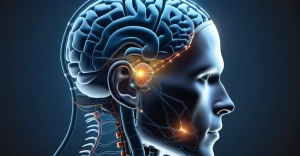


The phrase “brain chips” triggers two very different reactions. One group sees a medical breakthrough that could restore speech, movement, or communication to people who have lost them. Another sees the start of a transhumanist arms race where wealthy people buy better cognition and pull even further ahead. Both reactions contain part of the truth, and that is why the inequality debate matters. The payoff here is clarity. This article explains what brain-computer interfaces, or BCIs, can actually do today, why the class-divide question is already legitimate, and what guardrails would matter before neural augmentation becomes another advantage that compounds on wealth.
Curious how the implants work? See how brain implants read neural activity.
What BCIs can actually do today
A brain-computer interface is a system that translates neural activity into commands for software or devices. In plain language, it creates a communication path between the brain and a computer.
The most important point is that today’s leading BCIs are still mostly therapeutic. Their strongest public examples involve helping people with paralysis communicate or control external systems. A notable example came from research published in Nature, where a speech BCI helped restore more natural communication by decoding intended speech from brain activity and turning it into spoken output (Nature). That is not cosmetic enhancement. It is restoration.
A comparison helps. A wheelchair ramp and an Olympic sprint prosthesis both involve technology and the body, but they solve very different social problems. Much the same is true for BCIs. The medical use case is about restoring lost function. The enhancement use case is about extending human capacity beyond baseline.

Why inequality fears are not science fiction
The fact that BCIs are mostly clinical today does not make the inequality issue premature. It just changes where the risk begins.
The World Health Organization’s work on neurotechnology argues that the field raises human-rights questions around agency, privacy, and equitable access (WHO). That matters because inequality does not require a billionaire to buy instant genius. It can begin much earlier if high-cost neurotechnology helps one group regain capabilities faster, communicate more efficiently, or work with machines in ways that others cannot.
UNESCO’s Recommendation on the Ethics of Artificial Intelligence is broader than BCIs, but its human-rights baseline is still relevant here. If neural systems become part of education, employment, or public services, then dignity, autonomy, and non-discrimination stop being abstract principles and become design constraints (UNESCO).
Where the class divide could emerge first
The first divide may not be raw IQ. It may be access to capability.
Imagine three stages. In stage one, BCIs are rare, expensive, and mostly medical. Wealth still matters because the best clinics, follow-up care, and complementary technologies are unevenly distributed. In stage two, some systems move from restoration to performance support, perhaps by improving attention-intensive workflows, communication speed, or device control in specialized settings. In stage three, augmentation becomes more normalized and institutions start rewarding it.
A concrete comparison makes this easier to see. The original digital divide was not just about who owned a computer. It was about who gained early access to faster learning, better networks, better information, and better jobs. BCI inequality could work the same way. Even a modest edge, if concentrated among already powerful groups, compounds over time.
There is another layer that gets less attention: data power. A company that mediates neural interfaces does not just sell hardware. It potentially sits between a person and highly sensitive cognitive data. If that market concentrates, the inequality problem is not only who gets access to enhancement. It is also who controls the terms of access, the data exhaust, and the default settings around thought-adjacent systems.
Where schools and workplaces could make the divide worse
The pressure to adopt enhancement rarely begins as an explicit order. It often begins as a competitive norm.
Imagine an elite school that starts allowing a neurotechnology-assisted learning tool for focus, communication speed, or adaptive interaction. Families with money adopt it first. Teachers then start planning around the students who can use it effectively. The tool was optional at the start, but over time it begins to shape the baseline.
The same logic can appear in high-pressure workplaces. A trading desk, design lab, or military workflow does not need a public mandate to create augmentation pressure. It only needs a pattern where early adopters appear faster, more responsive, or more productive. Once that happens, people who reject the technology may look less committed even when the formal policy still says adoption is voluntary.
That is why BCI inequality is not just about who can buy premium hardware. It is about how institutions redefine normal performance once a neural edge becomes available to some participants first.

Why therapy and enhancement cannot stay separate forever
Many people assume a clean ethical boundary: therapy is acceptable, enhancement is controversial. In practice, the line blurs quickly.
Consider hearing aids, LASIK, stimulant medication, or fertility technology. Many tools begin as interventions for a clear deficit and later become status markers, convenience tools, or performance enhancers in broader markets. BCIs could follow the same path. A system justified at first for restoring communication could later be adapted for faster text generation, memory support, or high-bandwidth device control in healthy users.
That does not mean this future is guaranteed. It means policy cannot wait until the enhancement market is fully mature. By then, access patterns, vendor power, and public expectations may already be locked in.
What guardrails would matter
If societies want to avoid a biological class divide, they need guardrails before the premium market hardens.
The first guardrail is therapy-first access. If BCIs with proven medical benefit exist, reimbursement and public-health pathways matter. Otherwise, the technology starts by serving only the most affluent patients.
The second is cognitive privacy. WHO and related neuroethics work repeatedly emphasize that mental privacy and agency deserve stronger protection as neurotechnology advances. A neural interface should not become a back door for surveillance, coercive monitoring, or opaque behavioral optimization.
The third is anti-discrimination. Employers, schools, insurers, and public institutions should not be allowed to quietly create enhancement pressure through the back door. A world where a worker must adopt neurotechnology to remain competitive is not simply a free market. It is a coercive one.
The fourth is interoperability and exit. If people cannot move their data, leave a vendor, or understand what the system captures, then inequality deepens through lock-in, not only through price.
The fifth is public legitimacy. Neurotechnology will move faster if people trust that the rules are understandable, enforced, and designed around human dignity rather than vendor convenience. Without that, the field risks splitting into two bad outcomes at once: elite adoption on one side and broad public backlash on the other.
Why timing matters more than perfect prediction
Critics sometimes say it is pointless to worry about neural inequality before clear enhancement products exist. That sounds cautious, but in practice it can become an excuse to arrive late.
Technology policy rarely works best when it waits for full certainty. By the time a capability is obvious, markets, procurement rules, institutional habits, and cultural expectations are already in motion. That is especially true for systems that combine hardware, software, health regulation, and sensitive personal data. Once schools, employers, insurers, or defense organizations have integrated neural tools into high-value workflows, the cost of pushing back rises sharply.
That is why early governance is not anti-innovation. It is a way to prevent early advantage from solidifying into permanent hierarchy. Societies do not need to assume a dramatic superintelligence future to justify that work. They only need to recognize a simpler pattern: when expensive, powerful tools arrive unevenly, the winners gain more than the tool itself. They gain earlier practice, stronger networks, better defaults, and more power to shape the rules that everyone else later has to live under.

Final Thoughts
Brain-computer interfaces are not yet a consumer intelligence upgrade for the wealthy, and pretending otherwise weakens the argument. But dismissing inequality concerns because the technology is still clinical would be just as shallow.
The real issue is that enhancement divides rarely arrive as clean movie moments. They arrive through unequal access, blurry therapeutic boundaries, concentrated vendor power, and institutions that reward advantage before society has decided how much advantage is acceptable. If BCIs keep improving, the class divide may begin not with superhuman brains, but with unequal access to the first meaningful neural edge.