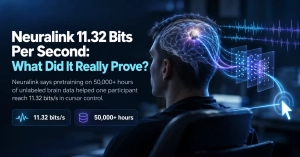
Neuralink 11.32 Bits Per Second: What Did It Really Prove?
Neuralink 11.32 bits per second is a company-reported cursor record built on 50,000 hours of brain data. What it measures, and what's still unproven.


Welcome to the fascinating intersection of biology and technology. Neural Tech, also known as Brain-Computer Interfaces (BCI), is perhaps the most personal and revolutionary field of modern science. In this section, Mindox AI explores how we are learning to connect the human brain directly to digital devices. Imagine controlling a computer with just a thought or restoring sight to the blind through a microchip. This is no longer the stuff of movies; it is happening right now in research centers across the globe.
We focus on the incredible potential of companies like Neuralink and Synchron, explaining how these technologies work in simple, easy-to-understand language. Our content covers the medical breakthroughs that allow paralyzed individuals to walk again using robotic limbs controlled by their minds. However, we also delve into the “curious” side of things: could we one day download a new language directly into our brains? Could we share memories or communicate telepathically through the cloud?
Neuralink 11.32 bits per second is a company-reported cursor record built on 50,000 hours of brain data. What it measures, and what's still unproven.

AI mind reading brain scan tech just got cheaper: Weizmann's Brain-IT rebuilds what you see from one hour of fMRI. What it can't do,…
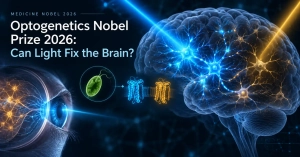
The optogenetics Nobel Prize 2026 honors a tool that switches neurons on with light. Here's what it proved in mice and what has reached…

Neuroplasticity is the brain's ability to rewire itself. Here's how it works, where BCIs and brain wearables rely on it, and where hype outruns…
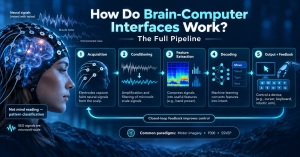
How do brain-computer interfaces work? Follow a microvolt brain signal through electrodes, filters, feature extraction and decoding to real output.
EEG, fMRI and ECoG compared: which brain-reading method is fast, which is precise, which needs surgery, and how each powers todays neural interfaces.
Invasive brain implants offer precise signal but need surgery; non-invasive BCIs are safe but noisier. Here is the real trade-off and which fits when.
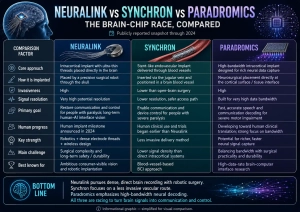
Neuralink, Synchron and Paradromics compared: cortical threads vs a vein-based stent vs speech-focused electrodes, and the bandwidth-versus-safety trade-off.
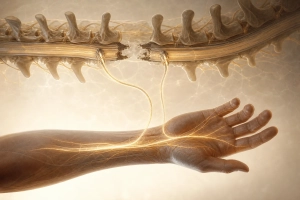
Double neural bypass restored movement and touch to a paralyzed man, and the gains outlasted the machine. Here's why that changes what BCIs are…
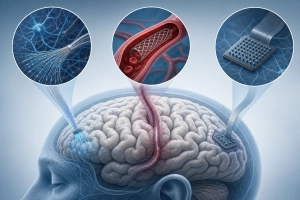
Neuralink vs Synchron vs Paradromics: a clear, human-first comparison of electrode counts, safety, patients, and the regulatory race in brain-computer interfaces.
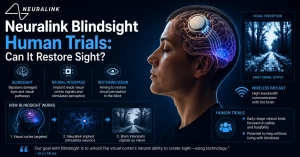
Neuralink Blindsight human trials aim to restore vision by writing signals into the brain. Here is what the science really promises, and what it…
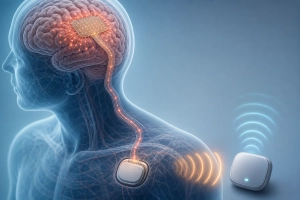
The Paradromics speech-restoring brain-computer interface just got a first-ever FDA nod. Here's what it means for people who can't speak, minus the hype.
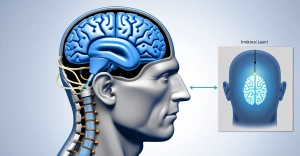
China's brain-computer chip just became the world's first approved invasive BCI. Who can get NEO, what's proven safe, and the neural-data gap left behind.
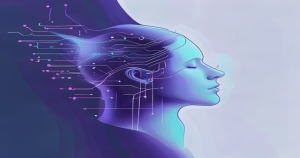
Brain-computer interfaces don't read minds: they read electrical patterns and guess. Here's how BCIs actually turn brain activity into commands.

A practical guide to digital twin regulation, virtual identity, future taxation, and digital estate planning.
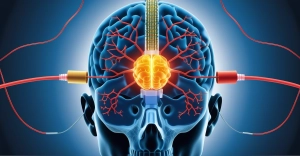
Can brain stimulation cross into manipulation? A grounded guide to neural implants ethics, agency, consent, and motor-cortex intervention.
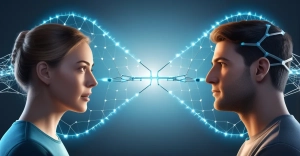
A practical guide to empathy technology, neural sync, emotional BCI, and why conflict resolution still depends on institutions, not shared brain signals alone.

A practical guide to perfect memory technology, hyperthymesia, neural recording, and why forgetting remains a feature of healthy cognition, not just a flaw.

A practical guide to mind uploading, neural backup, cloud-based consciousness, and the privacy rules that would matter if brain data ever left the body.
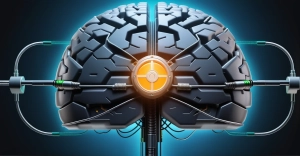
A practical guide to neural cybersecurity, neuroprivacy, brain hacking risks, and the layered defenses real BCI systems will need.
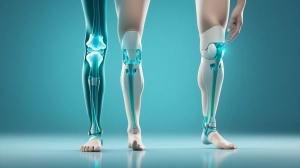
Neural implants for paralysis are restoring movement and control in selected patients. This is what is real in 2026, and what is still early.

Mind uploading technology raises technical, philosophical, and emotional questions. Here is what digital immortality could mean, and what it cannot yet do.

Dream recording is getting closer through neural decoding, but current science can only reconstruct fragments of dream-like visual experience.

Neural sensory repair is moving from measurement to partial restoration, but taste interfaces are closer than smell implants.