Nootropics vs Neurofeedback vs BCIs for Focus: What Actually Works
Nootropics, neurofeedback and focus BCIs compared: how each tries to sharpen the mind, what the evidence really says, and which is worth your time.


Nootropics, neurofeedback and focus BCIs compared: how each tries to sharpen the mind, what the evidence really says, and which is worth your time.
Narrow, generative and agentic AI compared: the shift from AI that performs one task, to AI that creates, to AI that plans and acts…
RLHF, Constitutional AI and RLAIF compared: how each teaches an AI model to behave, and the shift from human ratings toward scalable AI feedback.
AI alignment, safety and ethics are constantly confused. Here is what each actually means, how they nest together, and why the distinction matters.
Narrow AI, AGI and ASI compared: what each means, which exists today, the risks unique to each, and how close we really are to…
EEG, fMRI and ECoG compared: which brain-reading method is fast, which is precise, which needs surgery, and how each powers todays neural interfaces.
Invasive brain implants offer precise signal but need surgery; non-invasive BCIs are safe but noisier. Here is the real trade-off and which fits when.
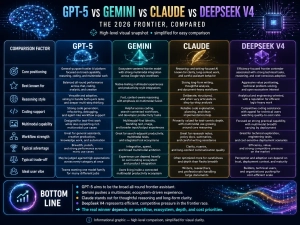
GPT-5, Gemini, Claude and DeepSeek V4 compared for 2026: how they differ on openness, multimodal ability, long context and cost, and which to pick.
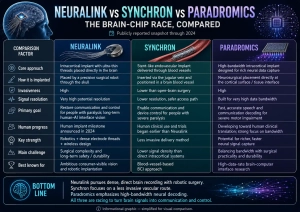
Neuralink, Synchron and Paradromics compared: cortical threads vs a vein-based stent vs speech-focused electrodes, and the bandwidth-versus-safety trade-off.

GANs, VAEs and diffusion models explained: how each generates images, why diffusion now dominates tools like Midjourney, and where GANs still fit.
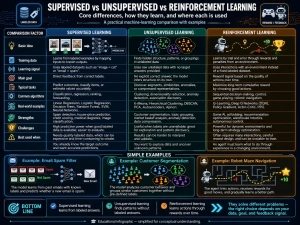
The three types of machine learning made simple: supervised learns from labels, unsupervised finds structure, reinforcement learns from rewards.
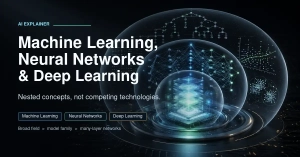
Machine learning, deep learning and neural networks are nested, not competing. Here is how they fit together and when you actually need each one.
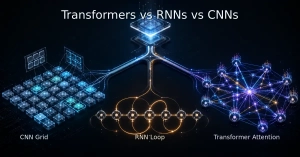
CNNs, RNNs and transformers compared in plain English: how each reads data, why transformers took over language, and where CNNs and RNNs still win.

RNNs, LSTMs and GRUs explained side by side: how their memory and gates differ, which trains faster, and exactly when to use each one.

For decades, the story of AI dominating humans in competitive environments has been a digital one. Chess engines crushed...

A year after its R1 model sent shockwaves through Silicon Valley and briefly erased $600 billion from Nvidia’s market capitalisation...
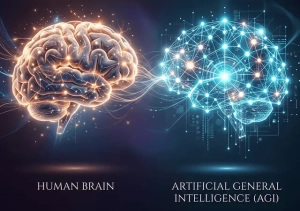
Reader payoff: By the end of this article you’ll know exactly which aspects of intelligence—learning, reasoning, and consciousness—are still uniquely...