
The way people talk about AI keeps shifting, and the vocabulary shifts with it. A few years ago everything was “narrow AI.” Then “generative AI” took over every headline. Now the word of the moment is “agentic.” These are not just marketing rebrands. They mark real steps in what these systems actually do, and the jump from one to the next is bigger than it looks.
Here is the progression in a sentence each. Narrow AI performs a fixed, specific task. Generative AI creates new content: text, images, code. Agentic AI goes further still: it plans and takes multi-step actions toward a goal, with little supervision. The story of 2026 is the move from AI that responds to AI that acts.
The three, side by side
| Narrow AI | Generative AI | Agentic AI | |
|---|---|---|---|
| What it does | One fixed task | Creates content | Plans and acts |
| Autonomy | None | Low | High |
| Example | Spam filter | ChatGPT, image tools | An AI agent booking a trip |
Narrow AI: the workhorse
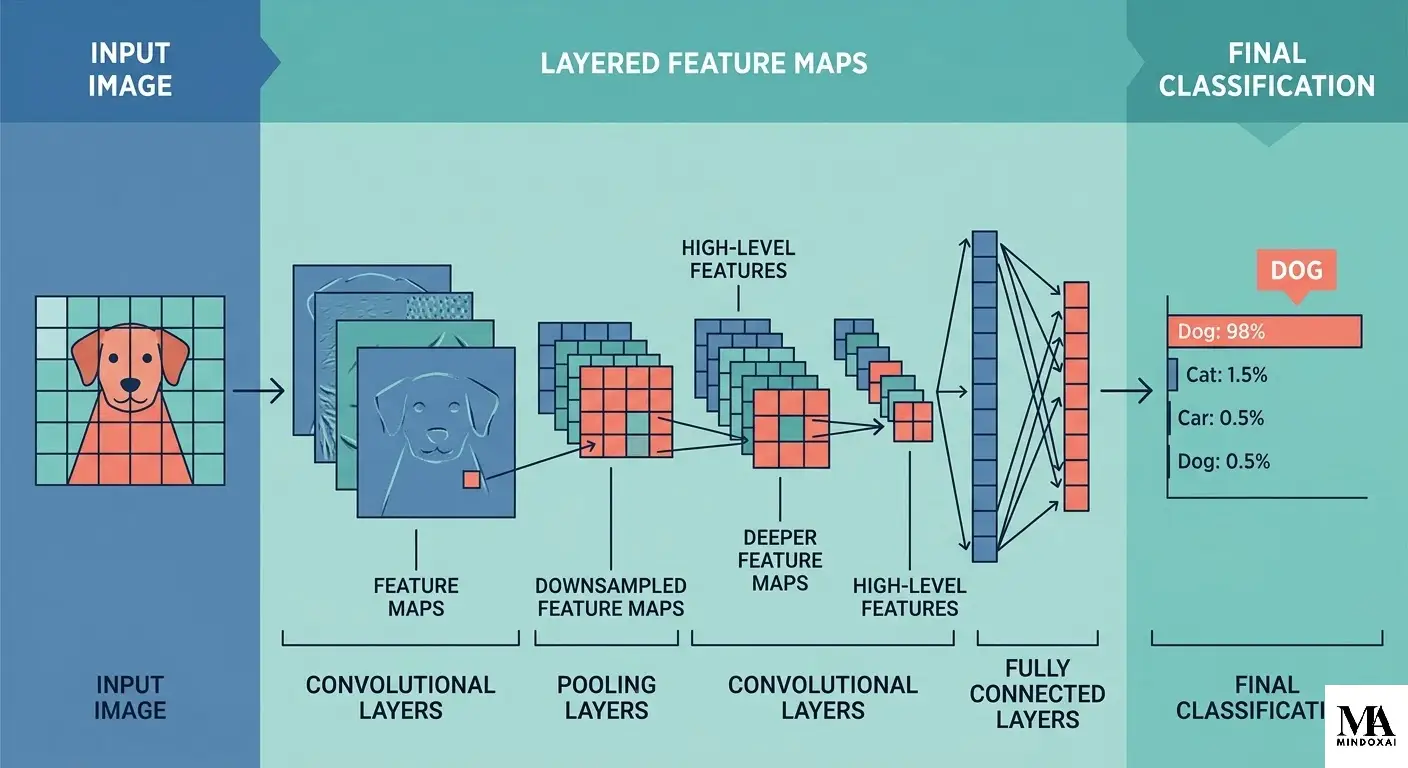
Narrow AI is the foundation everything else is built on, and it is everywhere: the recommendation engine picking your next video, the filter catching spam, the model flagging a fraudulent transaction. Each does one job, extremely well, and nothing else. It does not create and it does not act on its own; it classifies, predicts, or ranks within tight boundaries. Unglamorous, maybe, but it quietly runs most of the useful AI in the world.
Generative AI: from recognising to creating
Generative AI was the leap that put AI on magazine covers. Instead of just analysing existing data, these models produce new content: coherent essays, photorealistic images, working code, music. That shift from recognition to creation is what made tools like ChatGPT and image generators feel like a step change. But there is a subtlety people miss: generative AI is still fundamentally responsive. It waits for a prompt and produces an output. It creates on demand; it does not pursue goals on its own.
Agentic AI: from creating to doing
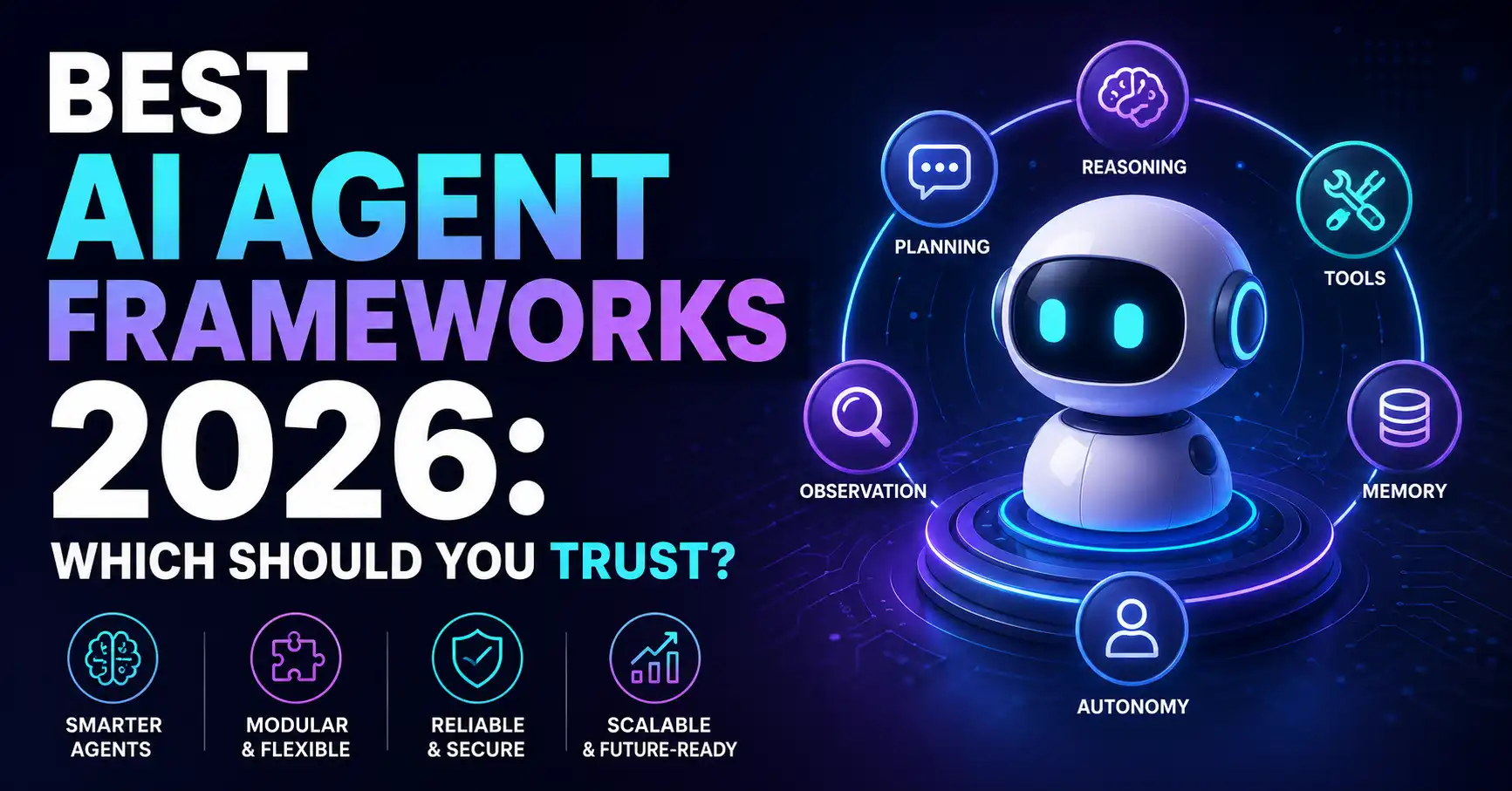
Agentic AI is the current frontier, and it is a genuine shift in kind, not just degree. An agent does not just answer. It breaks a goal into steps, uses tools, checks its own progress, and takes actions across multiple stages with minimal hand-holding. Ask a generative model to plan a trip and it writes you an itinerary; ask an agent and it can, in principle, search flights, compare options, and complete bookings. The engine underneath is usually a generative model, but wrapped in the ability to plan and act. That autonomy is powerful and useful, and it is also why questions of oversight get sharper. Our pieces on long-horizon AI agents and how much you should trust AI agents dig into exactly that.
What the research says about agents
Generative language models became general-purpose through scale. Brown and colleagues (2020) showed that scaling up language models greatly improves task-agnostic, few-shot performance, training GPT-3, an autoregressive model with 175 billion parameters. The step from generating text to acting came from work that connects models to tools and environments. Yao and colleagues (2022) proposed ReAct, in which a model produces reasoning traces and task-specific actions in an interleaved manner: the reasoning helps it track and update plans, and the actions let it interface with external sources such as knowledge bases or environments. Schick and colleagues (2023) showed with Toolformer that language models can teach themselves to use external tools, such as a calculator and a question-answering system, through simple APIs.
Two surveys map the field. Xi and colleagues (2023) define AI agents as artificial entities that sense their environment, make decisions and take actions, and review LLM-based agents as a possible basis for more general systems. Wang and colleagues (2023) survey LLM-based autonomous agents from a holistic perspective. Anthropic’s engineering guide “Building effective agents” draws a practical line: workflows offer predictability and consistency for well-defined tasks, while agents are the better option when flexibility and model-driven decision-making are needed at scale. That distinction is useful when deciding whether a task needs an agent at all.
What it means for the AGI question
It is tempting to see agentic AI and think AGI has quietly arrived, a system that plans and acts sounds general. It is not, though. Today’s agents are still built on narrow and generative foundations; they are impressive orchestrations of specialised abilities, not the flexible, transfer-everything intelligence that artificial general intelligence implies. The agentic shift is a real and important milestone, but it is a step along the path, not the destination.
Key takeaways
- Narrow AI does one fixed task, generative AI produces content on request, and agentic AI plans and acts toward a goal.
- Agents are usually built by connecting a language model to tools and a loop of reasoning and action.
- For well-defined tasks, a fixed workflow can be more predictable than an agent.
Sources
- Brown et al., “Language Models are Few-Shot Learners”, 2020.
- Yao et al., “ReAct: Synergizing Reasoning and Acting in Language Models”, 2022.
- Schick et al., “Toolformer: Language Models Can Teach Themselves to Use Tools”, 2023.
- Xi et al., “The Rise and Potential of Large Language Model Based Agents: A Survey”, 2023.
- Wang et al., “A Survey on Large Language Model based Autonomous Agents”, 2023.
- Anthropic, “Building effective agents”.
How we checked this: we compared the findings above with each source’s published abstract or page. Several of these works are position papers, surveys or reviews, so they describe arguments and evidence, not settled results.