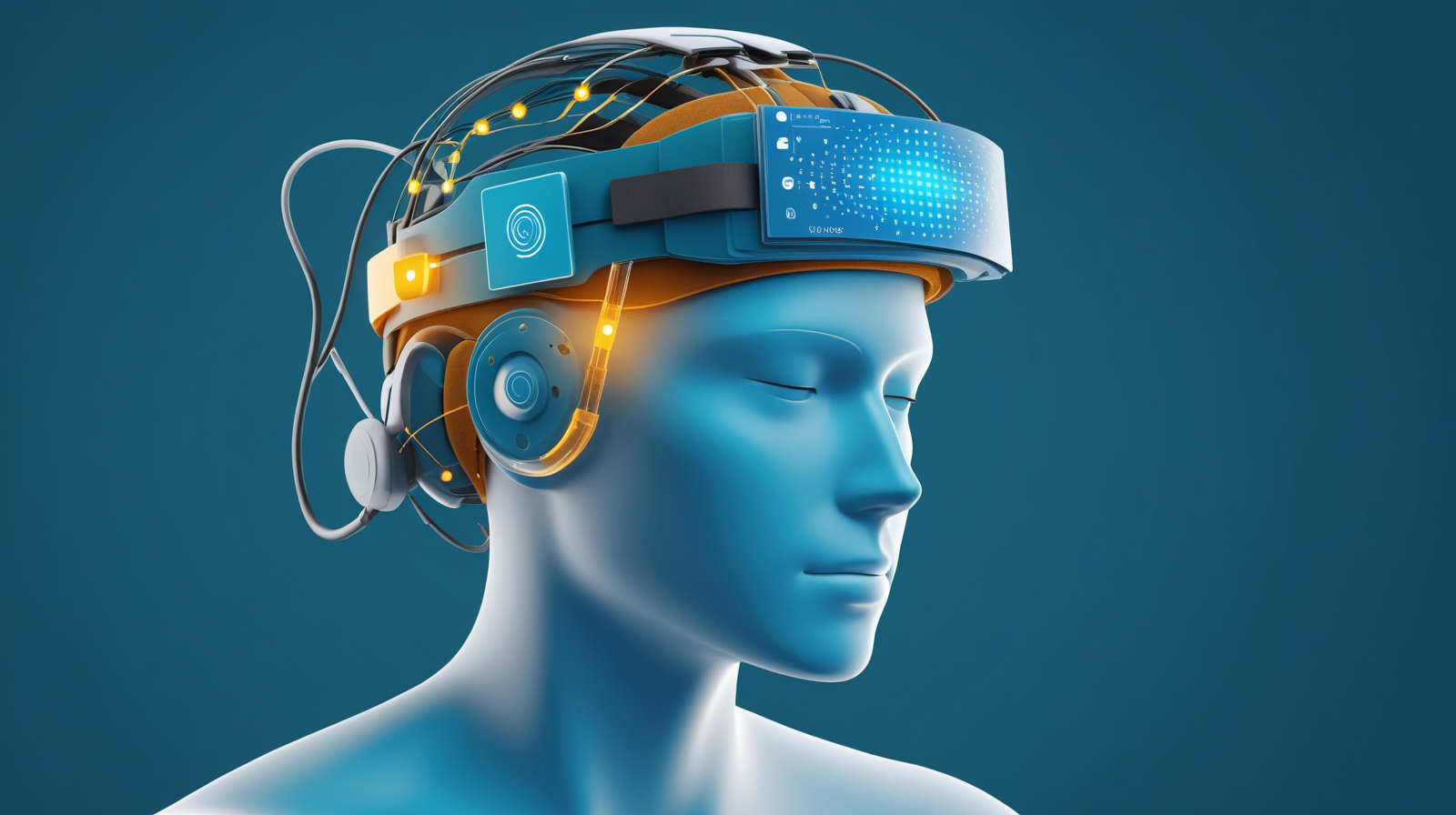


The appeal is obvious. If work is faster, markets are harsher, and attention is money, then the person who stays mentally switched on the longest should have an advantage. That idea sits underneath a lot of today’s human brain enhancement culture. It shows up in stimulant misuse, sleep-cutting productivity routines, biohacking stacks, and the growing belief that recovery is optional if the tech is good enough. The payoff here is straightforward: this article explains why mental overclocking feels attractive, where the real risks already show up, and what responsible cognitive enhancement would look like if the goal is durable performance rather than short-term stimulation.
Step back and see the bigger picture of cognitive augmentation.
Why mental overclocking feels so attractive
Mental overclocking is not really about laziness or greed. It is usually about pressure.
Founders feel they need more productive hours than their competitors. Athletes feel that even a small reaction-time edge matters. Creators feel punished if they disappear for a day. Knowledge workers increasingly operate in systems where responsiveness is mistaken for value. In that environment, the promise of 24/7 cognition sounds less like excess and more like adaptation.
A simple comparison explains the temptation. If everyone else treats the brain like a naturally limited system, the person who treats it like tunable hardware appears to have an edge. That is the same reason overclocking appeals in computing: more performance without waiting for a better machine. The problem is that silicon and nervous systems fail in very different ways.

Wakefulness is not the same as high-quality cognition
This is the mistake at the center of the whole culture.
Being awake is not the same thing as reasoning well. A person can feel alert enough to send messages, react quickly, or grind through repetitive work while their deeper cognitive performance is slipping. The CDC’s sleep guidance and indicators emphasize that insufficient sleep is tied to mental-health strain, injury risk, and broader health harms, not just grogginess (CDC, CDC Indicator Definition).
The performance cost is not limited to feeling tired. CDC/NIOSH training materials on long work hours note that sleep deprivation impairs performance, memory, and the manipulation of information needed for complex reasoning (CDC/NIOSH). That matters because many ambitious people are not trying to stay awake to do simple labor. They are trying to stay sharp enough to make difficult decisions.
A useful comparison is this: wakefulness helps you remain online; cognition determines whether what you do while online is any good.
The current enhancement stack already has real risks
The always-on productivity stack usually has three layers.
The first is chemical: prescription stimulants, wakefulness drugs, caffeine escalation, and supplement combinations sold as nootropics or performance aids. The second is behavioral: cutting sleep, extending work blocks, delaying recovery, and treating exhaustion as a discipline problem. The third is technical: wearables, feedback apps, and early neurotechnology tools marketed as ways to manage focus and output.
Prescription stimulants deserve special care here. NIDA is explicit that misusing prescription stimulants can carry serious risks, including addiction, heart problems, and psychosis (NIDA). That point matters because enhancement culture often reframes misuse as optimization. The language changes, but the pharmacology does not.
Supplements are not automatically safer just because they are sold over the counter. NCCIH warns that performance-enhancement supplements may contain dangerous hidden ingredients and that supplement makers do not have to prove safety and effectiveness before products are marketed (NCCIH). That is not an argument against every supplement. It is a warning against casual confidence.

Sleep debt is not a rounding error
The strongest case against mental overclocking is still sleep.
People often talk about sleep loss as if it were a small tax paid for more productive hours. The research picture is harsher than that. A major review indexed by PubMed notes broad agreement that insufficient sleep slows response speed, increases variability in performance, and disrupts attention and vigilance, while some higher-order functions can remain degraded even when stimulant countermeasures improve alertness (PubMed).
That last point is crucial. Many people assume the problem of sleep loss can be solved by restoring subjective alertness. But subjective alertness is a poor proxy for full cognitive recovery. You can feel switched on while still becoming worse at judgment, emotional regulation, creative reasoning, and error detection.
A concrete example helps. A founder running on four hours of sleep and high caffeine may still answer emails quickly and survive meetings. But they may also become more impulsive, less reflective, and worse at distinguishing a bold decision from a reckless one. The danger is not only reduced output. It is degraded decision quality masked by continued motion.
Why constant optimization can become self-defeating
Enhancement culture often promises control. In practice, it can produce fragility.
The first trap is tolerance. When every hard week is solved by pushing harder, the baseline shifts. The second trap is identity. Once someone starts seeing themselves as a person who must always operate at maximum output, rest begins to feel like weakness rather than maintenance. The third trap is distortion. High stimulation can create the feeling of momentum even when the work is getting sloppier.
That is why mental overclocking often becomes self-defeating. It turns the brain into a short-term extraction target. The gains look real at first because the person is present longer, more active, and more visibly intense. But over time, mood, recovery, judgment, and motivation can all become less stable. The system starts consuming the very capacities it claims to optimize.
The social cost of never switching off
There is another damage pattern that productivity culture often misses: overclocking does not stay inside the skull.
When someone is always “on,” the burden leaks into teams, families, and training environments. An executive who sends midnight messages normalizes nervous-system strain as professionalism. A coach who celebrates constant intensity can quietly train athletes to confuse depletion with commitment. A startup culture built around permanent urgency may produce more visible activity while degrading trust, patience, and judgment across the entire group.
A concrete comparison helps. If one laptop in an office overheats, that is a local hardware problem. If the whole office runs too hot, then it is a systems-design problem. Mental overclocking works the same way. Once enough people begin treating rest as a liability, the culture itself starts selecting for unstable performance habits.
That is one reason the issue matters beyond self-help. Human brain enhancement is gradually becoming a workplace norm question, not just an individual lifestyle choice. The risk is not only that one ambitious person pushes too hard. It is that organizations quietly build expectations around chemically supported wakefulness, shallow recovery, and permanent cognitive availability.

What responsible human brain enhancement would look like
Human brain enhancement is not automatically foolish. The problem is the model.
A responsible model starts with recovery, not override. It assumes that sleep, training load, mental health, and medical context matter more than hype. It distinguishes clinical treatment from casual misuse. It asks whether the intervention improves durable cognition or merely extends wakefulness.
WHO’s recent neurotechnology landscape work and broader brain-health framing are useful here because they place performance tools inside a larger health context rather than treating them as isolated gadgets (WHO Neurotechnology Report, WHO Brain Health). That is the right instinct. Enhancement should not be evaluated only by immediate output. It should be judged by long-term function, agency, safety, and the conditions it creates around work.
For teams, that means designing for sustainable cognition. For individuals, it means being suspicious of any protocol that demands less sleep, more chemical support, and constant strain as the default price of staying competitive.
Final Thoughts
The promise of 24/7 cognitive productivity is powerful because it flatters modern ambition. It suggests that the real limit is not biology but discipline, and that enough optimization can turn the brain into an always-on competitive asset. That idea is emotionally attractive, especially in cultures built around speed and scarcity.
But the brain is not a machine that becomes more reliable the longer it is pushed. Mental overclocking can extend activity without preserving judgment. It can raise stimulation while quietly lowering quality. The people most likely to be seduced by the promise are often the same people whose work depends most on clear thinking. That is why the smarter path is not to reject enhancement altogether. It is to reject the false equation between being switched on and actually performing well.