
Most people fantasize about better memory at least once a week. You forget a name, lose a detail from a meeting, or misremember what was said in an argument, and the obvious wish appears: what if nothing important ever slipped away? Perfect memory technology speaks directly to that frustration. It promises a cleaner life, a safer archive, and maybe even a fairer version of truth. But the brain does not work like a passive recorder, and that is not a design failure. The payoff here is practical: this article explains why forgetting is part of healthy cognition, what hyperthymesia tech and neural recording might actually deliver, and why total recall could create new problems instead of solving old ones.
Forgetting is not just a bug in the brain
The standard consumer view of memory is simple. More stored information must be better than less. Neuroscience gives a more complicated answer.
Healthy cognition depends on selection. The brain has to compress, prioritize, and generalize. Without that filtering, every experience would compete for attention at full intensity. A comparison makes the point. If your email inbox treated every message from the last ten years as equally urgent, the system would become less useful, not more. Forgetting serves a similar role. It reduces clutter so judgment can stay workable.
WHO’s framing of brain health fits this well because cognition is treated as a living function that supports daily decision-making, not as a score for raw storage. The question is not only how much you remember. It is whether memory remains useful, proportionate, and adaptive.
That is why the idea of the end of forgetting is more unsettling than it first appears. If technology preserved every detail with equal persistence, it could strengthen recall while weakening perspective.
What a mind that remembers everything might feel like
Popular culture often treats total recall as a superpower. Real cases suggest a stranger reality.
People with extraordinary autobiographical memory, often discussed under the label hyperthymesia, do not simply enjoy a sharper search tool. They may also experience memory as intrusive, persistent, and difficult to tune out. A memory that always returns on command can be an asset, but it can also trap attention in details the rest of us naturally let fade.
A concrete comparison helps. Imagine a browser with no tab-closing function. At first it sounds convenient. Over time it becomes oppressive because the old pages never stop competing with the task in front of you. Something similar can happen when memory loses its natural filters.
This matters for hyperthymesia tech because people often assume a memory-enhancement system would scale linearly: more detail, more accuracy, more benefit. In practice, memory overload can create anxiety, indecision, and difficulty moving on from emotionally charged events.
What perfect memory technology is actually likely to look like
Near-term technology will probably not create flawless biological recall. It will create layers around memory.
Some layers will be assistive: better cues, stimulation support, pattern detection, contextual reminders. Some will be archival: wearable capture, searchable logs, and AI systems that reconstruct likely events from external data. Some will be therapeutic: tools that help restore memory function after injury.
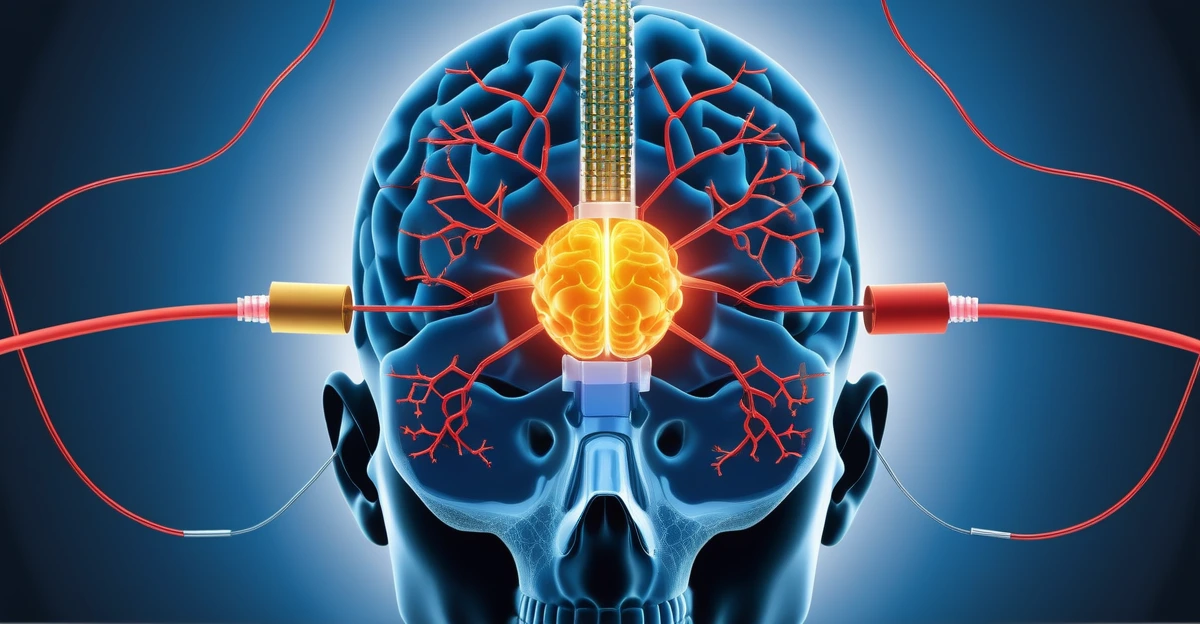
DARPA’s Restoring Active Memory program is a good example of the serious version of this work. The focus is not cinematic omniscience. It is helping injured brains encode and retrieve information more effectively through targeted neurotechnology. That is ambitious and clinically meaningful, but it is still very far from a life with zero forgetting.
A comparison makes the difference clearer. A calculator improves arithmetic performance without giving you infinite mathematical insight. In the same way, a memory device may improve selected functions without giving you absolute autobiographical recall.

Neural recording changes the problem from memory to management
Once a system starts logging more of life, the challenge is no longer only remembering. It is deciding what deserves retrieval.
A neural recording or lifelogging system might preserve meetings, health signals, location history, or memory cues. On paper that sounds empowering. In daily life it creates new burdens. Which version is authoritative when your memory and the archive disagree? Who controls access during divorce, litigation, or employment review? How much recorded detail do you actually want to revisit after grief, trauma, or shame?
A plain example helps. Security footage can clarify whether a package was delivered. It can also strip away context and create arguments over a narrow slice of reality. Memory archives could behave the same way. More footage does not automatically mean more wisdom.
The moment total recall becomes possible in partial form, selection and interpretation become the harder problems. That is where data storage limit becomes psychological as much as technical. Even if storage gets cheap, human attention does not.
Why memory modification will stay part of the story
People often imagine memory technology only as preservation. In practice, modification is just as important.
Research on reconsolidation shows that memory can become labile when recalled, which is one reason therapies and interventions may reshape how a remembered event is later experienced. That matters because the future of memory tech is not just capture. It is also editing, dampening, strengthening, and reframing.
For therapists and researchers, that creates real opportunity. A system that helps reduce the grip of traumatic recall could improve quality of life. But it also creates a harder ethical problem. If memory can be tuned, who decides which version of the past is acceptable to preserve?
This is where memory modification becomes more than a sci-fi talking point. The question is not simply whether we can keep more memories. It is whether we are comfortable living in a world where memories can be selectively emphasized or softened by design.
Law, relationships, and everyday life would all get stranger
A world with weaker forgetting would alter ordinary social life.
Arguments between partners rely partly on selective memory and partly on interpretation. Courtrooms already struggle with testimony, evidence, and context. Workplaces rely on some degree of informal forgetting so people can recover from minor mistakes. If every moment becomes retrievable, the social cost of living could rise even if factual recall improves.
A practical comparison helps. Searchable chat logs already change how people speak at work. People become more cautious because a casual remark can reappear years later. Now scale that instinct from messages to sensory-rich memory archives. The effect would be deeper and more intimate.
That is why a future of perfect memory technology could feel less like enlightenment and more like permanent exposure.

The right goal is better memory hygiene, not endless recall
The most realistic and humane goal is not to eliminate forgetting. It is to improve memory where failure is costly and protect people where memory becomes damaging.
That might mean rehabilitation tools for injury, reminder systems for aging, better archival support for complex work, and therapies that reduce the burden of traumatic recall. Those uses are practical because they respect the role of selection instead of trying to abolish it.
A good comparison is eyeglasses. They improve vision without demanding that every person see microscopic detail all the time. Memory technology should probably follow the same philosophy. Assist what matters. Do not assume that more signal is always more health.
Why courts, therapists, and families would use memory tools differently
The social meaning of perfect memory technology would depend heavily on context. A therapist, a judge, and a family member would not ask the same thing from a memory archive, even if they were looking at the same event.
In therapy, the goal might be to reduce suffering and restore function. In court, the goal would be evidentiary reliability. In families, the goal might be fairness, reassurance, or sometimes emotional leverage. A concrete comparison helps. A medical scan can be a tool for treatment in one room and a source of bureaucratic conflict in another. Memory systems would likely behave the same way.
That means the hardest question is not only whether a recorded memory is accurate enough. It is what kind of institution gets to define accuracy and relevance. A recorded life log might help resolve one factual dispute while intensifying ten others about motive, meaning, or context. A person may also need the right to avoid replaying an event even when the archive exists.
This is why neural recording cannot be discussed as a neutral capability. Once stored memory becomes reviewable, every institution that already pressures people for information will try to decide when recall should be mandatory, strategic, or forever preserved.

Final Thoughts
If technology ever makes forgetting partly optional, the biggest surprise may be that people still choose to let some things fade. That would not be irrational. It would be a sign that forgetting does important work.
The honest future of perfect memory technology is not a world where every second is preserved forever and everyone becomes wiser because of it. It is a world of selective support, partial archives, and difficult choices about what should be recalled, what should be softened, and what should be allowed to pass. In other words, the future of memory will still depend on judgment, not just storage.