
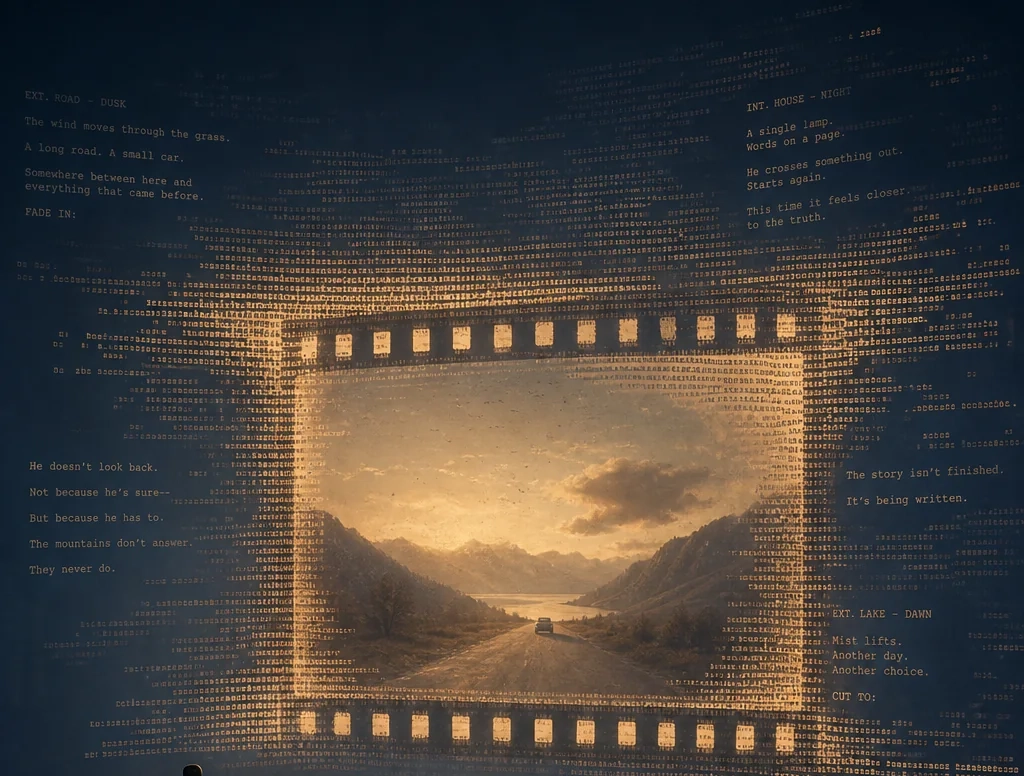
Type three sentences. Wait ten seconds. A finished clip plays back, with sound, lighting, and a camera move you never storyboarded. As of June 30, 2026, that’s an ordinary API call (Google’s developer launch), and it pushes AI video generation authorship from a seminar puzzle into a decision you make before you hit publish.
So here’s the question that won’t sit still. When the gap between imagining a shot and holding it in your hand shrinks to almost nothing, who is the author? The person who typed? The model that rendered? The company that trained it? Or has “author” quietly stopped describing anyone?
This isn’t a copyright footnote. It touches who gets paid, who gets credit, and whether the word “creator” still means what we think it means.
What just changed with Gemini Omni Flash
Gemini Omni Flash is the first model in Google’s new “Omni” family. It folds what used to be separate video, image, and audio pipelines into one system that reads text, images, audio, and video as input. It reached consumers first, going live worldwide on May 19, 2026 at Google I/O. Google offered it free with limits on YouTube Shorts and bundled it into the Gemini app for AI Plus ($7.99), Pro ($19.99), and Ultra subscribers (9to5Google).
Then developers got their turn. Pricing runs about $0.10 per second of 720p video, so a full ten-second clip (the current max) costs roughly a dollar, with a batch discount that halves it (Coursiv).
But price isn’t the interesting part. Every big lab now ships something like this. Veo 3.1 added true 4K and beat-by-beat “narrative control” in a January 2026 update (WaveSpeed). ByteDance’s Seedance 2.5 generates a native 30-second 4K clip in one pass from up to 50 reference inputs (The Next Web). Kuaishou’s Kling 3.0 pushed to 60fps with phoneme-level lip-sync across five languages (Atlascloud). We’ve watched this exact leapfrogging before, in the AGI development race, right down to the open-source models closing the gap.

Omni Flash doesn’t win on length or resolution. It tops out at 720p and ten seconds. Its edge is conversational, stateful editing. Google’s Interactions API remembers the clip you already made. So you can say “make it dusk, slow the pan,” and the model changes only that and keeps the rest (Google’s docs). No re-upload. No full regenerate. You talk to the footage, and it listens.
That sounds like a small feature. It quietly rewrites the authorship question.
What AI video generation authorship really comes down to
Strip away the tech for a second. In US law, only a human can be an author. That’s the whole game. Copyright protects human creativity, and a machine’s output, on its own, doesn’t qualify.
We already have a test case for video’s older cousin. In February 2023, the US Copyright Office canceled and reissued the registration for the graphic novel Zarya of the Dawn. It protected the writer’s text and her selection and arrangement of the panels. It refused to protect the individual Midjourney images, because they “are not the product of human authorship” (US Copyright Office letter).
The reasoning matters more than the ruling. You can’t control exactly how a prompt gets expressed and executed as a final image, so the prompt alone doesn’t hand you creative control over what comes out (Nixon Peabody).
The Office doubled down in its 2025 report. A human has to “determine sufficient expressive elements” before the output earns protection. Type a prompt and nothing more, and the result “likely” isn’t copyrightable at all, which means anyone can copy it freely (Copyright and Artificial Intelligence, Part 2). The courts agree. As the district court put it in Thaler v. Perlmutter, “non-human actors need no incentivization with the promise of exclusive rights” (Copyright Alliance).
So the law already answers AI video generation authorship for the simple case: three sentences in, a finished clip out, nobody home as the author. But Omni Flash doesn’t run the simple case.
Who’s the author when three sentences make a finished clip?
Here’s where it gets uncomfortable. Philosophers David Casacuberta and Ariel Guersenzvaig put the problem bluntly. With prompt-based tools, they write, “the role of the human hand is conspicuously missing. What we have instead is text production through typing” (Frontiers in Artificial Intelligence).
Their sharper claim cuts deeper. Real craft grows through years of physical feedback: the failed take, the reshot angle, the muscle memory a director builds on set. That kind of tacit knowledge, they argue, can’t be fully written down as instructions. So no matter how clever your prompt, prompting alone stalls at the novice stage of skill. You’re describing a result, not making one. This is part of a wider shift in how AI reshapes thought, creativity, and choice.
Regular users feel the tension already. A December 2025 study of OpenAI’s Sora found people openly fighting over who owns a clip: the prompt-writer, the platform, or the folks whose work trained the model. Some started selling their prompts on marketplaces to stake a claim on their input, even though the law won’t hand them the output (arXiv study). They know they made something. They also know they can’t quite call it theirs.
Now add Omni Flash’s twist. A single prompt is one decision. A back-and-forth conversation, adjusting the light here, the pace there, the framing again, is a sequence of creative decisions over time. That looks a lot less like prompting and a lot more like directing. And current doctrine assumed single-shot prompts, not a ten-turn conversation with a clip. That gap is real, and no court has tested it yet.
The film world is already circling it. When filmmakers rebuilt the late Val Kilmer’s performance with AI for a 2026 release, the Academy ruled that AI use won’t automatically disqualify a movie from the Oscars. But only human-performed, credited roles stay eligible for acting awards, and the rules tell voters to weigh “the degree to which a human was at the heart of the creative authorship” (Variety). Even the awards are grading how much human is in the work.
The provenance problem: can SynthID prove who made it?
Google has a partial answer to “who made this,” and it helps to understand why it is only partial. Every clip Omni Flash produces carries a SynthID watermark, invisible to viewers but readable by software. SynthID stamps a signal into every frame’s pixels at generation time, built to survive cropping, filters, frame-rate changes, and compression (Google DeepMind).
This is spreading fast. By May 2026, Google had marked more than 100 billion images and videos, and rivals including OpenAI, Nvidia, and ElevenLabs signed on to the same standard (Crypto Briefing). A rare truce in a cutthroat field.
There is a caveat, and it is a large one. SynthID detection returns one of three verdicts: watermarked, not watermarked, or uncertain. Google is careful to say a “not watermarked” result never means “a human made this,” and the system “is not designed to directly stop motivated adversaries” (Google’s own docs).
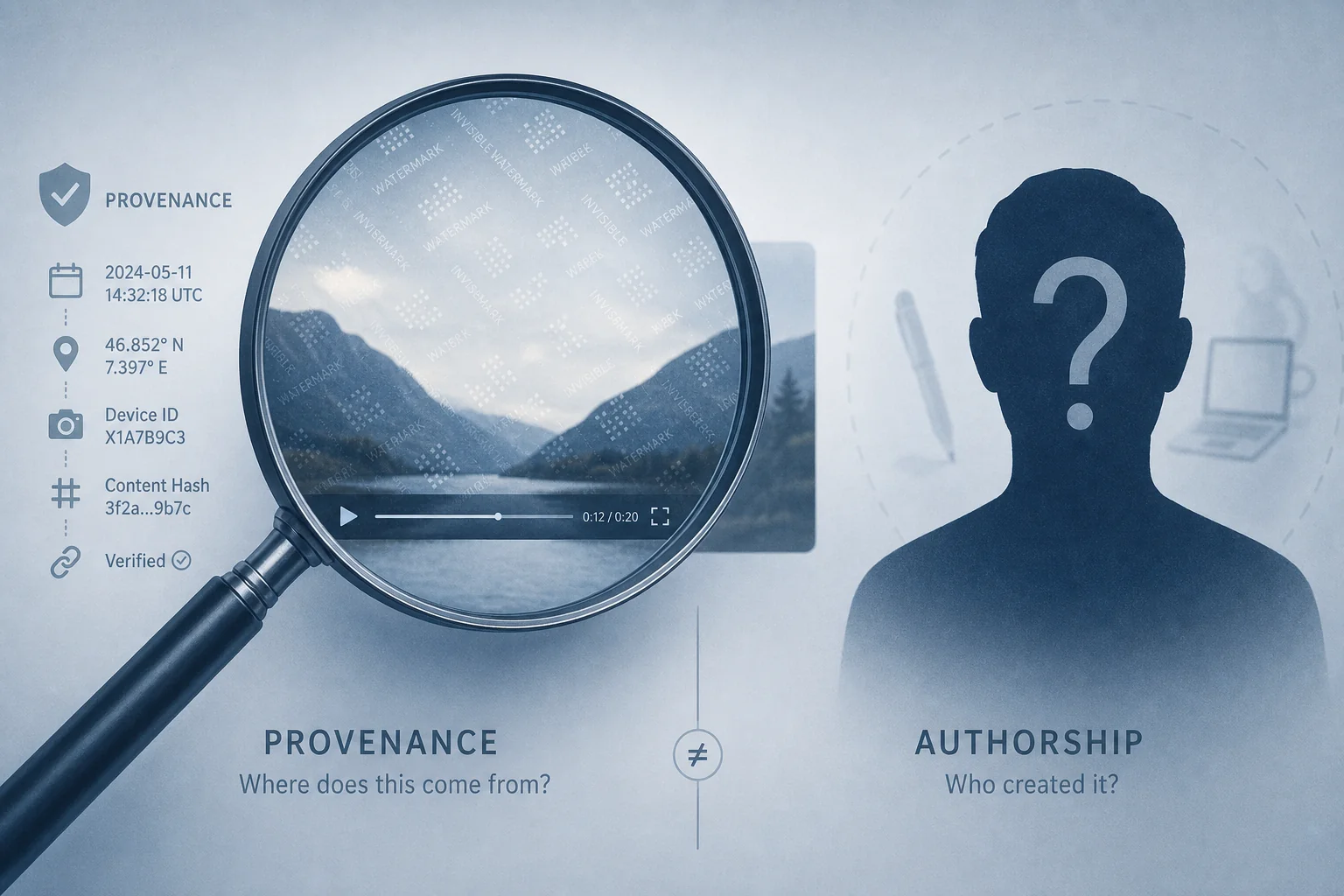
Read that closely. SynthID confirms machine origin. It says nothing about authorship. It can tell you a clip came out of a SynthID-enabled tool. It can’t tell you whether a person shaped that clip with real intent, whether someone chained five tools together and stripped the mark along the way, or anything about footage from a model that never joined the club. Provenance is not attribution. The tools racing to prove “an AI made this” are answering a different question than “who authored this.”
That’s the same gap that makes AI deception harder to catch than a failed Turing test. A signal about the surface tells you little about what sits underneath.
What happens to creative labor when direction replaces craft?
The money question isn’t philosophical for the people who make video for a living. A CVL Economics study, commissioned by the Concept Art Association and the Animation Guild, ran the numbers. It found roughly 118,500 US film, TV, and animation jobs at risk by 2026. That’s about 21.4% of the whole workforce, jobs that could be consolidated, replaced, or eliminated by generative AI. Los Angeles County alone shed 41,000 film and TV jobs in three years, a quarter of its entertainment workforce. And the exposed roles skew toward routine execution, not creative direction. As one executive put it, studios “are not replacing senior artists, they are replacing the tasks that junior artists used to handle” (Metaintro).
Sit with that last line. If the junior tasks vanish, so does the training ground for the next generation of senior artists. It’s the same access problem that surfaces whenever a powerful new tool arrives, the same worry behind whether brain chips could deepen a human class divide. The people who own the direction keep rising. The people who did the craft fall out of the pipeline.
There’s a real counterweight, and it deserves airtime. McKinsey pegs the global content-creation value chain at $181 billion and figures generative AI could cut production costs by up to 30%, mostly in pre- and post-production work like storyboards and previsualization. Its framing leans on AI “enhancing creativity instead of replacing it” (McKinsey). Maybe. Cheaper production could mean more people get to make things, not fewer.
Labor isn’t waiting to find out. In June 2026, SAG-AFTRA members ratified a new TV and theatrical agreement that limits synthetic-performer use and builds on four demands: transparency, consent, compensation, and control over digital replicas (SAG-AFTRA). Notice what they’re really protecting: not the tools, but the human at the center of the work. That’s exactly the kind of question a post-work economy forces.
Where the law is, and where it isn’t
Don’t expect a clean rule any time soon. The Copyright Office declined to write new categories for AI work. Instead it reuses old standards, the “minimal creativity” bar from Feist and the “intellectual production, thought, and conception” test from Burrow-Giles, and applies them case by case (Skadden). So Omni Flash’s whole selling point, that multi-turn conversation, has no settled treatment. Someone will have to argue it through a framework built for still images.
Here’s the nuance the scary headlines skip. The rule was never “AI content can’t be copyrighted.” You can protect a work that blends human authorship with AI output, at least the human parts. Creative selection, arrangement, or heavy editing of AI footage can count too. What’s coming isn’t a wall. It’s a spectrum of partial protection, graded by how much a human actually decided.
If that sounds familiar, it should. We keep having to draw the same messy line every time a tool extends what people can do, which is why a clear ethics framework for new capabilities matters more than a single verdict.
So who’s the author?
My honest read: for now, nobody is, and that’s the wrong thing to panic about. The clip that appears in ten seconds has no author in the eyes of the law, and SynthID can only vouch that a machine made it. AI video generation authorship hasn’t disappeared. It’s turning into a measurement, a question of how much of yourself you actually put into the thing.
Omni Flash makes that measurement harder and more interesting at the same time. Talk to a clip long enough, shape it turn after turn, and you start doing something that feels like directing. Whether the law ever catches up to that feeling is the open question of the next few years.
So before you post your next AI-made video, ask yourself the only thing that still means anything: how much of this did you actually decide? Sit with the answer. Then tell us where you’d draw the line.