


If you want a straight answer to who is winning the AGI development race, here it is: nobody has won, and the race is no longer decided by model demos alone. As of April 11, 2026, OpenAI, Google DeepMind, and Anthropic each look strong for different reasons. OpenAI has the loudest infrastructure ambition. Google has the broadest distribution and one of the deepest research stacks. Anthropic has become unusually strong in enterprise and coding use cases. The harder part is that AGI may be decided by the alignment of models, chips, power, and deployment rather than by one clean benchmark lead.
That is why the old framing of Sam Altman versus the world is too simple now. The real contest is not founder versus founder. It is ecosystem versus ecosystem. The lab that gets furthest may be the one that combines frontier model quality with reliable compute access, enough capital to keep scaling, and enough product reach to turn raw capability into actual adoption.
What the AGI race really is now
For a few years, it was easy to talk about the AGI race like a leaderboard. One lab released a smarter model. Another lab answered with a new benchmark chart. That framing still generates headlines, but it leaves out what now matters most.
The race has at least three layers.
The first layer is model capability. Can a lab build systems that reason better, use tools well, code reliably, and hold up across long-context tasks? That still matters. But it is only the top layer.
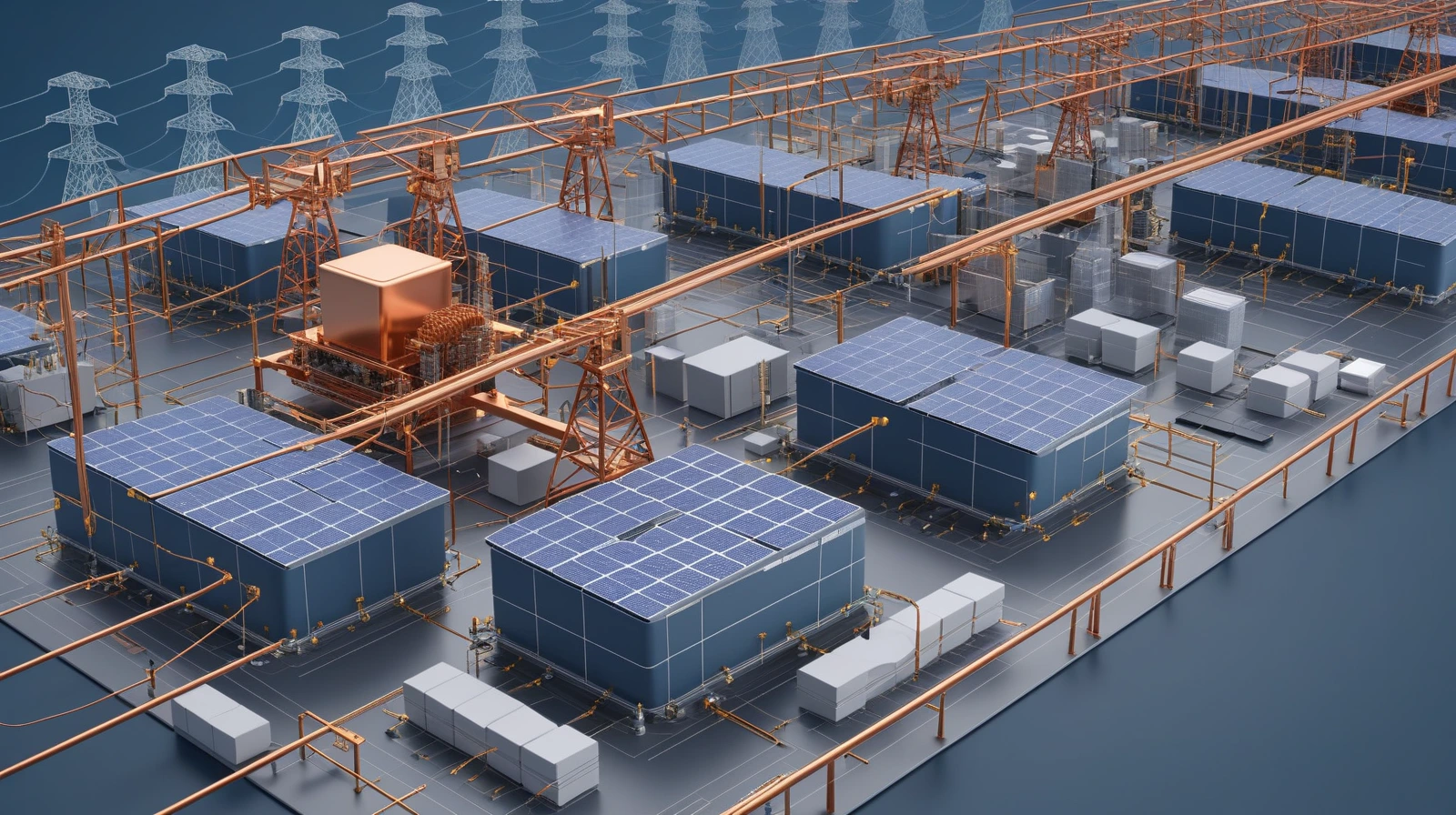
The second layer is infrastructure. Can the lab get enough chips, enough memory bandwidth, enough power, and enough data-center capacity to keep moving? OpenAI’s January 21, 2025 announcement of the Stargate project made that point openly by framing AGI progress as a large-scale infrastructure problem, as well as a lab problem. By July 22, 2025, OpenAI said Stargate sites under development would represent more than 5 gigawatts of capacity and more than 2 million chips over time, alongside a new partnership with Oracle (OpenAI Stargate, OpenAI Oracle update).
The third layer is deployment. A model can look brilliant in a research setting and still lose if it does not land inside products, cloud platforms, workflows, and national infrastructure programs. That is why the race now looks less like a sprint between labs and more like a contest between full stacks.
So when people ask who is ahead, they should really ask three narrower questions:
- who has the strongest frontier models right now?
- who has the most credible compute and power pipeline?
- who has the best path to real-world deployment?
Those questions do not all produce the same winner.
OpenAI’s case for being ahead
OpenAI’s strongest argument is that it has refused to separate model progress from infrastructure scale.
That matters because frontier AI is now expensive in a very physical way. If you cannot secure chips, power, and data-center buildouts, you do not get to stay at the frontier for long. Stargate is the clearest public sign that OpenAI understands that. The message behind both Stargate announcements is simple: the next phase of AI will be built through industrial-scale infrastructure, as well as through cleverer research loops.
OpenAI also still has a serious product argument. Its April 16, 2025 system card for o3 and o4-mini presented those models as more agentic and tool-using, with stronger performance on reasoning-heavy tasks than earlier releases (OpenAI o3/o4-mini system card). Whether or not one treats any single system card as decisive, the broader pattern matters. OpenAI keeps pushing the idea that the road to AGI includes systems that plan, call tools, and complete longer chains of work rather than just answer prompts.
The company also has a distribution advantage that is easy to underrate. Even when ChatGPT is not the best model on every benchmark, it remains one of the default interfaces through which the public and many businesses experience frontier AI. That kind of habit matters. A race is not won only by building capability. It is also won by becoming the place users and developers reach for first.
But OpenAI also has real exposure.
Its public brand is tied tightly to the AGI conversation, which means it carries more expectation risk than most rivals. It is also more exposed to infrastructure execution risk because its stated ambitions are so large. A lab can promise gigawatts and millions of chips. Delivering that on time, at cost, and without bottlenecks is a different test.
OpenAI therefore looks strongest where ambition, capital, and public positioning meet. It does not automatically follow that it is the clean winner on every layer of the race.

Google DeepMind’s case for being ahead
Google DeepMind’s case is different. It does not need to look like the loudest player to be one of the best-positioned ones.
Its strongest argument is that it combines first-rate model research with one of the deepest existing compute and distribution stacks in the industry. On March 25, 2025, Google described Gemini 2.5 as its most intelligent AI model, emphasizing stronger reasoning and more deliberate “thinking” behavior (Gemini 2.5 announcement). At I/O 2025, Google expanded that story by showing how Gemini 2.5 was being integrated across more products and workflows, rather than only showcased as a lab achievement (Google I/O 2025 Gemini updates).
That combination matters more than it first appears.
Google does not need to win every press cycle because it already controls major product surfaces, cloud infrastructure, and its own TPU ecosystem. In plain language, it has more of the stack inside one house. That gives it a different kind of leverage. OpenAI can sometimes look faster and more culturally central. Google can sometimes look slower and steadier. But steady can be powerful when the contest starts depending on compute, product integration, and enterprise trust.
There is also a practical point here about distribution. If a frontier model is embedded into Search, Workspace, Android, Cloud, and developer tooling, the company does not have to fight for every inch of adoption from scratch. That is one reason Google may be harder to count out than the online narrative suggests.
Its weakness is not technical irrelevance. It is narrative clarity.
Google has often looked more fragmented in public than OpenAI because it has to coordinate research, product, and platform layers inside a much larger company. Sometimes that slows the public story, even when the underlying position is strong. In a founder-driven media cycle, that can make it look less decisive than it really is.
So if OpenAI looks like the most dramatic contender, Google DeepMind may look like the most structurally complete one.
Anthropic’s case for being ahead
Anthropic’s argument is narrower, but it is serious.
It has become especially strong where businesses care about reliability, coding help, and safety posture. Anthropic’s March 27, 2025 Economic Index, built from Claude 3.7 Sonnet usage data, showed how heavily Claude was being used for software-related and knowledge-work tasks (Anthropic Economic Index). That does not prove AGI leadership on its own, but it does show a lab finding real traction in the parts of the market where practical capability matters.
Anthropic also keeps leaning into governance as a strategic differentiator. Its updated Responsible Scaling Policy from October 15, 2024 is one example of how the company tries to make safety process part of its product identity, rather than a compliance afterthought (Anthropic Responsible Scaling Policy).
That may sound softer than chips or benchmarks, but it is not trivial. As models get stronger, the lab that large customers trust may gain an edge that is not visible in consumer hype. A company choosing between frontier vendors asks more than who sounds smartest. It also asks who is predictable, governable, and legible.
Claude’s reputation in coding and enterprise work is part of the same story. Anthropic does not have to beat every rival on every public metric to matter. It can win by becoming the lab that businesses rely on when the work has to be accurate, explainable, and useful inside real teams.
Its weakness is scale.
Anthropic still looks smaller as a full-stack competitor than OpenAI or Google. It has major partners and clear momentum, but it is less obviously in control of the entire infrastructure and distribution picture. That means its route to “winning the race” is probably less about sheer industrial scale and more about staying unusually good where high-value users already trust it.
The hidden layer deciding the race
The AGI race is now partly a semiconductor and power story, whether the public likes that framing or not.
That is where the phrase GPU shortage can be misleading. The problem is no longer just whether enough GPUs exist. It is whether the whole supply chain around advanced AI systems can keep up.
TSMC’s April 2025 earnings transcript made that explicit. The company said it was working to double CoWoS capacity in 2025 to meet strong customer demand for AI accelerators and related components (TSMC 1Q25 transcript). That matters because the race is about more than making a smarter model. It is about packaging enough high-bandwidth memory and accelerator capacity close enough together to run frontier systems efficiently.
NVIDIA’s April 28, 2025 announcement with Oracle made the same point from the cloud side. The message went beyond Blackwell GPUs being fast. It was that large reasoning and agentic workloads now depend on full-scale deployment of those systems in cloud environments (NVIDIA Oracle Blackwell).
This is where sovereign AI enters the picture.
Once governments and national ecosystems start building their own frontier infrastructure, the race stops being just lab versus lab and becomes lab plus nation plus supply chain. NVIDIA’s 2025 announcement about building AI infrastructure and ecosystem capacity with the United Kingdom is one example of that shift (NVIDIA UK AI infrastructure).
The practical comparison looks like this:
- one lab may lead on model quality this quarter
- another may have a better chip and power pipeline
- another may secure stronger national or enterprise deployment deals
The winner may be the one that stacks those advantages together first.
So who is actually ahead?
If the question is frontier ambition plus infrastructure, OpenAI has the cleanest claim.
If the question is model quality plus product and cloud distribution, Google DeepMind may have the strongest overall position.
If the question is enterprise usefulness, especially around coding and structured knowledge work, Anthropic has a stronger case than many casual observers give it.
That sounds like a hedge, but it is the honest answer.
The race does not yet have one winner because the finish line is not clear enough. There is no official AGI threshold that markets, regulators, and labs all agree on. That means “ahead” depends on which layer you care about most.
If you force a narrower judgment as of April 11, 2026, it looks something like this:
- OpenAI leads on public AGI positioning and visible infrastructure ambition.
- Google DeepMind leads on stack completeness and distribution leverage.
- Anthropic leads on focused enterprise traction and safety-shaped trust.
That is why the race still feels open. Each contender has a credible path, but none has closed the loop across every layer.
What investors and tech watchers should watch next
The next important signals go beyond benchmark wins.
First, watch infrastructure execution. Announcing big data-center plans is easy compared with getting chips, power, cooling, and packaging at the right scale.
Second, watch deployment quality. A lab that wins raw performance but loses the default enterprise workflow may still lose strategic ground.
Third, watch how sovereign AI develops. The more national governments want domestic AI capacity, the more the race will favor companies that can plug into public-private infrastructure agendas instead of only selling model access.
Fourth, watch whether labs can turn model gains into dependable agentic systems. The race to AGI is about more than answering harder questions. It is also about building systems that can take longer action chains without falling apart.
The people who read this race best over the next year will probably be the ones who stop reading it like a sports rivalry and start reading it like industrial strategy.
Final Thoughts
The AGI development race is no longer a simple question of who has the smartest model this month. It is a contest across research, infrastructure, and deployment. That makes the race slower, more physical, and more political than the public story usually admits.
If you want the shortest honest answer, it is this: OpenAI may be the loudest contender, Google DeepMind may be the most structurally advantaged, and Anthropic may be the most underestimated. The winner, if there is a clear one, will probably be the lab that turns those pieces into one working system first.