

General Electric spent six years building a wearable robot and never dared switch it on. The Hardiman project ran from 1965 to 1971, and the team never trusted the machine enough to power it up with a person strapped inside (Wikipedia). Consumer exoskeletons for everyday life have come a long way since that caged experiment.
Roll the clock forward to January 2026. At CES in Las Vegas, nineteen exoskeleton companies set up booths, and lines formed for the chance to strap motorized legs over your jeans and walk a few steps (Futura-Sciences). The target buyer changed too. Not soldiers. Not warehouse crews. Hikers, casual walkers, and adults over fifty who want an easier climb (Futura-Sciences).
That shift matters because the price finally dropped. Some 2026 models cost less than a good laptop. So the real question isn’t whether the tech works. It’s who gets to move more easily through the world once effort becomes something you can buy.
What a powered exoskeleton actually does
Strip away the marketing and you get two families of device. Powered exoskeletons use motors and sensors to push your limbs along. Passive ones skip the motor entirely, storing and releasing energy through springs and mechanical linkages (NSIN).
The consumer models grabbing headlines this year are the powered kind. Here’s the loop they run, roughly.
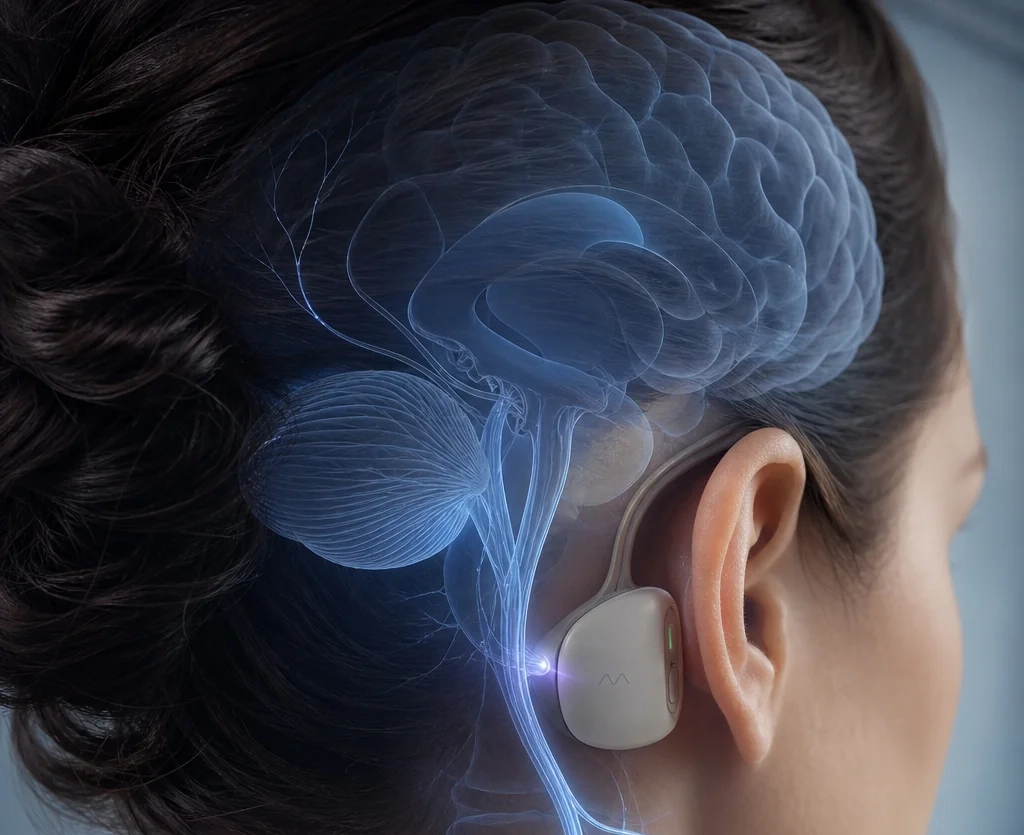
First, the suit has to guess what you’re doing. Two sensor types handle that. Skin electrodes read muscle activation. They fire about 120 milliseconds before your leg actually moves, early enough to predict what you’re about to do (PMC). Motion sensors called IMUs track acceleration and angle to confirm it (arXiv).
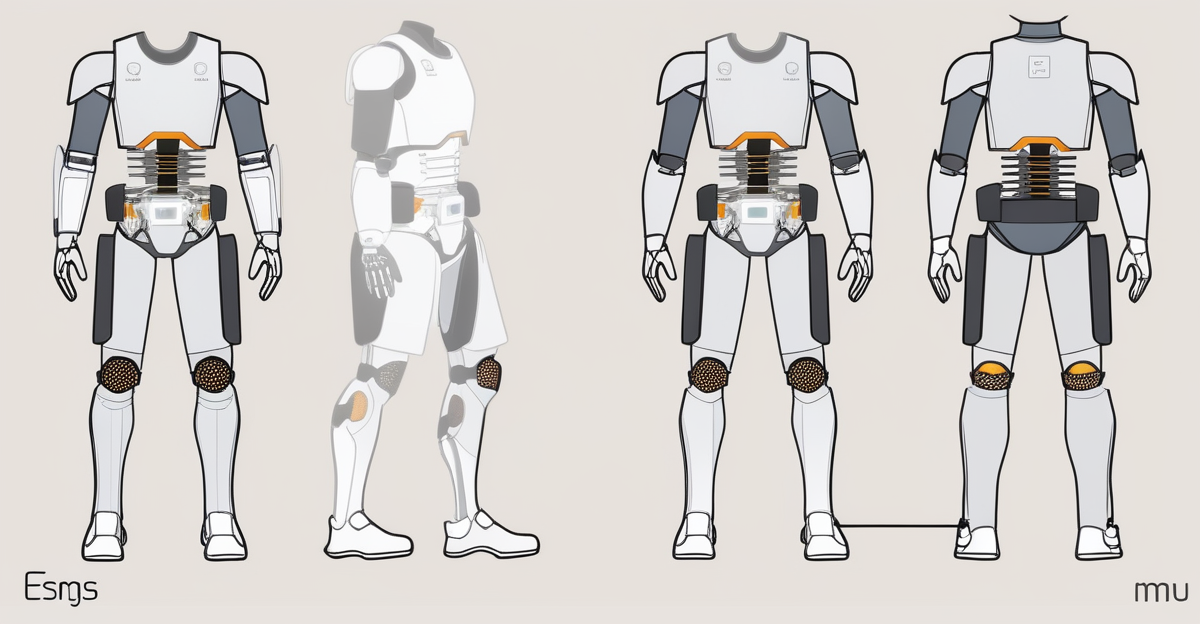
Then a two-layer controller takes over. One layer estimates which phase of your stride you’re in. The next layer computes how much torque to send. A control loop then drives small motors at your hip and knee (ScienceDirect).
The 2026 consumer suits add a twist. Onboard AI reads the terrain and your pace, then adjusts the assistance on the fly (Futura-Sciences). The hardware got light, too. Several of this year’s models weigh under two kilograms without the battery. They run up to ten hours on a charge (Futura-Sciences).
Why consumer exoskeletons for everyday life feel different in 2026
Powered suits aren’t new. What’s new is the sticker.
Ascentiz’s H1 Pro lists at $1,049, or $699 through Kickstarter. Hypershell’s X Ultra runs $1,999, and Dnsys prices its X1 Carbon Pro at $1,899 (Futura-Sciences). Hypershell’s X series starts as low as $799 (ETC Journal). A few years ago, a powered exoskeleton meant a five-figure medical device. Now it competes with a phone.
The buyers reflect that. Dnsys says half its customers are over fifty (Futura-Sciences). Hypershell claims it has sold 20,000 units, though that’s a company figure nobody has independently checked (techxplore.com). Almost every manufacturer on the CES floor was Chinese (Futura-Sciences). They see the United States as their big 2026 growth market, tariff risk and all.
We’re not taking their word for it anymore, either. A Popular Science reviewer wore a Hypershell rig down the Grand Canyon’s Bright Angel Trail. On a sustained climb, his heart rate fell from 158 to 118 beats per minute with full assistance (Popular Science). On flat ground it dropped from 128 to 96. The suit couldn’t help his balance, and the hip belt slipped over a long day. But the effort it erased was real.
The people building these things think this is the tipping point. “It’ll hit a critical mass at some point, and maybe become as commonplace as smartwatches or glasses,” says Hypershell’s Toby Knisely (techxplore.com). That’s the same story the industry keeps telling about the next big wearable, the one we’ve been hearing about smart glasses for years.
Who buys one, and who gets priced out
Here’s where the optimism needs a footnote.
Consumer suits sit between roughly $700 and $5,000 (Futura-Sciences; ETC Journal). The powered exoskeletons built for hospitals and factories still cost $77,000 to over $100,000, with ReWalk’s device cited at $77,000 (NSIN). Older accounting tells the same story. Ekso’s rehab suit ran about $110,000 in 2015 (Scientific American), and one 2020 transaction put a ReWalk personal unit at $125,500 (New Mobility).
For medical users, insurance barely reaches. Only two exoskeletons carry FDA clearance for home use, and only for people with paraplegia (Medical Device Network). Medicare added the ReWalk device to its brace benefit on January 1, 2024, at a fee schedule near $91,000 on average (Lifeward). Even then, Medicare pays about 80 percent, and the user covers the rest (New Mobility).
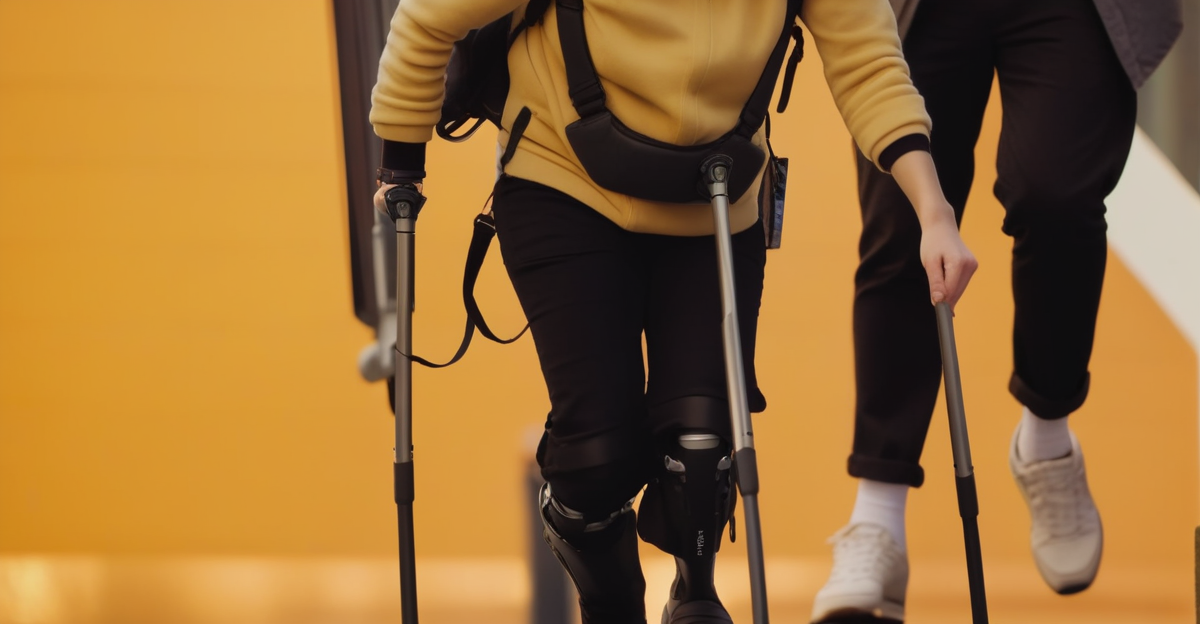
Consumer exoskeletons skip that system completely. No billing code, no coverage, no diagnosis required. You buy one the way you buy earbuds, on Kickstarter, or during a Prime Day sale (Exoskeleton Report).
That sounds democratic until you check who needs the help. More than one in ten American adults have some mobility difficulty (UC Berkeley). And poverty tracks it closely. About 9 percent of adults without mobility problems live below the poverty line. For those with lower-limb impairment, it’s nearly 25 percent. Roughly half of assistive-device users pay the whole bill themselves. The people who’d gain the most are the ones least able to spend $1,500 on a gadget.
The scholars have noticed. A 2026 systematic review of construction-industry exoskeletons flags inequity and restricted access as core ethical risks, not afterthoughts (ITcon).
Does outsourcing effort change your own body?
Every time a machine takes over a physical job, the same worry shows up. Will it make me soft?
The honest answer: probably not, at the levels these suits assist. Dr. Karl Zelik, who co-directs a rehabilitation-engineering center at Vanderbilt, puts it plainly. “Muscle weakness or atrophy seems unlikely,” he says, because the unloading is modest and the muscle loss people fear tends to need something drastic, like limb immobilization or bed rest (Forbes). He goes further. If a suit relieves muscles that are already overworked, it might prevent atrophy rather than cause it.
Clinical data leans the same way. A trial of 93 stroke patients found no significant adverse effects over four weeks of exoskeleton gait training (PMC). The exoskeleton group actually gained more lower-body strength than the group in standard therapy. One caveat matters: that was supervised medical use, not a weekend hiker strapping in solo.
Even the CES press admits the fitness question isn’t settled. Some worry the suits cancel the exercise value of a walk, and neither the makers nor independent researchers have a firm answer yet (Futura-Sciences).
The deeper unease isn’t about muscle. It’s about identity. Back in 2015, futurist Zoltan Istvan framed exoskeletons as a way to “repair” people who use wheelchairs. Disability advocate Emily Ladau fired back that the framing “directly echoes years of discrimination and eugenic practices” (IBTimes UK). That fight is about to reach able-bodied buyers, dressed up as a lifestyle choice.
Designers know it. “People don’t want to look like robots,” says Dnsys co-founder Xiangyu Li (techxplore.com). So the newest products hide the machine. Arc’teryx and Skip built their motor straight into a pair of hiking pants (Designboom).
This is familiar ground for anyone who’s read our take on cognitive offloading to AI. The question isn’t only what the tool does for you. It’s what leaning on it does to how you see yourself.
We’ve argued about this before, with brain chips
Mindox readers will recognize the shape of this. We spent a whole piece asking whether brain chips would deepen the human class divide, and consumer exoskeletons are the physical-augmentation version of the same worry.
The pattern goes like this. A device that boosts a human ability launches at a price only some people can pay. Early access compounds. And the gap between the augmented and everyone else widens before any policy catches up.
Exoskeletons come with a warning the brain-chip debate didn’t have: a finished case study. Medical exoskeletons have been on sale for over a decade, and access never opened up. Fewer than 1,000 had sold in the entire United States as of 2015, even though millions of people could have used one (Scientific American). The price stayed high. Insurance stayed narrow. A mobility tool became expensive infrastructure for the few instead of a common good.
If consumer exoskeletons scale the same way, with a cool gadget up top and a locked-out population below, we’ll have run the experiment twice and learned nothing. Our framework for cognitive-enhancement ethics applies almost word for word to a motor on your hip.
What would actually make consumer exoskeletons for everyday life fair
Hoping prices fall won’t fix any of this. A few concrete levers exist, and some are already moving.
Right to repair. Assistive tech breaks, and broken assistive tech strands people. A 2022 PIRG survey found 62 percent of power-wheelchair users waited four weeks or more for repairs (PIRG). One user paid $500 to replace a $20 part. In 2026, Representative Maxwell Frost introduced a federal Wheelchair Right to Repair Act (Frost). It would stop manufacturers from using warranty terms to block independent fixes. Extend that logic to every powered wearable and you cut the real cost of owning one.
Shared hardware. Engineers have argued for years that reusing parts across medical, military, and consumer suits could pull the price down through scale (UC Berkeley). The industry hasn’t done it. But the math still holds.
Insurance that isn’t diagnosis-locked. Medicare’s 2024 brace benefit proved a robotic wearable can be covered (Lifeward). Right now it reaches exactly one diagnosis and two products. Widening it is a policy choice, not a technical barrier.
Employer subsidies. The workplace case is already strong. One study tracked more than 311,000 hours of labor across five distribution centers. It recorded a 62 percent drop in strain-and-sprain injuries, with back injuries falling to zero and payback inside three to twelve months (Risk & Insurance). Overexertion injuries cost U.S. employers over $13 billion a year, so the incentive to equip workers is right there (Forbes).
Rentals and resale. You can already rent MO/GO hiking pants for $80 a day (Gadget Review). A real secondhand and rental market would let people try mobility without buying it outright.
The choice we’re actually making
The engineering argument is basically over. These suits work, they’re light, and they cost about what a fancy phone costs. What’s left is a distribution question, and we’re answering it by default: sell them like earbuds and let the market sort out who walks easier.
I don’t buy that as good enough. We watched medical exoskeletons stay rare and expensive for a decade while the people who needed them most went without. Consumer exoskeletons for everyday life could repeat that, or they could be the first augmentation we get right on access.
So here’s the question worth sitting with. When effort becomes optional for anyone who can pay, what do we owe the people who can’t? If you want the cognitive version of that same argument, our piece on wearable neurotechnology asks it from the other direction.