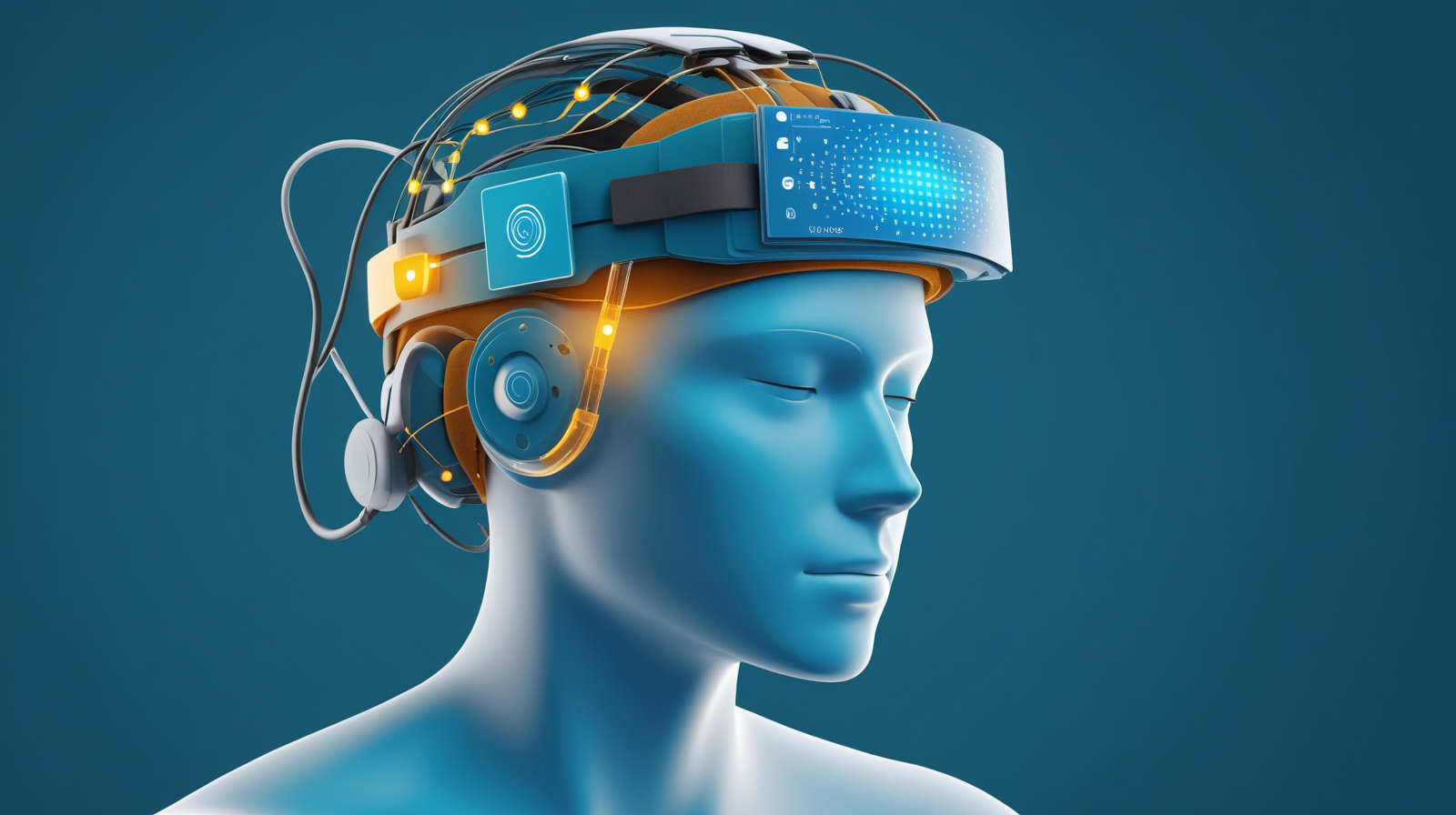

A small headset you wear behind your ears for half an hour while watching TV is now a licensed medical treatment for post-traumatic stress. That’s the plain fact. The FDA-cleared neuromodulation wearable for PTSD, Neurovalens’ Modius Spero, cleared regulatory review in July 2026 as the first device of its kind authorized for the condition (MedCity News).
Most coverage stopped at the approval headline. The trial numbers, the mechanism, the VA rollout date. All useful. But the more interesting question sits one level up.
What does it mean when a regulator starts clearing brain-stimulation gadgets you use at home, alone, without a clinic in the room?
What the FDA-cleared neuromodulation wearable for PTSD actually is
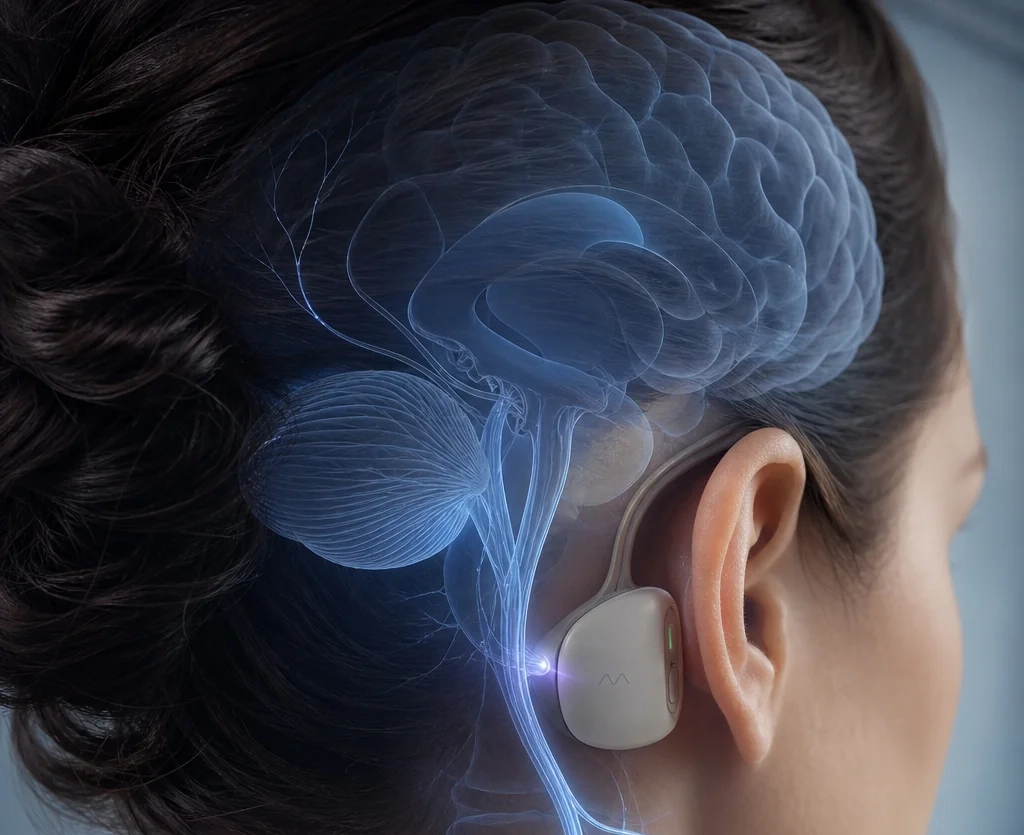
Modius Spero is a wearable that delivers non-invasive electrical stimulation through skin electrodes behind both ears. The target is the vestibular nerve, and the goal is to regulate the stress-response circuitry deep in the brain. You wear it for 30-minute sessions, once a day, usually in the evening, while going about normal activity like reading or browsing. A clinician prescribes it and oversees the course of treatment, and it’s indicated for adults 22 and older.
The clearance rested on a real trial, not a pilot. Neurovalens enrolled 383 adults with clinical PTSD diagnoses in a 12-week study, comparing the active device against an active sham. Two-thirds of the people using Modius Spero reported a clinically meaningful improvement in their symptoms. The same protocol also showed gains in insomnia, which tends to travel with PTSD.
Hold onto that two-thirds figure. It cuts both ways, and I’ll come back to it.
Why “behind the ear” is a clever place to start
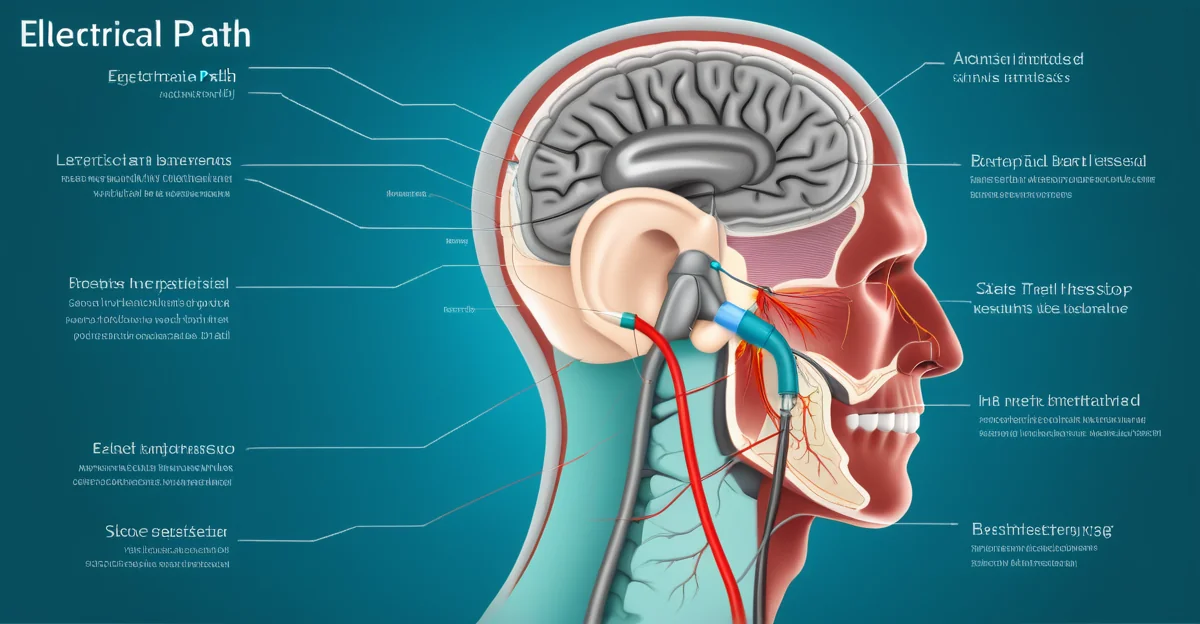
The vestibular nerve handles balance and spatial orientation, and it wires directly into brainstem regions that help govern the body’s stress and arousal state. Stimulate that pathway gently, the theory goes, and you can nudge an overactive threat-response system back toward baseline. It’s a subtler approach than jolting the surface of the cortex, and it fits a device you can wear on the couch.
This isn’t the site’s first look at gear like this. If you want the broader consumer picture, our piece on wearable neurotechnology for focus and memory maps how these headsets moved from wellness curiosity toward something people take seriously.
Why the De Novo route matters more than the approval
Here’s the part almost nobody wrote about. Modius Spero didn’t clear through the usual door.
Most devices reach the market via the 510(k) pathway, where a company shows its product is substantially equivalent to something already sold. Roughly 99% of FDA device clearances go that way. Modius Spero used De Novo instead, the pathway reserved for novel devices with no existing legally marketed predicate (PMC/NCBI).
De Novo is slower. It averages 338 days of review, against roughly 150 for a standard 510(k). But it does something a 510(k) can’t. It creates a brand-new regulatory category, with its own product code, that becomes the first predicate future devices can cite.
Read that again. The FDA didn’t just approve a product. It laid down a foundation other companies can now build on.
And this is where the pattern shows up. Seven months earlier, in December 2025, the FDA cleared Flow Neuroscience’s FL-100 headset as the first at-home brain-stimulation device for major depression, using transcranial direct current stimulation to the prefrontal cortex. Its trial showed a 58% remission rate at 10 weeks versus 29% for placebo, and real-world data from 55,000 European users found 77% reported symptom improvement within three weeks (Forbes).
Two at-home neurostimulation clearances, two different psychiatric conditions, inside a single year. That’s not a one-off. That’s a lane being paved.
What the device does not do
The excitement needs a counterweight, and the honest one comes from the company itself.
Neurovalens CEO Jason McKeown describes Modius Spero as something that “can be used alongside standard-of-care treatments such as psychological therapies or medication.” An adjunct. Not a swap for a therapist, not a replacement for a prescription. That framing matters, because the marketing gravity around a slick wearable pulls the other way.
Now back to that two-thirds figure. Flip it. Roughly a third of trial participants did not get meaningful benefit. A 383-person study is large for a pivotal device trial, yet it’s tiny next to population-level psychiatric drug research. Long-term durability, results across more diverse groups, and how the device performs on its own versus bolted to therapy, none of that is settled in the public record yet.
Access has a catch too. VA availability starts in summer 2026, but nationwide insurance coverage isn’t targeted until late 2027. So for now, if you’re uninsured and not a veteran, this “cleared” treatment may still be out of reach.
What it signals for cognitive-health wearables
Strip away the specifics and a bigger shift comes into focus. Regulators are getting comfortable with the idea that you can carry a piece of brain-modulating hardware home and run it yourself.
That comfort unlocks real good. Mental health care has stayed, as Flow’s chief scientific officer Daniel Mansson put it, “tethered to 20th-century delivery models” even as the rest of life went digital. At-home neurostimulation could reach people who can’t get to a clinic weekly, or who’ve exhausted other options.
It also opens a set of questions this site has been circling for a while.
- Data. A device that stimulates your brain every evening is also a device that logs when, how long, and how you responded. Who holds that record? Our look at neuroprivacy and what governments can really subpoena gets uncomfortably relevant here.
- Oversight at scale. Clinician supervision is easy to promise in a 383-person trial. It’s harder to guarantee when hundreds of thousands of units ship. The ethics of writing signals into the brain don’t get simpler as the hardware gets cheaper.
- Access gaps. If the effective devices land first with insured patients and veterans while everyone else waits years, you get a familiar split. We’ve argued before that brain tech risks deepening the human class divide, and reimbursement timelines are exactly where that starts.
There’s also the wellness-versus-medicine line, which just got blurrier. Modius Spero is a prescribed, clinician-overseen medical device. But once a regulatory category exists, the pressure builds to sell lighter, unregulated cousins that stimulate your brain “for stress” with no doctor involved. The clearance that legitimizes the serious version also warms up the market for the flimsy one.
So watch the follow-ons, not just this device. The next company won’t need De Novo. It’ll point at Modius Spero and file a 510(k), and the one after that will do the same. That’s how a single approval quietly becomes an entire product category. The device treating PTSD tonight is the least interesting thing about the day it cleared.
If you’ve been tracking where brain hardware is actually heading, this is the moment the regulatory floor shifted. Keep an eye on who builds on top of it.