
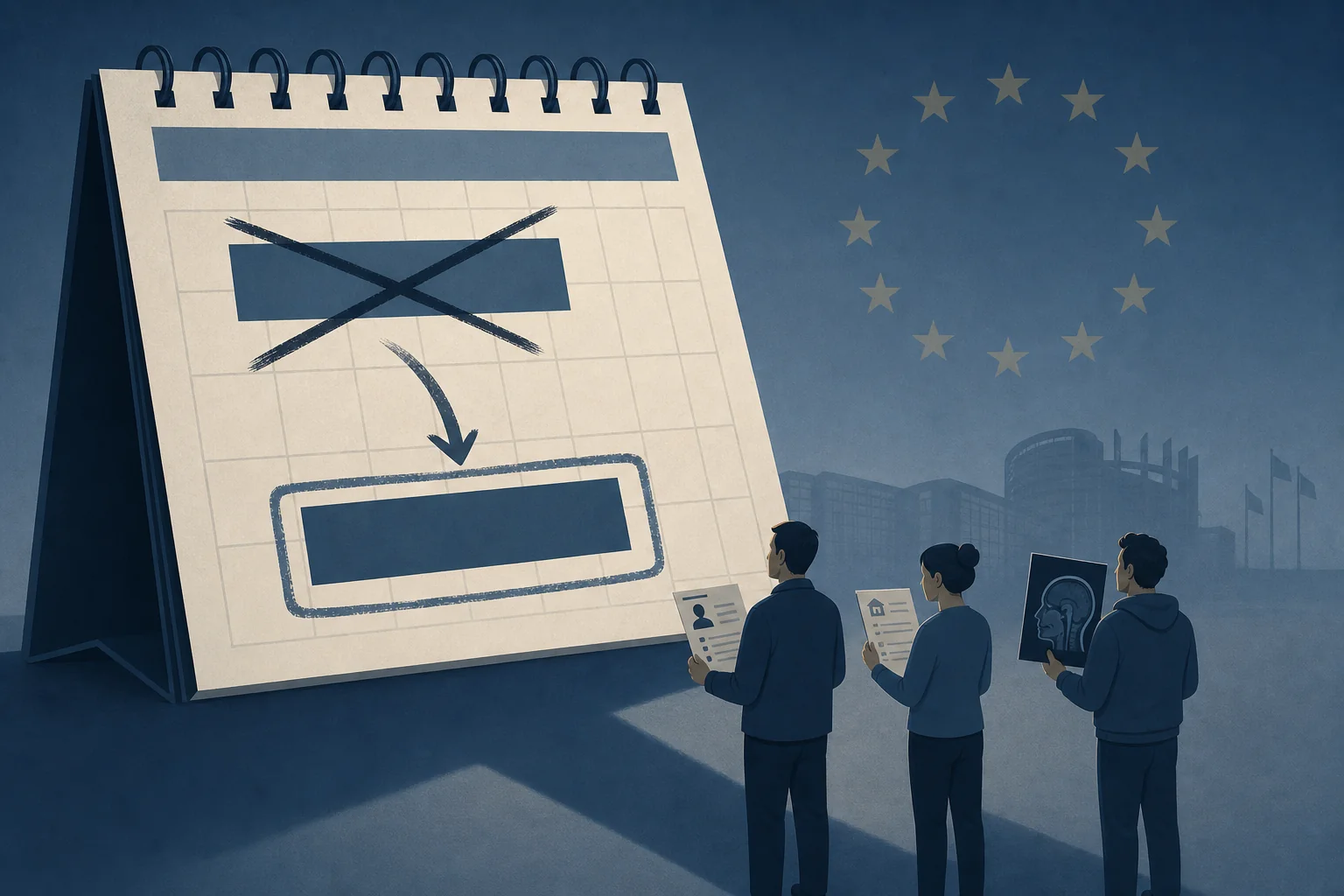
Picture the last time an algorithm quietly decided something about your life. A résumé filter that never forwarded you. A credit model that set your rate. A scan a hospital’s software flagged, or missed. You never met the system. You just lived with the result. The EU AI Act high-risk compliance deadline was meant to be the moment Europe started policing those exact systems. And then the date moved.
Here’s the part almost nobody outside a compliance department knows. As of today, 5 July 2026, it isn’t even settled which deadline is law.
So this post skips the checklist. I want to answer the question the law firms keep dodging: on the day you’re reading this, does any of it actually protect you?
The EU AI Act High-Risk Compliance Deadline Keeps Moving
The original plan was simple. Europe’s rules for “high-risk” AI systems that stand on their own (hiring tools, credit scoring, biometric ID, benefits decisions) kicked in on 2 August 2026. Then Brussels changed its mind.
A package called the Digital Omnibus pushed those obligations back to 2 December 2027, a 16-month delay (Gibson Dunn). It also delayed high-risk AI built into regulated products. Medical devices, machinery, and cars now move from 2027 to 2 August 2028.
Lawmakers provisionally agreed the deal on 7 May 2026 (Consilium). The same package added one new ban outright. “Nudify” apps and AI-generated child sexual abuse material now carry the Act’s top fine.
The European Parliament adopted it on 16 June 2026, by 423 votes to 57, with 174 abstentions (howtheyvote.eu). The Council signed off on 29 June. But a vote isn’t a law. The change only bites once Brussels publishes it in the EU’s Official Journal, expected sometime in July 2026, taking effect three days later (Consilium).
Read that again. If you searched this exact phrase hoping for a yes or no, the honest answer is annoying. Politically, the deadline is delayed. Legally, not quite yet.
One thing did not move. The transparency rules (the ones that force a company to tell you when you’re talking to a chatbot or looking at AI-generated content) still apply from 2 August 2026 (ComplianceHub.Wiki). So you’ll gain the right to know an AI is involved months before you gain any right to challenge what it decided. Odd priorities.
What “High-Risk” Means When It’s Your Loan, Not a Legal Category
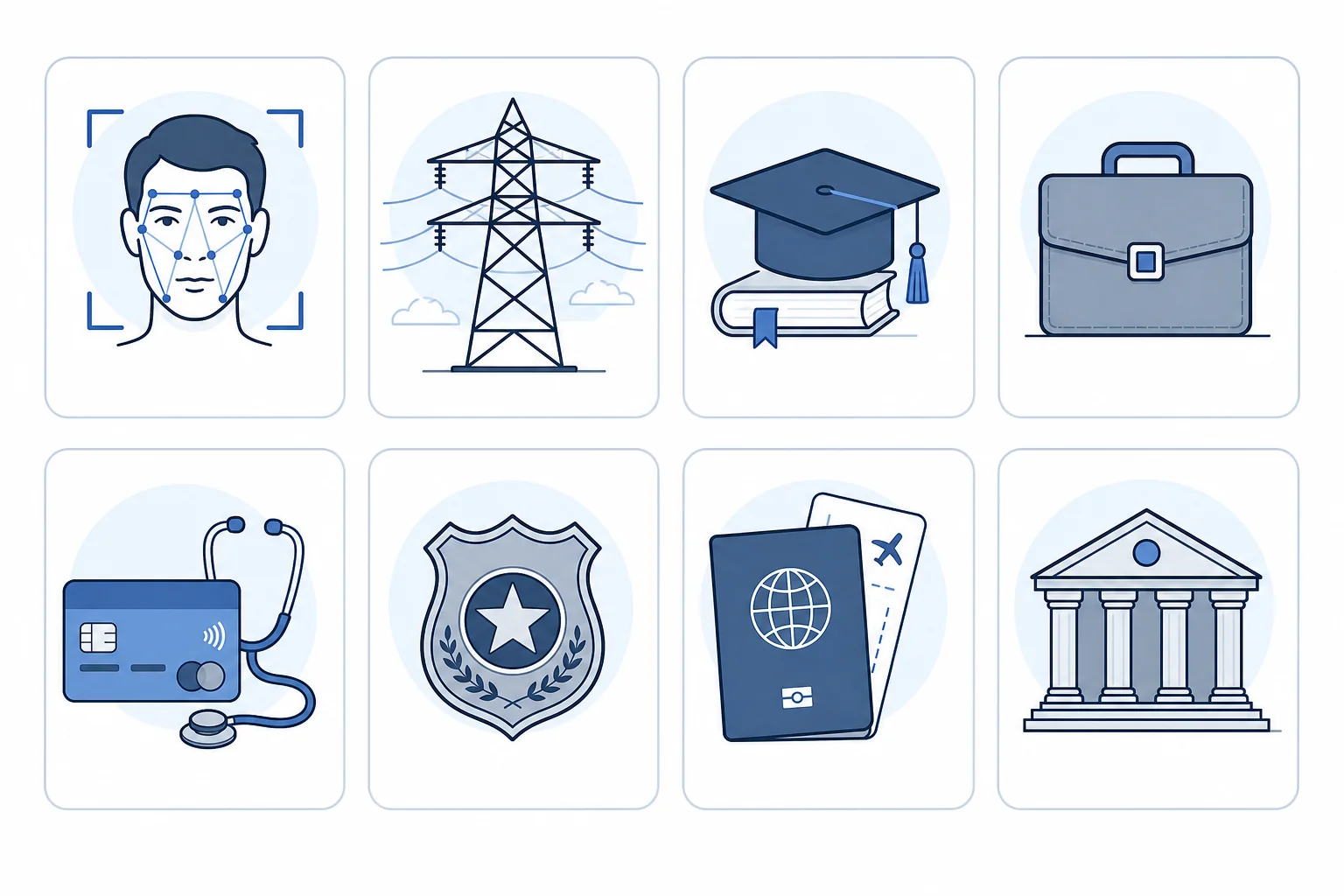
Strip away the jargon and “high-risk” is just a list of the moments AI touches a life in ways that are hard to undo. The Act’s Annex III names eight of them (Annex III text):
- biometric ID and categorisation,
- critical infrastructure,
- education and exams,
- hiring and firing,
- essential services like credit and healthcare access,
- policing,
- migration and border control,
- and the courts.
Look at how close those already are.
Roughly 87 to 90% of US employers now use AI somewhere in hiring, most often to screen résumés before a human sees them (Demandsage). Stanford researchers have shown those tools can produce racial bias and blanket rejections. The model learns yesterday’s hiring patterns, then repeats them.
Credit is no cleaner. One 2025 review of lending algorithms found women scored six to eight points lower than otherwise-identical men (Real World Data Science). And this isn’t theoretical. In July 2025 the Massachusetts Attorney General reached a $2.5 million settlement with a student-loan lender whose AI model allegedly denied more Black, Hispanic, and non-citizen applicants, including an automatic rejection for anyone without a green card (Mass.gov). That happened months before any EU deadline, delayed or not.
Then there’s medicine. Nearly 1,500 AI-enabled medical devices are already cleared for US clinical use. Yet one analysis of 903 of them found just 2.4% had randomized-trial evidence behind them (IntuitionLabs). These are the systems the Act files under high-risk healthcare, and many won’t face the rules until 2028. If you want the fuller picture, we’ve asked whether you can trust an AI to diagnose you better than a doctor.
Biometrics sit at the sharp end. The EU banned live facial recognition in public spaces back in February 2025, with a few narrow exceptions for police (State of Surveillance). After-the-fact biometric matching, though, is merely “high-risk,” not off-limits, which is why the question of what governments can actually pull from your data keeps getting more urgent.
What Companies Actually Have to Do, in Plain Words
When the rules do land, the burden splits. Providers build the system. Deployers are the bank, hospital, or employer that points it at you.
Deployers carry real duties under Article 26 (Article 26). In plain terms, they must:
- run the system the way its maker intended,
- put trained people in charge of watching it,
- pause it and flag problems when something looks wrong,
- feed it data that represents the people it judges,
- and keep logs for at least six months.
Public bodies and some large private deployers must also complete a Fundamental Rights Impact Assessment before switching a high-risk system on, writing down who it affects and how they’ll catch harm (Article 27).
Ignore all that and the fines climb fast. The worst breaches cost up to €35 million or 7% of global turnover. High-risk failures run to €15 million or 3%. Lying to regulators, €7.5 million or 1% (Article 99). Smaller firms pay the lower figure.
And no, distance doesn’t save a company. The Act reaches any firm, anywhere, whose AI output lands on someone in the EU. A US company screening an EU applicant is covered even with zero staff or servers in Europe (Modulos). That reach is wider than the privacy rules Europe already runs, because an AI’s output merely touching an EU resident is enough to pull the maker in. Governments have wrestled with powerful AI before, and our look at how governments plan for superintelligence shows how differently they treat tomorrow’s AGI versus today’s hiring bot.
Regulated Isn’t the Same as Being Protected
One detail reframes the whole delay.
The Act doesn’t work backwards. A hiring or credit tool already on the market before December 2027 may never have to meet the high-risk rules at all, unless its maker “substantially modifies” it later. Laura Caroli, who helped negotiate the Act, warns that plenty of today’s systems could dodge oversight permanently (Tech Policy Press). Another MEP put it more bluntly: the extra runway rewards companies for rushing risky systems onto the market now, before the clock starts.
Sit with what that means for you. The 16 extra months aren’t only a longer wait. Some of the software weighing your loan or your job application this year might be grandfathered out of the rules for good.
There’s a second escape hatch too. Researchers in that same investigation warn that folding AI oversight into old product-safety rules for medical devices, toys, and cars could let something like a talking chatbot inside a doll cause harm with no clear line of accountability under the Act. The rulebook exists. Whether it points at the thing that hurt you is another matter.
That gap (between a system being “regulated” on paper and you being protected in practice) is exactly where the cost tends to land on the people with the least room to absorb it. It’s the same worry we raised about brain chips deepening the human class divide. When a safeguard slips, it rarely slips evenly.

Why the Delay Itself Is the Real Signal
You can read the postponement two ways, and both are honest.
The Commission’s version is practical. Vice-President Henna Virkkunen argued the deal lets Europe “innovate and feel safe” at once, buying time so real standards and testing tools exist before enforcement starts, rather than paper rules nobody can verify (ieu-monitoring). There’s substance to that. The technical standards high-risk providers need weren’t ready.
The other reading is harder to shake. According to that same Tech Policy Press investigation, industry took 69% of the Commission’s 2025 meetings on the Omnibus, against just 16% for NGOs; one consultation on high-risk exemptions had eleven or twelve industry voices and a single civil-society one. More than 60 rights groups, including EDRi, begged lawmakers to drop the delay, calling it a rollback for “negligible benefits” to companies (EDRi). Advocates at Liberties.eu called the vote a step backwards that “weakens fundamental rights protections” and “empowers Big Tech companies” (Liberties.eu).
Parliament passed it anyway, by a wide margin. Whatever else that tells you, “simplification” beat “protection” when the two collided.
So who does the high-risk compliance deadline actually serve?
If you were waiting for 2 August 2026 to make the algorithms fairer, the plain truth is this: probably not on that day, and maybe not for years. The label you’ll gain first is transparency. You’ll know an AI touched your case. The teeth come later, if they reach your case at all.
I don’t think that makes the Act worthless. Rules with real fines and global reach still bend corporate behaviour over time. But a deadline written for compliance officers was never going to feel like protection to the person being scored. Whether an algorithm should get to make these calls in the first place is a bigger question, the same one we circle when we ask whether AI would ever deserve rights of its own. For now the useful move is small and concrete. When a system decides something about you, ask who built it, ask for a human to look again, and don’t assume a date on a Brussels calendar is standing between you and the machine.