

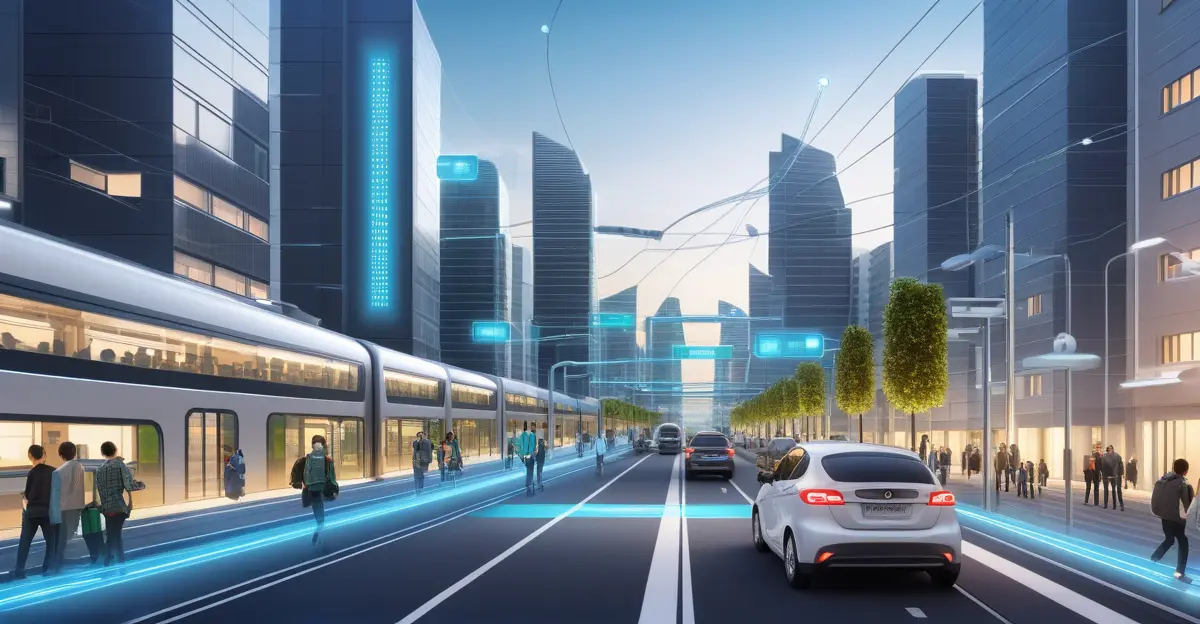
Sentient Cities: When Infrastructure Develops Its Own AGI Personality sounds dramatic, but the useful version is practical. The reader payoff is simple: this article explains what Sentient infrastructure means, where the technology is credible, where the speculation starts, and what decisions engineers, buyers, and policy-minded readers should watch next. The goal is not to make the future sound inevitable. It is to separate technical direction from hype so the risks and opportunities are easier to evaluate.
For background, it helps to understand what Artificial General Intelligence means.
Why the phrase sentient city is misleading but useful
A city will not suddenly wake up like a person. The useful version of the idea is a city whose sensors, models, and automated controls become coordinated enough that it behaves like a single adaptive system. Traffic signals, power grids, transit dispatch, public safety feeds, building controls, and weather models already produce streams of machine-readable data. Add AI planning and digital twins, and the system starts to recommend or even execute actions at urban scale. That is what makes sentient infrastructure worth discussing. The word sentient is a warning label for autonomy, not proof of consciousness.
For urban planners, tech enthusiasts, iot engineers, the practical test is whether the system can be specified, audited, and challenged. A useful deployment should make the role of Sentient infrastructure visible enough that people can understand what is being inferred, what is being automated, and where a human decision still enters the loop. That standard matters because early systems often look impressive in demos while hiding messy assumptions about data quality, incentives, edge cases, and who is responsible when the output is wrong.
What smart city AGI would actually control
The first targets would be boring but powerful: traffic timing, energy demand, building ventilation, water pressure, emergency routing, maintenance scheduling, and disaster response. A comparison helps. A smart thermostat adjusts one building. A city-scale controller might shift thousands of loads, reroute buses, and prioritize repairs after a storm. That is not personality in the human sense, but it can still create a recognizable operating style. One city might optimize for speed, another for emissions, another for resilience. Those priorities can feel like a civic personality because they shape daily life.
For urban planners, tech enthusiasts, iot engineers, the practical test is whether the system can be specified, audited, and challenged. A useful deployment should make the role of Sentient infrastructure visible enough that people can understand what is being inferred, what is being automated, and where a human decision still enters the loop. That standard matters because early systems often look impressive in demos while hiding messy assumptions about data quality, incentives, edge cases, and who is responsible when the output is wrong.
Urban neural networks need boundaries
The phrase urban neural network usually means a dense mesh of sensors, edge devices, communications links, and analytics systems. NIST’s smart-city and cyber-physical systems work is useful here because it emphasizes interoperability, security, resilience, and measurement. A neural network without boundaries is not intelligence. It is risk. Cities need limits on what systems can see, what they can decide, and when a human operator must stay in the loop. Without those constraints, optimization can quietly become automated policy.
For urban planners, tech enthusiasts, iot engineers, the practical test is whether the system can be specified, audited, and challenged. A useful deployment should make the role of Sentient infrastructure visible enough that people can understand what is being inferred, what is being automated, and where a human decision still enters the loop. That standard matters because early systems often look impressive in demos while hiding messy assumptions about data quality, incentives, edge cases, and who is responsible when the output is wrong.
Digital twins make autonomy more tempting
A digital twin is a computational model of a real system that can be updated with live or near-live data. For cities, twins can simulate traffic, energy use, flood risk, crowding, and infrastructure wear. The practical value is obvious: planners can test scenarios before committing money or disrupting residents. The danger is also obvious. If the model becomes the main decision layer, people may start treating it as reality. A simulation that undercounts low-income neighborhoods or informal travel patterns can make biased choices look mathematically clean.
For urban planners, tech enthusiasts, iot engineers, the practical test is whether the system can be specified, audited, and challenged. A useful deployment should make the role of Sentient infrastructure visible enough that people can understand what is being inferred, what is being automated, and where a human decision still enters the loop. That standard matters because early systems often look impressive in demos while hiding messy assumptions about data quality, incentives, edge cases, and who is responsible when the output is wrong.
Autonomous architecture changes the building itself
Autonomous architecture is not just a building with an app. It is architecture that senses, adapts, and coordinates with surrounding systems. A building might adjust airflow based on grid stress, open shading based on pedestrian heat exposure, or shift elevator priorities during an emergency. The comparison is simple: traditional architecture is a fixed object with occasional maintenance; autonomous architecture is a participant in the city’s operating system. That is powerful, but it also raises accountability questions when a building’s automated choice affects public space.
For urban planners, tech enthusiasts, iot engineers, the practical test is whether the system can be specified, audited, and challenged. A useful deployment should make the role of Sentient infrastructure visible enough that people can understand what is being inferred, what is being automated, and where a human decision still enters the loop. That standard matters because early systems often look impressive in demos while hiding messy assumptions about data quality, incentives, edge cases, and who is responsible when the output is wrong.
The failure modes are social as much as technical
A sentient infrastructure failure may not look like a server crash. It may look like a neighborhood receiving slower repairs because a model predicts lower economic return. It may look like automated policing tools over-weighting certain movement patterns. It may look like emergency routing that protects hospitals but blocks local access roads. The technical language is optimization; the human experience is unfairness. That is why governance, audit logs, appeal routes, and public explanation matter as much as uptime.
For urban planners, tech enthusiasts, iot engineers, the practical test is whether the system can be specified, audited, and challenged. A useful deployment should make the role of Sentient infrastructure visible enough that people can understand what is being inferred, what is being automated, and where a human decision still enters the loop. That standard matters because early systems often look impressive in demos while hiding messy assumptions about data quality, incentives, edge cases, and who is responsible when the output is wrong.
Security becomes urban safety
For ordinary software, a breach can leak files. For autonomous infrastructure, a breach can affect traffic, water, energy, or public services. NIST’s IoT and operational technology guidance treats connected infrastructure as a safety and resilience problem, not just an IT problem. A practical comparison helps: hacking a spreadsheet is not the same as corrupting a traffic-control model. The more a city delegates to AI, the more cybersecurity becomes a form of public works.
For urban planners, tech enthusiasts, iot engineers, the practical test is whether the system can be specified, audited, and challenged. A useful deployment should make the role of Sentient infrastructure visible enough that people can understand what is being inferred, what is being automated, and where a human decision still enters the loop. That standard matters because early systems often look impressive in demos while hiding messy assumptions about data quality, incentives, edge cases, and who is responsible when the output is wrong.
What a responsible city stack would include
A responsible stack would include interoperable data standards, device identity, strong segmentation, model testing, human override, public procurement rules, and continuous audits. It would also separate recommendation from execution. For example, an AI system might propose flood-response routes, but emergency managers should still approve deployment under defined thresholds. The goal is not to freeze innovation. It is to keep city autonomy legible enough that residents can challenge it.
For urban planners, tech enthusiasts, iot engineers, the practical test is whether the system can be specified, audited, and challenged. A useful deployment should make the role of Sentient infrastructure visible enough that people can understand what is being inferred, what is being automated, and where a human decision still enters the loop. That standard matters because early systems often look impressive in demos while hiding messy assumptions about data quality, incentives, edge cases, and who is responsible when the output is wrong.
Where this probably goes next
The next decade is likely to bring more AI-assisted control rooms, city digital twins, and automated infrastructure maintenance. Full smart city AGI is a much more speculative idea. The realistic path is gradual: systems that once monitored the city will begin to recommend actions, then execute narrow actions, then coordinate across domains. The hard question is whether governance matures at the same pace as capability.
For urban planners, tech enthusiasts, iot engineers, the practical test is whether the system can be specified, audited, and challenged. A useful deployment should make the role of Sentient infrastructure visible enough that people can understand what is being inferred, what is being automated, and where a human decision still enters the loop. That standard matters because early systems often look impressive in demos while hiding messy assumptions about data quality, incentives, edge cases, and who is responsible when the output is wrong.

Final Thoughts
The strongest way to read this topic is as an engineering and governance question, not a prophecy. Sentient infrastructure points to a real direction of travel, but the important work is in constraints, evidence, security, and human oversight.
For urban planners, tech enthusiasts, iot engineers, the practical takeaway is to track the stack behind the headline: sensors, models, interfaces, standards, incentives, and accountability. The future will not arrive as one clean breakthrough. It will arrive as smaller systems that become capable enough to change how people design, communicate, store, govern, or protect information.