


A lot of futuristic energy talk focuses on giant breakthroughs: fusion, next-generation batteries, or grid-scale storage. Ambient energy tech points in a different direction. Instead of building one dramatic new power source, it tries to capture the small flows of energy that already surround us: light in a room, vibration in a machine, heat across a surface, or radio waves in the air. That sounds minor until you think about how many low-power devices now shape daily life. The payoff here is practical. This article explains where ambient energy harvesting is genuinely useful, why it will not replace the grid, and how a battery-free future could still transform infrastructure, sensors, and maintenance economics.
What ambient energy harvesting really is
At its core, energy harvesting means converting small environmental energy flows into usable electrical power.
The source might be indoor light, waste heat, motion, pressure, humidity, or ambient radio frequency signals. The amount of energy is usually modest, which is why the best targets are low-power electronics rather than energy-hungry appliances.
A comparison makes the concept easier to hold. A rooftop solar system is like adding a visible mini power plant to a building. Ambient harvesting is more like giving hundreds of tiny devices the ability to sip from their surroundings. It is subtle, distributed, and often invisible when it works well.
That is why the headline matters less than the operating model. The breakthrough is not that one sensor collects a tiny amount of power. It is that thousands of sensors may no longer need routine battery replacement.
Why the battery problem is bigger than it looks
The case for a battery-free future is not only environmental. It is operational.
Replacing or recharging batteries is manageable when you own a few gadgets. It becomes expensive and unreliable when you deploy thousands of sensors across buildings, factories, bridges, farms, clinics, or shipping infrastructure. Maintenance crews, downtime, access constraints, and disposal costs all begin to dominate the economics.
A practical example helps. Consider sensors inside a large warehouse or on industrial equipment. If each device needs periodic battery service, the power source becomes the bottleneck. If the device can harvest light, vibration, or electromagnetic energy on-site, the sensor becomes easier to scale.
That is why researchers and standards groups keep treating ambient harvesting as an infrastructure enabler, not a novelty add-on.
Where the technology already looks credible
This field is no longer limited to concept sketches.
Recent work published in Scientific Reports demonstrated battery-less long-range sensing by combining harvesting and low-power communication. Nature Electronics has examined wirelessly powered large-area electronics for IoT applications. NREL has also highlighted battery-free approaches for remote maritime sensors and navigation aids, where maintenance is difficult and reliability matters.
A concrete comparison clarifies the opportunity. Charging a phone from stray energy in a room remains unrealistic with today’s constraints. Powering a low-duty-cycle sensor that wakes, measures, transmits, and sleeps is much more realistic.
That gap explains why ambient harvesting often feels underhyped to consumers and overimportant to engineers. The biggest wins arrive first in boring systems that nobody sees, not in dramatic consumer gadgets.
The four source types that matter most
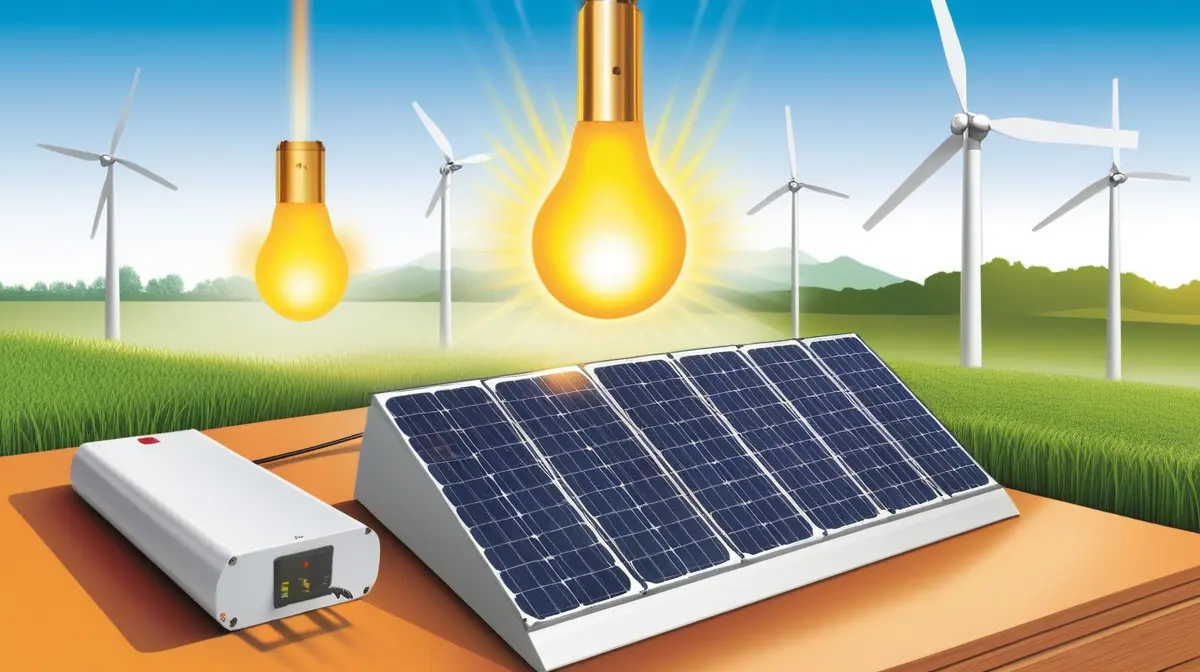
Most practical harvesting conversations come back to four families of energy sources.
Light is the most familiar. Indoor photovoltaics can support small devices in offices, homes, and commercial spaces. Heat matters where temperature gradients are stable, such as industrial surfaces or specialized environments. Motion and vibration help in wearables, transport, or machinery. Radio frequency harvesting is attractive for ultra-low-power communication and sensor scenarios, especially where dedicated or ambient RF fields are available.
A comparison helps. Think of these sources as terrain types rather than universal fuels. Light is great in bright, predictable spaces. Vibration is great near moving equipment. Heat works where gradients persist. RF works where power demand is tiny and communication design is disciplined. A successful system matches the device to the environment instead of assuming one harvesting method fits every use case.
Why ambient energy will not run your whole house
This is where hype needs to be cut down.
Wireless power and Wi-Fi charging are catchy phrases, but they can distort expectations. Ambient harvesting usually deals in small budgets. Homes and appliances consume energy at much larger scales. Refrigerators, air conditioning, cooking equipment, and entertainment systems need steady and substantial power. Ambient harvesting is not designed to replace that demand profile.
A useful comparison is rainwater collection. It can serve meaningful functions without replacing a city’s entire water system. Ambient energy behaves similarly. It can support targeted loads very well while remaining the wrong tool for bulk household supply.
That is not a weakness. It is a design truth. Once you stop asking the technology to do everything, its best use cases become clearer.
The invisible infrastructure shift is about maintenance, not spectacle
The real transformation will likely happen in the background.
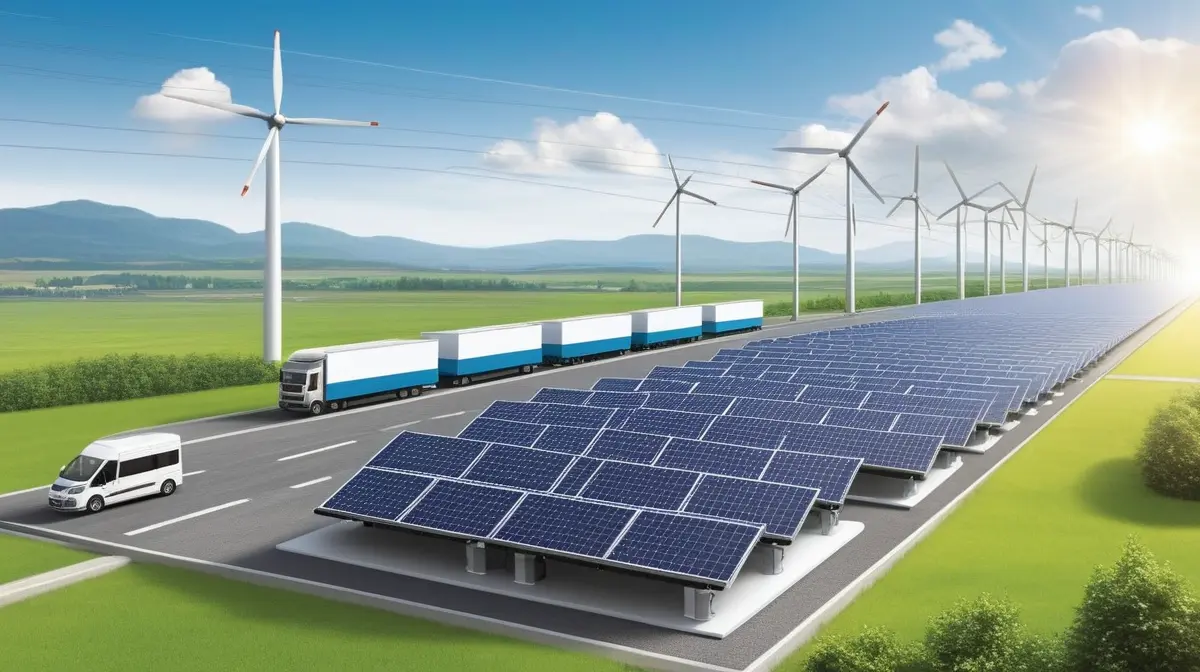
Cities, buildings, and logistics systems are filling with sensors. Roads, cold chains, health environments, ports, and utility networks all want more data. The scaling problem is not only software. It is how to keep millions of edge devices powered without turning maintenance into a permanent tax.
A concrete example helps. A bridge sensor that can harvest vibration or solar trickle power may avoid years of battery service visits. Across a large network, that changes cost models, inspection rhythms, and deployment density. Suddenly more sensing becomes economically sane.
This is why invisible infrastructure is the right phrase. The public may never notice the devices. What changes is the reliability of the systems underneath daily life.
Engineering constraints still decide everything
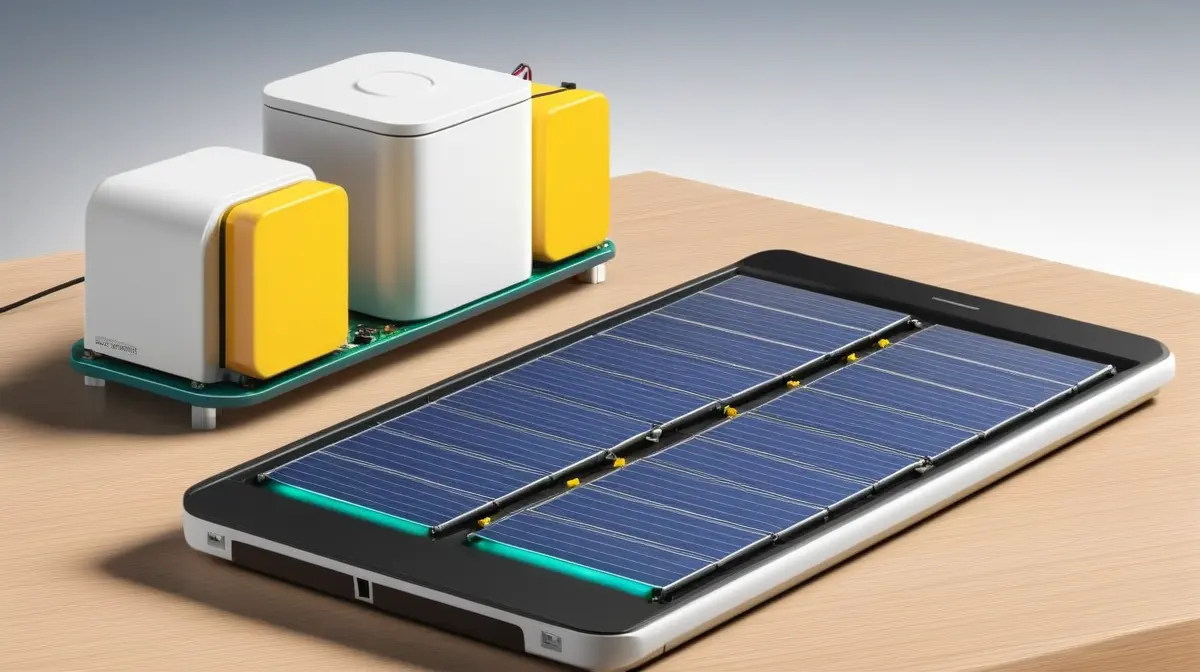
Ambient harvesting works only when the entire design stack is disciplined.
The harvester, storage element, power management, sensing duty cycle, communication protocol, and compute load all have to fit together. A single wasteful component can collapse the budget. This is why low-power design matters as much as the harvester itself.
A comparison with ultralight backpacking is useful. Saving weight is not about one miraculous item. It is about every item being chosen with the total load in mind. Battery-free devices follow the same rule. The whole system must be designed around scarcity.
That also means some deployments will remain hybrid. A small battery or capacitor plus harvesting may be more realistic than pure harvesting alone. In many cases the best answer is not no battery ever, but far less maintenance and much longer life.
What daily life might look like if this scales
If ambient harvesting matures, the average person may experience it indirectly.
Homes may have more maintenance-free sensors. Buildings may monitor airflow, leaks, occupancy, and equipment health with fewer service calls. Supply chains may track sensitive goods more continuously. Public infrastructure may become easier to inspect because sensor networks can stay alive longer without manual intervention.
A practical comparison helps. You probably do not think about how many systems quietly rely on lithium coin cells until one fails. Ambient harvesting reduces that hidden friction. The future feels less like a flashy charging trick and more like an environment where small digital systems become cheaper to deploy and easier to trust.
Why ultra-low-power design matters as much as the harvester
It is easy to talk about ambient energy tech as if the hard part were only collecting energy from the environment. In many deployments, the harder part is spending almost nothing.
A concrete example helps. If a sensor can harvest only tiny bursts of power, the device has to wake briefly, do useful work, communicate efficiently, and then disappear back into a low-energy state. That forces discipline in firmware, radio choice, sensing frequency, memory operations, and even how often the system decides to be curious about the world.
This is why the phrase battery-free future can mislead if it makes the harvester sound like the whole answer. The real breakthrough is often a stack-level design: low-power electronics, sparse communication, lightweight processing, and just enough local intelligence to avoid waste. Harvesting supplies the budget, but architecture decides whether the budget is enough.
For hardware engineers, that is the exciting part. Energy harvesting does not only create new power sources. It forces better product design. And in many cases, the devices that win will not be the ones that harvest the most. They will be the ones that need the least.
Final Thoughts
Ambient energy tech is not a magic replacement for plugs, batteries, or the electric grid. It is something more surgical and, in many ways, more useful. It lets low-power devices tap the energy that is already present and turns maintenance-heavy sensing into something closer to background infrastructure.
That is why the biggest impact of energy harvesting may not arrive as a consumer wow moment. It may arrive as thousands of quiet systems that keep working longer, need fewer battery swaps, and make buildings, logistics, healthcare, and public infrastructure more observable at lower cost. In other words, the future may feel more powered not because we see the energy, but because we stop having to think about it.