
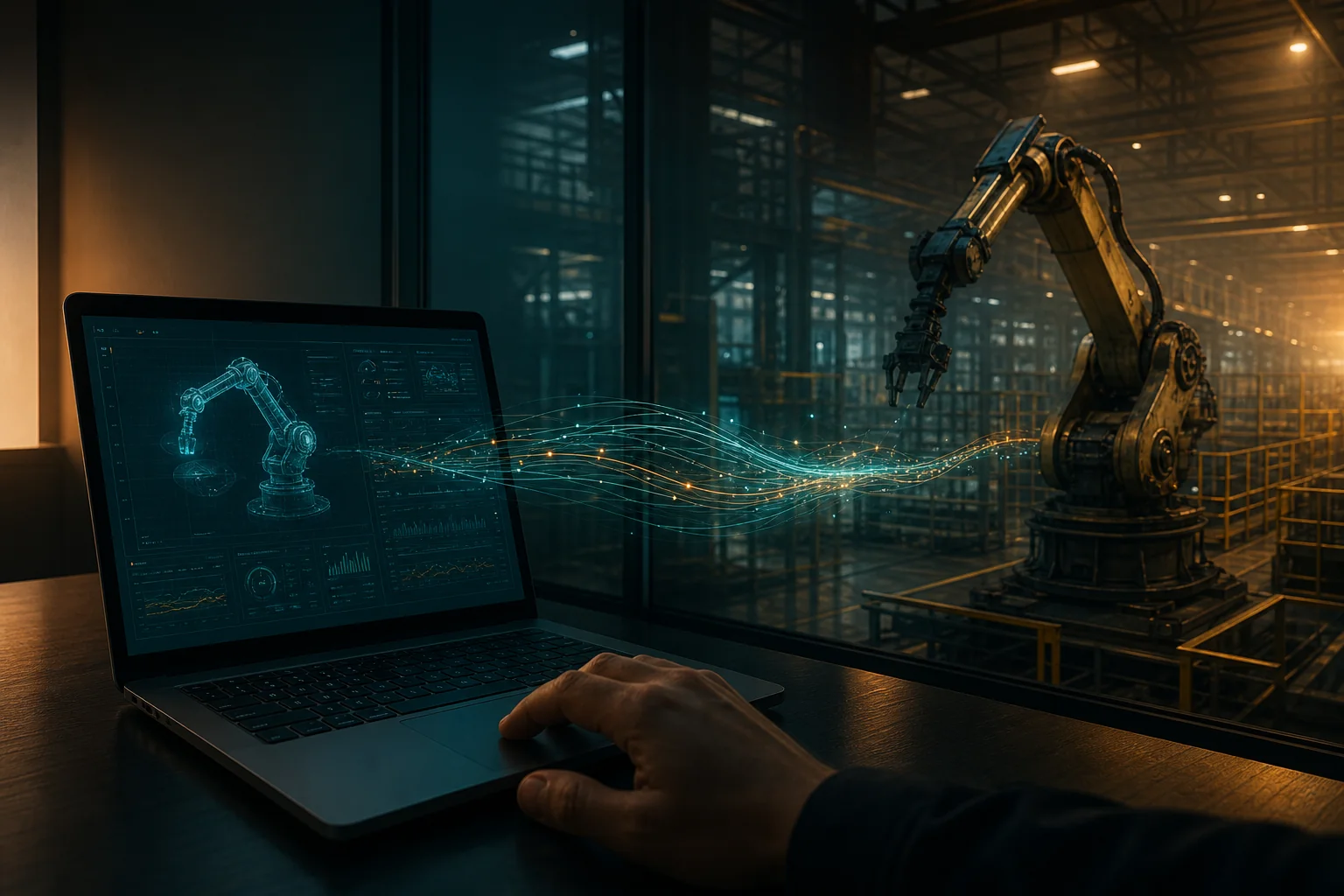
Enigma robots.online opened to the public on July 27, 2026, and the pitch is stranger than the usual robotics launch. Pick a real robot in a real hangar. Drive it yourself, from a browser tab. No simulation, no recorded demo reel.
The same day, the company walked out of stealth with a $71 million seed round. More than 100 of its own robots sit in hangars in Israel and California, and anyone online can take a turn at the controls. They paint. They sword-fight. They mix liquids in small chemistry setups.
Most coverage led with the money, which is fair enough. Seventy-one million dollars before a shipping product is a headline. The quieter part is what keeps nagging at me. Enigma has handed untrained strangers a live robot and a text box, and those strangers now demonstrate what a human instruction looks like.
So who is actually training the robotic brain here?
What Enigma robots.online actually launched
Index Ventures and Ribbit Capital co-led the seed round. Sarah Guo’s Conviction Partners joined, along with individual angels from OpenAI, Anthropic, Google DeepMind, xAI, Cognition and Wiz (TechCrunch). That cap table reads like a list of people who already understand what training data is worth.
One small mess worth flagging before it spreads: some outlets reported $70 million, others $71 million. TechCrunch’s own headline says $70M while its body text says $71 million. Treat $71 million as the real figure.
The public demo, which Enigma calls the world’s first interactive AI robotics experience, runs three tasks right now:
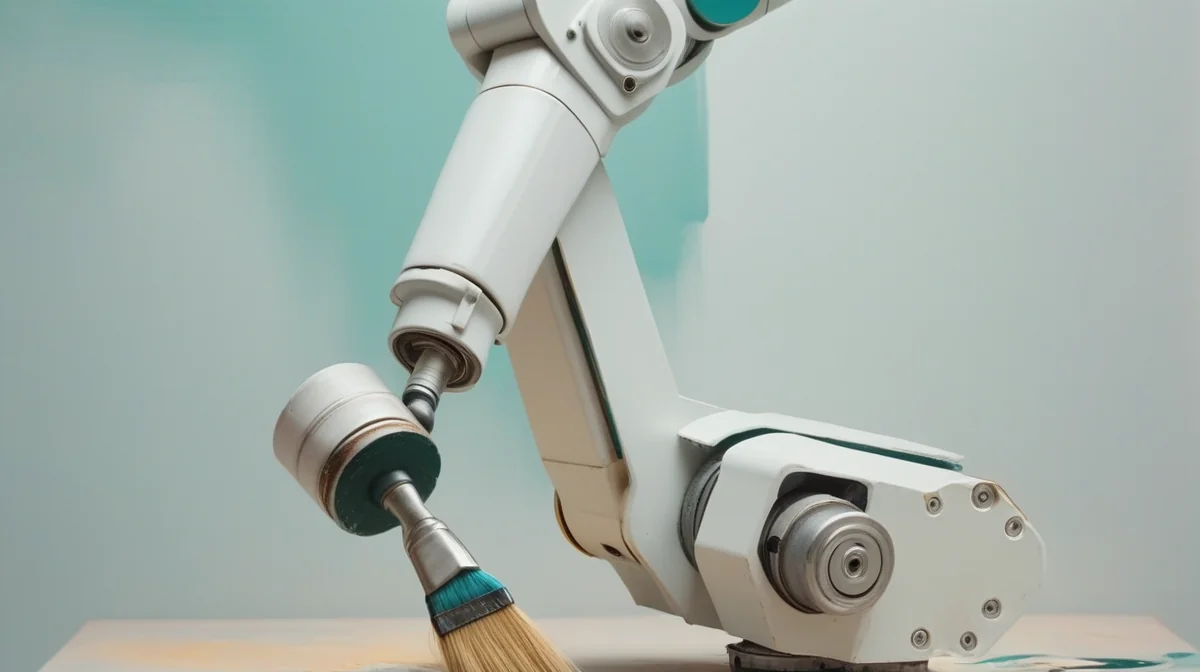
- Drawing. A robot holds a paintbrush and makes a picture.
- Sword fighting. Two robots duel each other.
- Chemistry. A robot picks up flasks and mixes liquids.
Jonathan Jacobi and Gal Niv founded the company less than a year ago. They met through Israel’s Unit 8200 military intelligence unit, after competing against each other in hacking contests as teenagers. Wiz co-founder Assaf Rappaport later recruited Jacobi into Microsoft, where he became the youngest person the company had ever hired. He also spent time at Check Point.
Neither founder comes from robotics. Hold onto that, because it explains the product.
Enigma’s bet: the bottleneck is the interface, not the model
The thesis is blunt. Robots are already capable enough. People simply can’t tell them what to do without it feeling like unpaid work.
Jacobi’s example is the dishes. “If you had to do your dishes and spent 15 minutes explaining to a robot where to put everything, everyone reaches the point of ‘Forget it, I’ll just do it myself.'”
He wants robot control to feel like turning up the volume in a car. You reach out, you nudge, the thing responds. Nobody learns a syntax. Nobody types a percentage. As he put it in the funding announcement: “No matter how capable robots get, if they aren’t intuitive to use, most people never will [use them].”
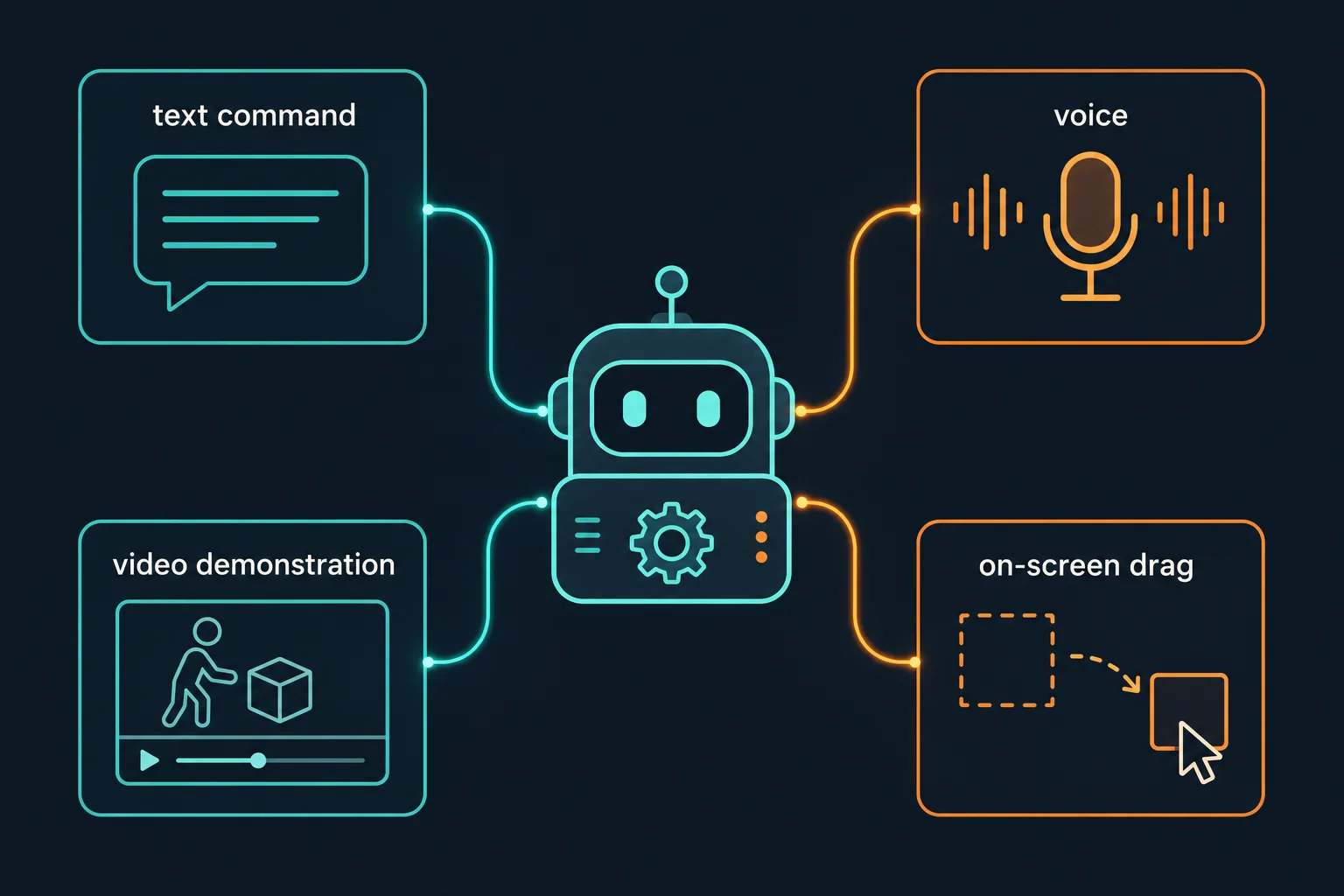
So the site is running four ways of giving a robot an instruction, side by side:
- Typing a text command
- Speaking to it
- Showing it a video of the task
- Dragging it around directly on screen
Index partner Shardul Shah framed the founders’ outsider status as the point: “Someone who’s an insider may start with the capability of teleoperation or dexterity, but Enigma is starting from a very different place: ‘What’s the ultimate experience?'” (Unite.AI)
He has a case. Anyone who has watched collaborative robots on a real factory floor knows that adoption usually turns on one thing: can an ordinary worker direct the machine without a training course?
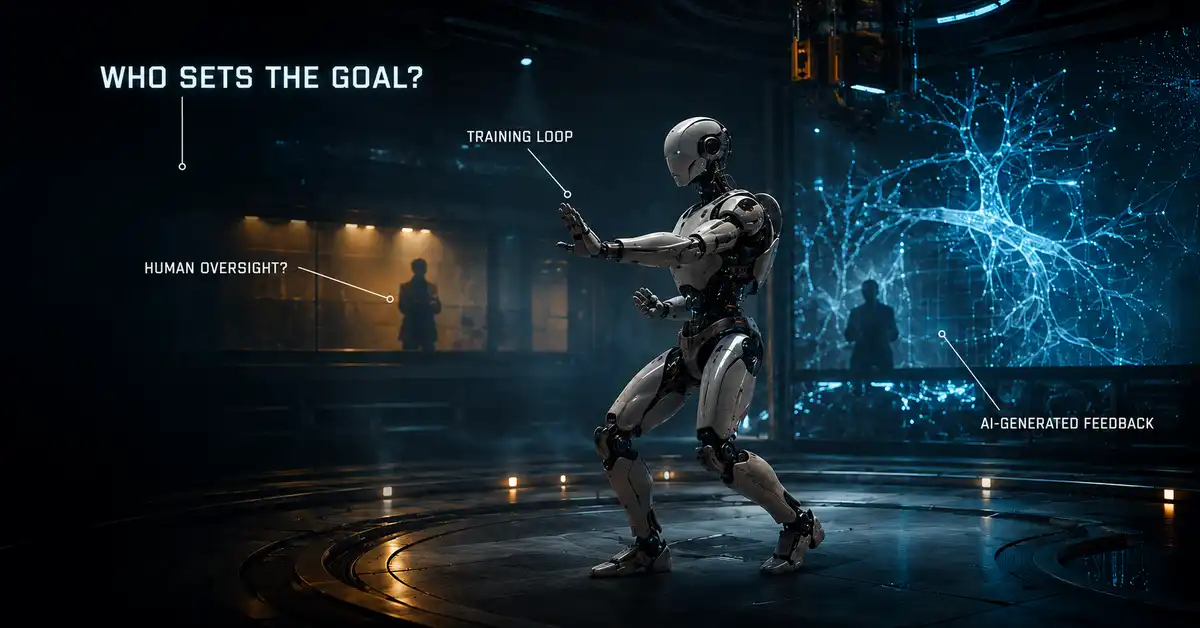
Who trains a robotic brain when strangers hold the controls?
Unite.AI made the sharpest observation in its writeup. The experiment itself is the asset, not any single robot or app.
One analysis of the round, from Value Add VC, read it the same way. Every interaction on the site is a data point on how the underlying model generalises across unscripted human commands. And real-world human-robot interaction data stays scarce and expensive next to text or code.
That’s the trick, and it’s a good one. Text is free on the internet. Video is everywhere. But recordings of a stranger trying, fumbling and retrying until a robot arm finally lifts a flask? Almost nobody has those at volume.
Which means the valuable output of Enigma robots.online isn’t the drawings. It’s you, mildly confused, while the model watches how you recover.
Traditional robot training runs through engineers. Someone writes a spec. Someone labels data. A lab decides what “correct” looks like, and the machine learns that definition.
Enigma robots.online flips the order. Whoever showed up that afternoon defines what a natural instruction is: teenagers, hobbyists, curious retirees, people checking whether they can make two robots stab each other. Their improvisation becomes the reference behaviour.
Publishers have spent years fighting over whether training on their work counts as fair use. Nobody has seriously argued about who owns your improvised gestures at a robot arm.
Consent, curation, and the part nobody has explained
There’s a precedent here, and it isn’t a comfortable one. A widely cited report estimated that Google’s reCAPTCHA has consumed 819 million hours of human time (TechRadar). The report calls it a “tracking cookie farm for profit” — people thought they were only proving they weren’t bots.
The comparison isn’t exact, and I want to be fair about that. reCAPTCHA hid the labelling task inside a security check. Robots.online is open entertainment. You know you’re driving a real machine, you chose to do it, and you can walk away.
The gap sits elsewhere. Knowing you’re piloting a robot is not the same as knowing your session becomes training signal for a commercial model.
Here’s what I couldn’t find, and I did look. None of the launch coverage describes a plain-language notice telling visitors that their interactions train the underlying model. None mentions a retention window, a deletion path or an opt-out. Enigma’s own page returned little more than a title and a tagline.
That’s a reporting gap, not proof of a missing policy. Maybe the terms exist and no reporter thought them newsworthy. But when a company’s stated edge is data that’s scarce and expensive to collect, the terms of collection stop being boilerplate.
Then there’s curation. Somebody decides which recorded sessions count as good examples and which get thrown out. That editorial choice quietly shapes the model’s idea of a reasonable human. We know nothing about who makes it.
It’s the same knot we hit whenever autonomous systems start acting on our behalf. Responsibility gets diffuse right at the moment you most want it concentrated.
What to watch over the next few months
A data policy written for robots.online. Not a generic privacy page. Something that says what happens to a session, how long it lives, and whether you can pull it back.
Published findings. Enigma is sitting on a genuinely interesting result: which of the four control methods do untrained people reach for first, and which one actually works? Sharing that would help the whole field. Keeping it quiet tells you the data is the moat.
The competitive answer. Physical Intelligence closed a $600 million Series B in November 2025 at roughly a $5.6 billion valuation, led by CapitalG and Lux Capital, taking its total raised to about $1.1 billion. Figure is playing a similar capital-heavy game. Neither has opened its robots to the public. Enigma’s $71 million looks tiny beside that, which is exactly why the interface bet has to land.
Rules catching up. Public control of physical machines raises questions regulators haven’t touched yet, much like the ones circling humanoid robots and safety standards.
So is the crowd a better teacher than the lab?
I think the interface thesis is right, and I also think it’s the least interesting thing about this launch. Robots that need a manual will lose to robots you can nudge. That was true of the mouse, the touchscreen and the voice assistant, and it’ll be true here.
Authorship is the part worth arguing about. If enough strangers turn up, the model ends up carrying a kind of collective fingerprint. None of those people signed anything. None of them will be credited, and none of them can ask for a session back.
Go drive one of the robots anyway. It’s free, and honestly it looks like a good time. Just watch for whatever Enigma eventually publishes about where your session goes. If nothing ever appears, that silence is the real story.
Then tell me which side you land on. Is a crowd of strangers a better teacher for a robotic brain than a room full of engineers, or only a cheaper one?