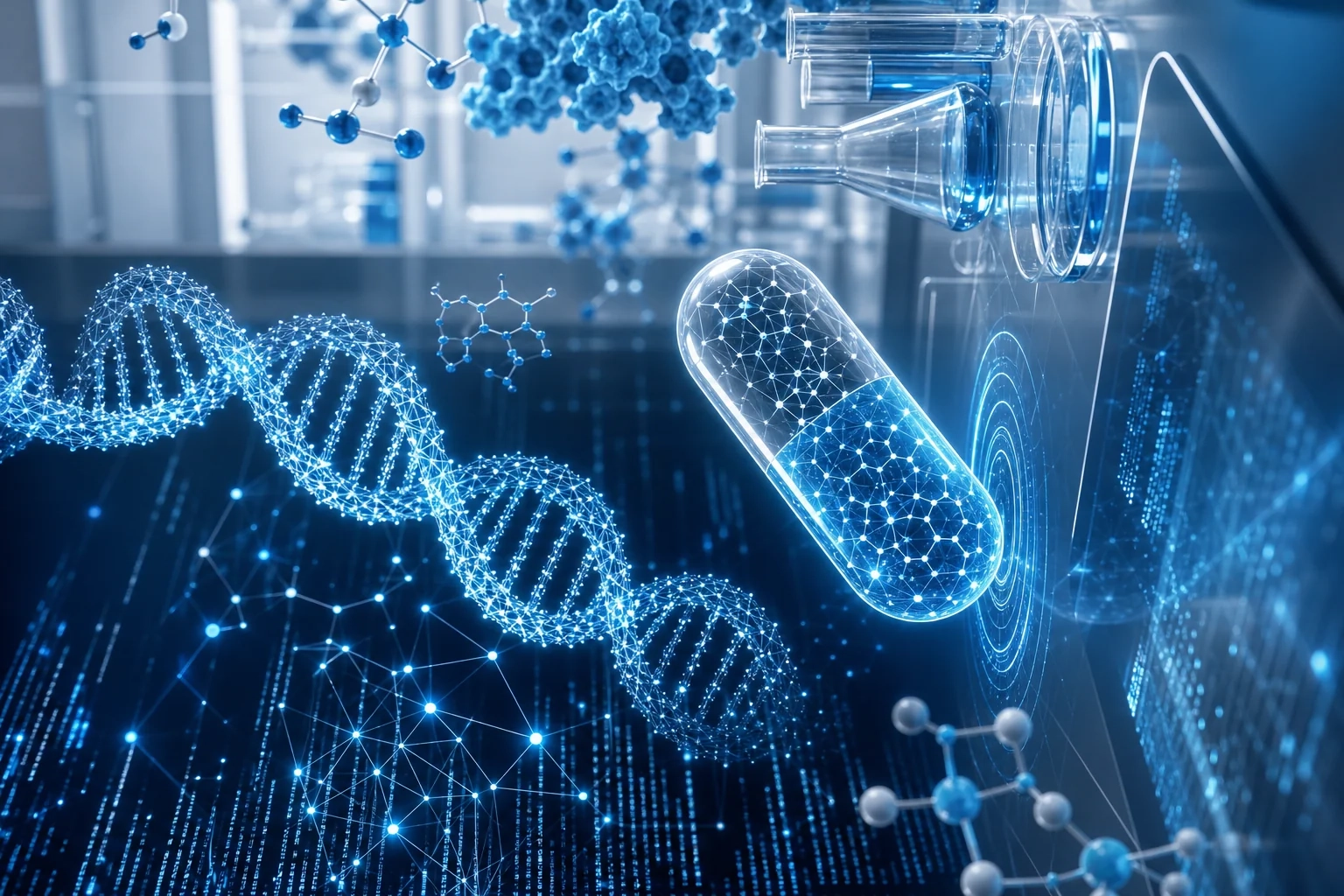
An AI company just decided to become a drugmaker. Not a supplier of software to pharma. A drugmaker.
That’s the quiet shift buried inside Anthropic AI drug discovery news from this summer, and it deserves more than a headline skim. On June 30, 2026, the company behind Claude launched a research tool called Claude Science and, in the same breath, said it would start running its own drug programs.
Read that again. The lab that trains chatbots wants to make medicine.
So what changes when the people building the AI also start pointing it at your prescription? That’s the human question underneath the product launch, and it’s the one worth sitting with.
What Anthropic actually announced
Two things arrived together, and they’re easy to blur.
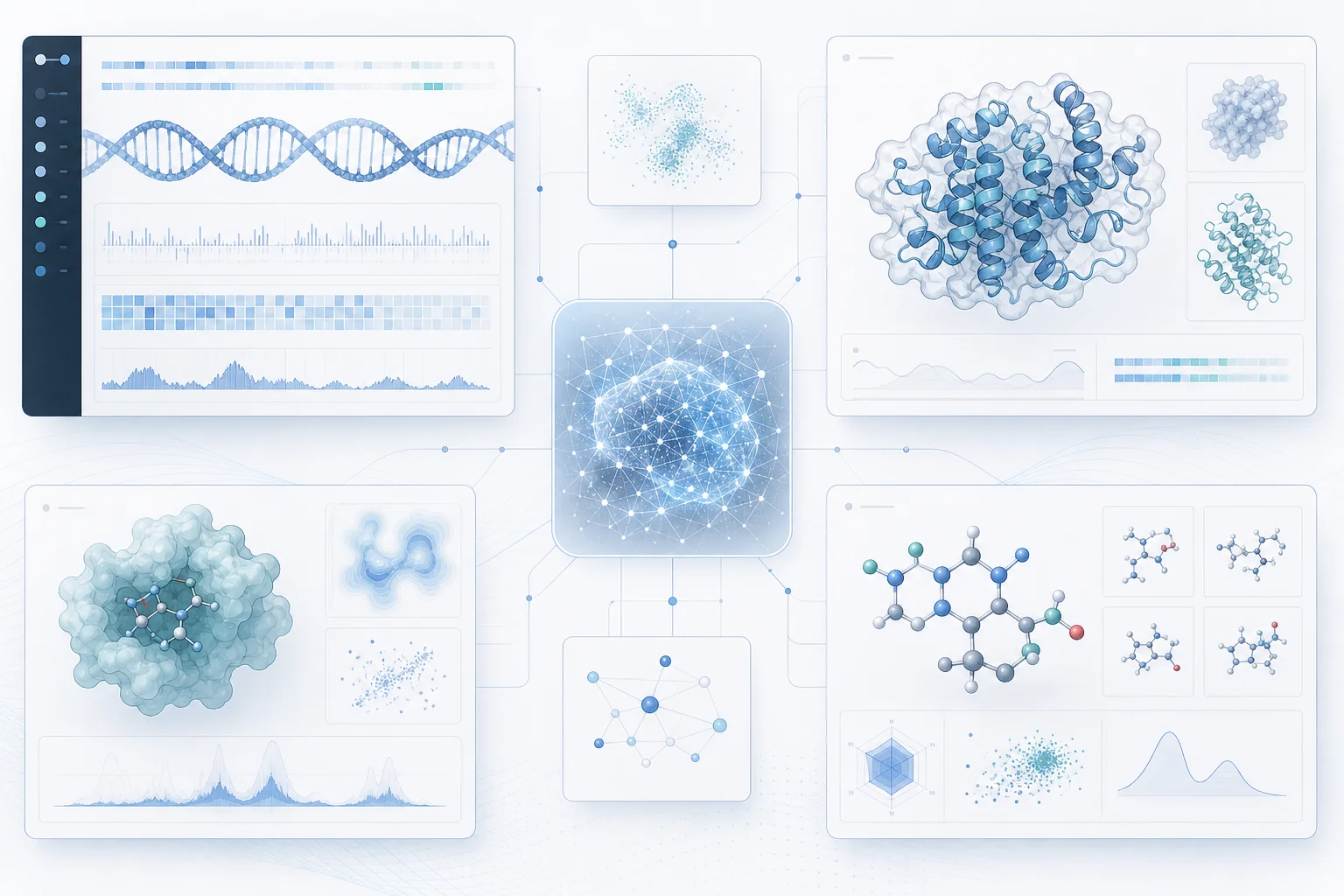
The first is Claude Science, a beta research workbench that pulls more than 60 scientific databases and computation tools into a single workspace: genomics, proteomics, structural biology, cheminformatics. Anthropic says it can “autonomously carry out meaningful work when given concise, high-level instructions.” Think of it as a lab assistant that never sleeps and reads every paper.
The second is the bigger deal. Anthropic said it will run its own internal, preclinical drug-discovery programs, aimed at neglected diseases, the conditions big pharma has mostly abandoned because there’s no money in them.
That’s the leap. Selling tools to drug companies is one business. Making drugs is another.
How Anthropic AI drug discovery actually works
Strip away the jargon and the pipeline has stages. Some are cheap. Some are brutally expensive.
Early on, researchers pick a biological target, a protein or gene tied to a disease, then design molecules that might act on it. This is where AI shines. It can sift through vast chemical space, predict how a molecule folds and binds, and propose candidates far faster than a bench chemist working by hand.
Tools like Claude Science lean into that early phase. The system can spin up specialized sub-tasks (hunting for a target, generating molecules, combing the literature) and keep a documented trail of what it did.
There is a caveat. The hard part isn’t finding a promising molecule. It’s proving one is safe and works in people. That happens in clinical trials, and no amount of clever software has yet made that stage cheap or quick. AI mostly accelerates the front of the pipeline, not the costly, failure-prone back end.
Why an AI lab, not a pharma company, is doing this
The obvious question: why would Anthropic bother making drugs at all?
Its own answer is learning by doing. Build medicine yourself, feel where the tools fall short, and you’ll build better tools for the industry you sell to. Choosing neglected diseases fits that logic, less competition from incumbents, and a mission story that plays well.
But this wasn’t a whim. Follow the money and you see a plan.
In April 2026, Anthropic bought a stealth biotech startup called Coefficient Bio in a $400 million all-stock deal (TechCrunch). Coefficient was tiny, roughly ten people, founded only about eight months earlier by Samuel Stanton and Nathan C. Frey, both from Genentech’s Prescient Design drug-discovery group. Against Anthropic’s roughly $380 billion valuation, that price was pocket change, near 0.1% dilution.
The acquisition also followed an earlier step: “Claude for Life Sciences,” launched back in October 2025. So the drug push had been building for the better part of a year before most people noticed. This is a deliberate march, not a press-release stunt.
Anthropic versus the competition
Anthropic isn’t first here, and that matters.
Google DeepMind’s spinoff, Isomorphic Labs, has been at this since 2021, built on the AlphaFold protein-structure breakthrough. It has its own Drug Design Engine and raised $600 million in outside funding led by Thrive Capital. On paper, it’s the front-runner.
Now look at its timeline. CEO Demis Hassabis once said AI-designed drugs would enter trials “by the end of 2025.” At Davos in January 2026, he moved that to “first clinical trials by the end of 2026” (Yahoo Finance). The best-funded, longest-running player just gave itself another year.
That’s the sober backdrop for Anthropic’s entrance. It’s stepping into a race where the leader keeps pushing back the finish line.
Anthropic also already sells into pharma. It has a deal to roll out Claude to more than 30,000 employees at Bristol Myers Squibb. The tool business and the new drug program run side by side. If you follow the broader contest between labs, our look at the AGI development race and who’s ahead in 2026 maps the same rivalry from a different angle.

The gap between promise and proof
Here’s where the hype meets the numbers.
As of mid-2026, zero AI-designed drugs have FDA approval. Not one. Only a small number of AI-originated candidates have even reached trials.
The furthest along is Insilico Medicine’s rentosertib, found by AI spotting a TNIK-inhibition mechanism. A 71-patient Phase 2a trial in China called it “safe and well-tolerated” and showed improved lung function. It’s now moving toward a 52-week Phase 3, which would make it the first AI-designed drug ever to reach that stage (Chemistry World).
“Moving toward” is doing a lot of work in that sentence. Phase 3 trials run three to four years, cost hundreds of millions, and succeed only about 55% of the time, even for drugs found the old way.
And AI programs do fail. Verge Genomics’s AI-identified ALS candidate never made it past Phase 1. Early AI molecules have posted stronger Phase 1 results than traditional ones, but researchers warn that edge “might not last in Phase 2.” Speed at the start says little about survival at the end.
What this means for patients and for trust
So where does that leave you, the person who might one day swallow a pill an algorithm helped design?
Cautiously hopeful, I’d argue. Pointing serious AI muscle at neglected diseases is a good use of the technology. These are the illnesses the market ignores, and a lab that doesn’t need a blockbuster margin can afford to care. If Anthropic’s tools shave months off the early grind, patients waiting on rare-disease research could actually feel it.
But keep your skeptic close. An AI lab making medicine is still a company with a valuation to defend and an eventual IPO to think about. “For neglected diseases” is a mission and a marketing line at once. The honest scorecard right now is simple: impressive tools, real momentum, and not a single AI-designed drug across the finish line.
The deeper shift is about who we trust to make our medicine. For a century that was pharma and regulators. Now a chatbot company wants a seat at the table. That’s not a reason to panic. It’s a reason to watch closely and ask hard questions, the same way we’d interrogate any new claim on human health. For more on how emerging tech earns or loses that trust, our framework for cognitive enhancement ethics and our piece on longevity tech and extending healthspan sit right next to this question.
The race is on. The proof isn’t in yet. And that gap, between what’s promised and what’s been shown, is exactly where you should keep your attention. What would it take for you to trust a drug an AI helped invent?