
The phrase injecting ideas directly into the motor cortex sounds like a thriller headline. It also captures a real fear. Once neurotechnology can read and write signals in the brain, where do treatment and assistance end and manipulation begin? The immediate problem is not movie-style mind control. It is whether stimulation technologies can shape action, intention, or felt impulse in ways that blur agency and consent. The payoff here is clear: this article explains what the motor cortex can and cannot do, why the ethics matter before the science becomes routine, and what safeguards would be needed if signal-writing technologies become more capable.
Why the phrase is dramatic but not empty
Strictly speaking, researchers are not uploading complete ideas into the motor cortex in the way popular culture imagines. The motor cortex is not a concept warehouse. It helps plan and execute movement. That means the phrase is technically wrong if it implies that abstract beliefs, full memories, or rich narratives are being written directly into a single motor strip.
But the ethical concern behind the phrase is still legitimate.
If a system can shape movement, readiness, or action-related intention, it can still affect behavior in ways that feel deeply personal. A tool does not need to implant a full belief to alter what a person experiences as voluntary. That is why this topic matters. The concern is less “can we beam a finished idea into the skull?” and more “can we influence thought and action closely enough that the line between self-driven and device-shaped behavior becomes hard to see?”
A simple comparison helps. A navigation app does not implant a destination into your mind, but it can influence your route choice. Neural stimulation works closer to the machinery of action than that. So the ethical stakes rise quickly even before science fiction becomes real.
Why the motor cortex is ethically sensitive
The motor cortex matters because action carries responsibility.
A stimulation device that helps restore movement after paralysis is one thing. A stimulation system that nudges movement in a non-medical or poorly understood context is another. The ethical tension comes from the fact that movement is not just output. It is how intentions become visible in the world.
FDA guidance on implanted BCIs already reflects the seriousness of these devices as medical interventions, with strong emphasis on testing, safety, and study design (FDA). That framework is essential, but ethics runs wider than device safety alone. Even a safe system can raise questions about who controls initiation, how users understand influence, and whether consent remains meaningful over time.
The motor cortex is ethically sensitive because it sits near the transition between thought and action. That does not make every intervention suspicious. It does make every intervention morally charged.
Why consent is necessary but not sufficient
People often assume the ethical question begins and ends with consent. It does not.
Consent matters, obviously. A patient who chooses a therapeutic intervention to restore movement is making a very different decision from a worker pressured into an attention or performance enhancement device. UNESCO’s neurotechnology work repeatedly emphasizes voluntariness, cognitive liberty, mental integrity, and the need to protect freedom of thought from illegitimate interference (UNESCO, UNESCO Legal Affairs).
But even fully signed consent forms do not solve everything.
One problem is comprehension. A person may consent to stimulation without fully grasping how adaptive or closed-loop systems might change in practice. Another is dependency. If a device becomes central to movement or emotional stability, the user’s bargaining power changes. A third is context. Consent inside a clinic is different from consent in a military, workplace, school, or criminal-justice setting.
That is why ethics boards do not stop at “the user agreed.” They also ask whether the user understood, whether the choice was free, and whether the surrounding institution had incentives that distorted the decision.
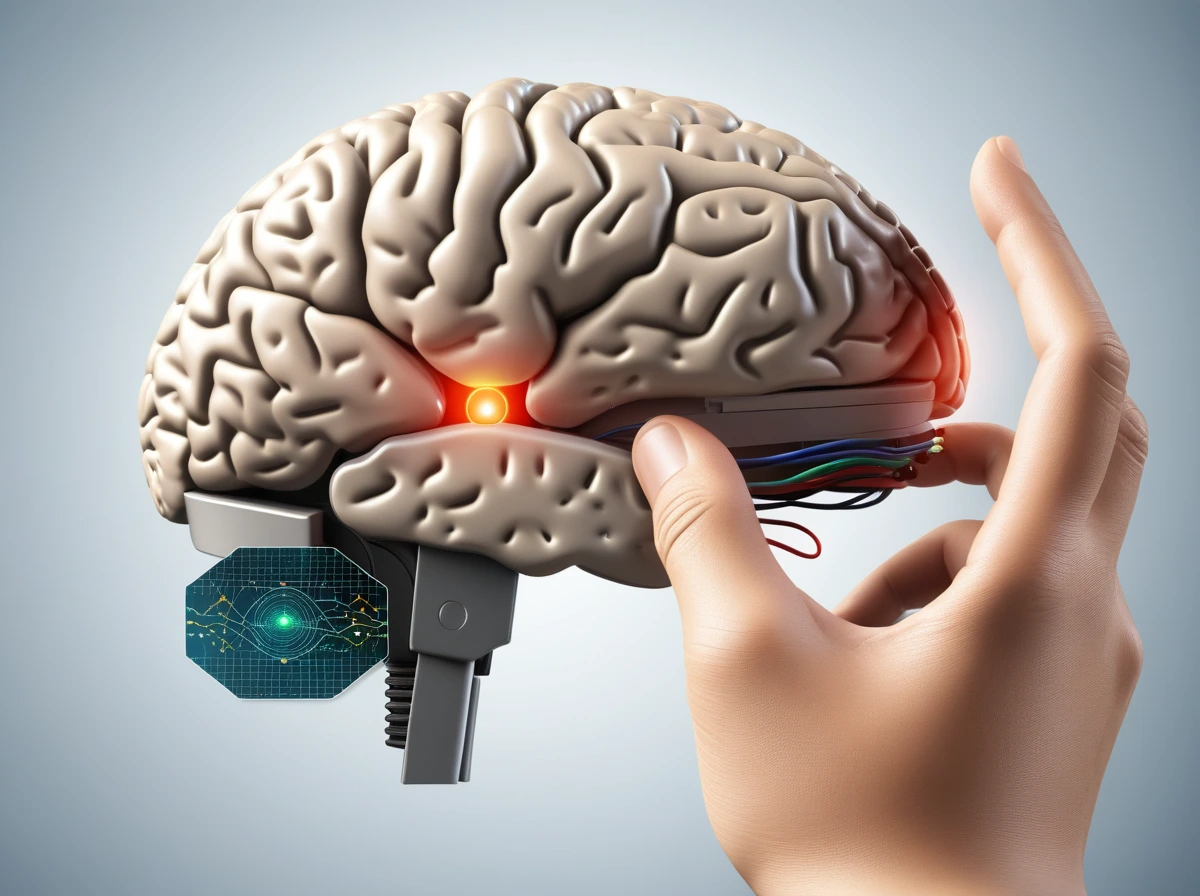
Agency is the real fault line
The deepest issue is agency.
If a stimulation device helps someone carry out an intention they already had, many people will see that as supportive. If the same device begins to shape urges, decisions, or movement tendencies that the person does not fully endorse, the moral picture changes.
A concrete comparison helps. Glasses improve vision without making choices for you. A predictive keyboard influences wording a little, but you can usually detect that influence. A neural device that modulates readiness to act or the felt ease of certain movements could be much harder to separate from the self.
This matters for responsibility as well as dignity. If an action was partly device-shaped, how should responsibility be assigned? If a person later says “that did not feel fully like me,” how should medicine, law, and family members interpret that claim?
The scoping review on ethical aspects of BCIs is useful here because it shows that autonomy, personhood, responsibility, and informed consent have been central concerns for years, not just recent media panic (PubMed).
Therapeutic use is not ethically identical to manipulation
It is important not to flatten every intervention into the same category.
If a system is restoring lost function to someone with paralysis, movement disorder, or severe impairment, the ethical case may be strong. The aim there is to return capability, reduce suffering, and restore independence. WHO’s neurotechnology landscape report treats these medical possibilities seriously while also stressing implementation limits and governance challenges (WHO).
That is different from using stimulation to steer behavior in a healthy person for discipline, compliance, or performance. The second case raises far sharper concerns because the line between enhancement and coercion becomes unstable very quickly.
A practical example makes the difference clearer. Helping a patient regain arm movement after stroke and nudging a soldier, employee, or student toward faster action selection are not ethically interchangeable. The hardware may look related. The moral context is not.
Why authorship and authenticity matter too
Another issue often gets missed: authorship.
If a neural system helps shape what a person does, says, or feels moved to do, then people will eventually ask how much of the resulting action was still theirs in the ordinary sense. This is not only a legal problem. It is a psychological one. People need to feel that their actions still belong to them.
A simple comparison helps. A calculator helps produce a result, but nobody thinks the calculator authored the decision to use it. A device that modulates action readiness or suppresses hesitation could feel different, because it works much closer to the machinery of impulse and movement.
That is why authenticity matters alongside autonomy. A patient may accept extensive assistance if it clearly serves goals they already endorse. The moral picture changes if the system begins to redefine those goals from the inside, or if the person can no longer tell where support ends and behavioral shaping begins.
The biggest risks are coercion, opacity, and normalization
Three risks stand out.
The first is coercion. The more valuable a system becomes for work, education, or security, the greater the temptation to make participation feel mandatory without saying so openly.
The second is opacity. Adaptive neurotechnology can become hard for ordinary users to interpret. If the system changes its own behavior, how does a person know when assistance turns into influence?
The third is normalization. A society can drift into accepting brain-directed intervention in domains where it never would have accepted overt control. What begins as rehabilitation can become expectation. What begins as optional can become socially required.
UNESCO’s recent push for a global standard on the ethics of neurotechnology makes sense in exactly this context. Once technologies can read and write brain activity, governance cannot be an afterthought. Human dignity, mental privacy, and freedom of thought have to be treated as design constraints, not PR language.
What safeguards would actually matter
If signal-writing neurotechnology becomes more capable, ethical safeguards will need to be concrete.
The most important ones are:
- strong medical-need justification for invasive use
- explicit opt-in consent with easy withdrawal where possible
- independent ethics review
- transparent logging of when and how stimulation occurs
- narrow purpose limitation so tools do not drift into unrelated control
- strong protection against employer, military, or institutional coercion
There is also a design lesson here. The more powerful the intervention, the more reversible and inspectable it should be. Systems that cannot be meaningfully audited by clinicians or explained to users will be much harder to defend ethically, even if they appear effective in a narrow performance sense.
A comparison helps. Modern cybersecurity does not rely on trust alone. It uses layered controls, logging, and auditability. Neurotechnology will need the same mindset, but with higher stakes because the protected system is a human brain rather than a corporate network.
Final Thoughts
The fear behind the phrase injecting ideas into the motor cortex is not childish. It is a rough way of naming a real ethical threshold: the moment technology stops merely helping a person act and starts shaping action in ways that threaten agency.
That threshold is why this field needs more than technical ambition. It needs tight medical justification, strong governance, and clear limits on coercive use. Neural implants can still be humane, beneficial, and life-changing. But the more directly they influence action, the more carefully society has to defend consent, accountability, and the right to remain mentally self-directed.