

If you run ads, pick packaging, or spend money on market research, neuromarketing answers a practical question: what do people react to before they can explain it in a survey? The useful version of the field is not mind reading. It is measurement. Brainwaves and other biometric signals can help brands see attention, emotional response, and memory formation more directly than self-report alone.
That matters because people are not always good at explaining why one ad worked and another did not. The real value of neuromarketing is narrower than the hype. It can improve creative testing, help with brand recall, and reduce uncertainty in early-stage research. It cannot tell a marketer what every customer secretly wants, and it cannot guarantee a sale.
What neuromarketing actually measures
Neuromarketing is usually a mix of neuroscience tools and marketing questions. In plain terms, it tries to measure how the brain and body respond to ads, packaging, prices, branding, and buying cues.
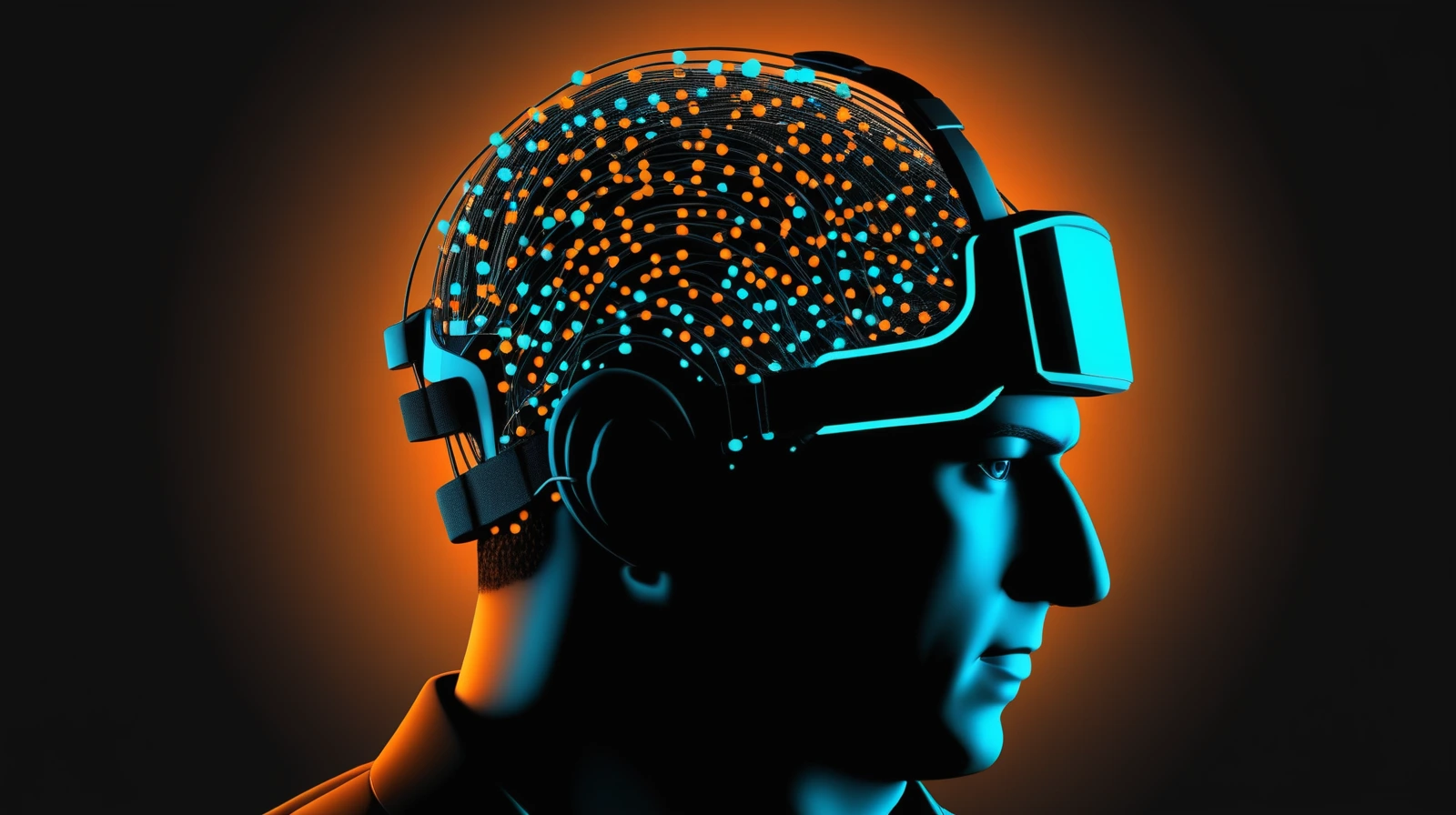
EEG, or electroencephalography, is the most common tool because it is relatively low cost and has high temporal resolution. A systematic review of EEG in marketing research found that this speed is one reason the method is attractive for ad testing and consumer research (Is EEG Suitable for Marketing Research?). EEG is good at showing when a response happens, even if it is not perfect at explaining every reason behind it.
But EEG is only one piece of the picture. Brands also use eye tracking, facial expression analysis, skin conductance, heart rate, and sometimes fNIRS, a method that tracks blood oxygen changes in the brain. The point is not to replace surveys completely. The point is to see behavior that people do not always put into words.
A definition paper on the field warned early on that neuromarketing is often used too loosely and that claims can get ahead of the evidence (Defining neuromarketing: practices and professional challenges). That warning still matters. If a vendor says it can “read thoughts,” it is already overselling the method.

The cleaner way to think about it is this: surveys tell you what people say. Neuromarketing helps show what their nervous system did while they saw the ad.
Where brainwaves help brands most
The strongest use case is creative testing.
If you have two video ads that are both on-brand, both well-produced, and both expensive to place, the hard question is not which one looks better in a boardroom. It is which one actually holds attention, creates memory, and leaves the viewer more likely to recall the brand later.
That is where EEG can be useful. A systematic review of EEG-based consumer preference prediction found that some neural features show up more consistently than others, especially frontal alpha asymmetry and late positive potential, but the results are still mixed across studies (Prediction of consumer preference using EEG measures and machine learning). In other words, the field can spot patterns, but it still needs careful interpretation.
One useful example comes from online advertising research. A study on consumer neuroscience-based metrics found that a combination of EEG, heart-rate, and eye-tracking measures predicted recall, liking, and viewing rates for online ads (Consumer Neuroscience-Based Metrics Predict Recall, Liking and Viewing Rates in Online Advertising). That is the kind of result marketers actually care about. Not “What did the brain feel?” but “Which creative is more likely to be remembered and watched?”
Neuromarketing can also help with packaging and shelf cues. Small design changes matter when attention is limited. A visual metaphor in a product label, a color shift, or a logo placement can change what people notice first. In a neurophysiological experiment on ads with visual metaphors, researchers combined EEG, eye tracking, and skin conductance to reveal reactions that a simple survey might have missed (Revealing Unconscious Consumer Reactions to Advertisements That Include Visual Metaphors).
That is the practical point. Brainwaves are useful when they help a brand choose between creative options, not when they are treated as a shortcut around strategy.
Why multimodal research beats a single headset
A single EEG signal rarely answers the whole question.
Say you see a spike in arousal. That might mean interest, but it could also mean confusion, irritation, surprise, or simply a noisy artifact. Without a second signal, it is easy to read too much into one trace.
That is why the better neuromarketing studies combine methods. Eye tracking tells you where people looked. Facial expression analysis gives clues about positive or negative response. Skin conductance picks up physiological arousal. Heart-rate variability can reflect stress or engagement. EEG adds timing and pattern data on top of that stack.
The literature supports this multimodal approach. The EEG preference review found that prediction improves when EEG is combined with other measures rather than used in isolation (prediction review). The online advertising study arrived at the same practical conclusion: combined metrics are more informative than one channel alone.
If you want a plain-English comparison, think of it this way:
- EEG tells you when the nervous system reacts.
- Eye tracking tells you what got looked at.
- Facial coding tells you whether the reaction looks more positive or negative.
- Skin conductance tells you that the body is aroused, but not why.
Used together, these signals are much more actionable than a single brainwave trace. Used alone, each can be misleading.
This is also why neuromarketing is not the same as a single magical headset. In good work, the headset is part of a measurement stack.
What the studies can and cannot predict
The best neuromarketing studies do not say that brainwaves predict everything. They say that some neural features can improve forecasting in narrow settings.
That distinction matters. A 2017 neuroforecasting study found that neural responses could help forecast crowdfunding outcomes at the market level, and in that setting some neural predictors generalized better than behavioral measures (When Brain Beats Behavior: Neuroforecasting Crowdfunding Outcomes). That is interesting, but it is not a blank check. It is evidence that neural data can add signal in specific contexts.
At the same time, a 2015 review on consumer choice warned that market-level prediction is still partly speculative and should not be treated as solved (The Neuroscience of Consumer Choice). That caution is still useful today. In a controlled study, a small set of signals may look strong. In a live campaign, the same pattern may weaken because audiences, context, placement, and competition all change.
Consumer-grade EEG devices make this easier to test, but they also add another layer of caution. A 2024 scoping review found that low-cost EEG headsets are increasingly used in research, yet they still need careful validation (consumer-grade EEG devices for research). A newer evaluation framework makes the same point even more directly: consumer hardware can be useful, but signal quality, artifacts, and reproducibility still matter (consumer-grade EEG evaluation framework).
The business takeaway is simple. Neuromarketing can improve the odds that you pick the better creative, but it does not remove uncertainty. It narrows the field.
Ethics, privacy, and trust
This is the part that determines whether people trust the field.
The first ethical issue is consent. If a brand measures brain or biometric data, people need to know what is being collected and why. The second issue is retention and reuse. Brain-related data can be sensitive, even when it is not personally identifying by itself. The third issue is audience vulnerability. Methods that measure attention and emotional response can be used responsibly, but they can also be used to push too hard on people who should have extra protection.
An ethics paper on neuromarketing argued that the field raises legitimate concerns around privacy, autonomy, and the possibility of overclaiming influence (Ethical Issues in Neuromarketing). Another paper on the professional challenges of defining neuromarketing made a related point: if the field wants credibility, it has to use precise language and avoid hype (Defining neuromarketing).
That is not a side issue. It affects buying decisions.
If a vendor leads with “we can read the subconscious” or “we can make customers buy anything,” the pitch should be treated as a warning sign. A better vendor will explain the exact signals, the sample size, the control conditions, and the limits of interpretation.
The more transparent the method, the more useful it becomes.
How to evaluate a neuromarketing vendor
If you are a marketer or business owner, you do not need to become a neuroscientist. You do need a few questions.
First, ask what the vendor is actually measuring. If the answer is only EEG, ask how the data will be paired with eye tracking, survey responses, or behavioral outcomes. A single signal is rarely enough.
Second, ask what decision the study is supposed to improve. Ad testing? Packaging? Pricing? Messaging? If the outcome is vague, the project will probably produce vague insights.
Third, ask about validation. Has the method been compared with traditional market research? Has it been tested on a similar audience? Has the vendor shown repeatable results across projects, not just one flashy case study?
Fourth, ask what counts as success. A useful neuromarketing project should improve something concrete: recall, attention, viewer completion, product preference, or click-through on a controlled creative test.
Fifth, ask how the data is stored and who can access it. If the vendor cannot explain that clearly, the privacy risk is too high for the value.
The best projects use neuromarketing to support a decision that already exists. They do not use it to invent a new strategy from scratch.
Final Thoughts
Neuromarketing is most useful when you treat it as a measurement tool, not a persuasion machine. Brainwaves do not reveal everything a customer thinks, but they can show where attention lands, how a message is processed, and whether a creative deserves another look.
That is enough to make the field valuable. It is also enough to keep it honest.
For brands, the best question is not “Can we read minds?” The better question is “Can we reduce uncertainty before we spend more on media and creative?” Used that way, neuromarketing helps teams make sharper decisions. Used carelessly, it becomes expensive theater.