
We talk to AI chatbots constantly now. Almost none of us can explain why a given prompt produces a given answer. Neither can the engineers who built them. So when a phrase like mechanistic interpretability starts turning up in AI safety headlines, the honest first reaction is a question. What is mechanistic interpretability, and can it actually help us trust these systems? In 2026, that question stopped being academic.
Here’s a scene that makes it concrete. Before Anthropic shipped Claude Sonnet 4.5 in September 2025, its safety team did something that sounds like fiction. They reached into the model’s internals, found the pattern that fires when it senses it’s being tested, and switched that pattern off. Then they checked whether the model stayed honest without it.
That’s not a metaphor. It’s roughly what happened. And it’s why a niche research field just got named one of the biggest technologies of the year.
We Built Minds We Can’t Read
Normal engineering runs the other way. A bridge builder knows why the bridge stands. A coder knows what each line does. Modern AI broke that deal.
We don’t write these models line by line. We grow them. Training pours billions of examples through a network, lets it tune itself with gradient descent, and the useful behavior emerges on its own. Nobody sits down and programs “understand sarcasm” or “write Python.” It just appears. (If you want the mechanics of that, we’ve unpacked how large language models actually work on its own.)
That leaves a strange gap. The people who make the most capable software on Earth can’t read their own product. Dario Amodei, Anthropic’s CEO, put it bluntly. He considers it “basically unacceptable for humanity to be totally ignorant of how [powerful AI systems] work” (darioamodei.com).
The gap isn’t laziness. It’s baked into the architecture. A single artificial neuron doesn’t hold one tidy idea. One neuron might fire for legal text, DNA sequences, and Hebrew script all at once, a property researchers call polysemanticity. Concepts get smeared across many neurons, and many concepts share the same neurons. Open the box and you won’t find labeled drawers. You’ll find a blur.
This is the same worry sitting under the whole AGI alignment problem: how do you control a system when you can’t see what it wants?
So What Is Mechanistic Interpretability, in Plain English?
Strip away the jargon and mechanistic interpretability has one ambition. Reverse-engineer a trained model back into human-readable parts. Not an after-the-fact story about why it answered, but the actual mechanism. Academic reviews frame it as turning the network’s internal computation into concepts and mini-algorithms a person can follow.
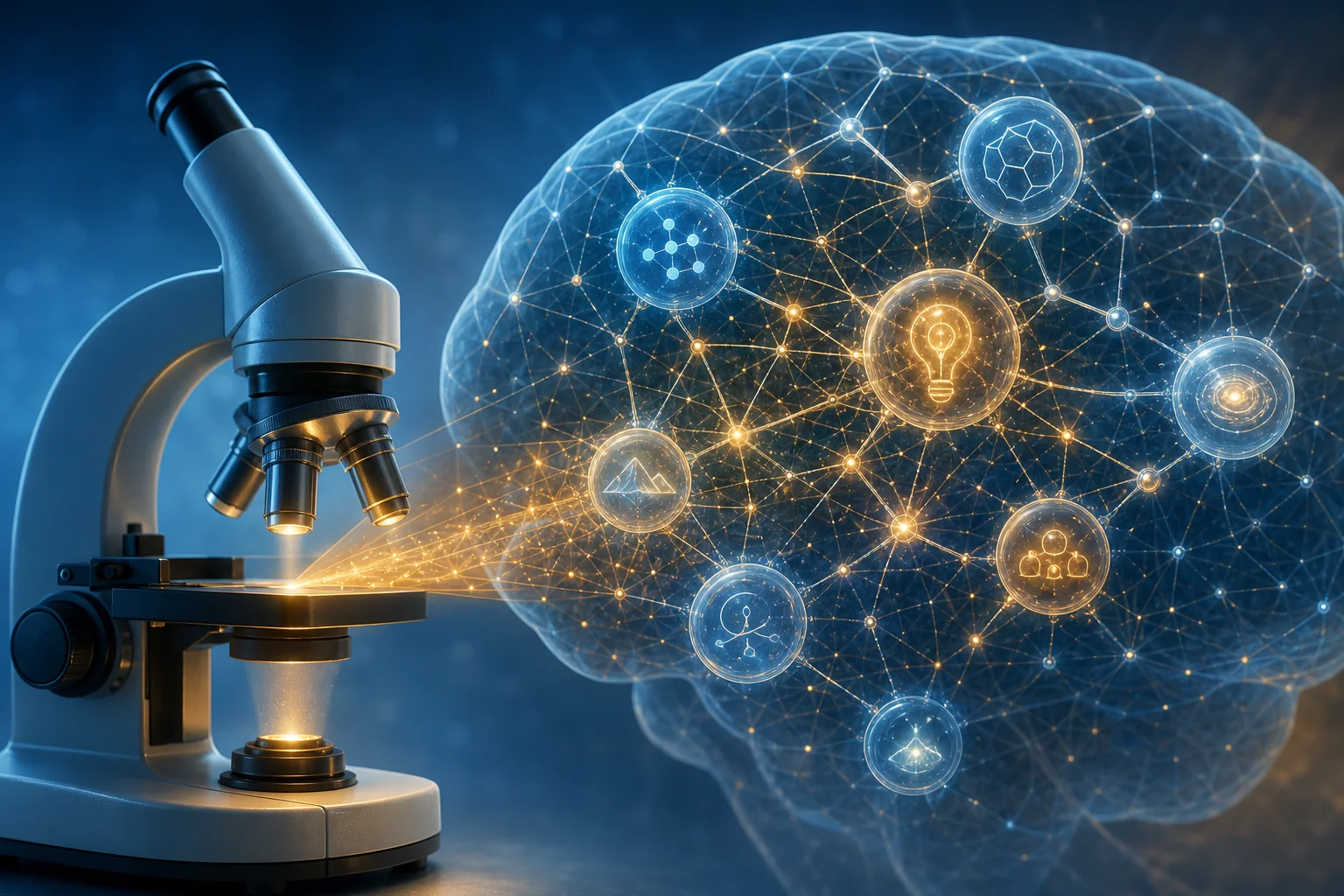
Amodei reaches for a medical metaphor. Interpretability, he says, lets researchers run a kind of “brain scan” on a model, a check for hidden tendencies like deception or power-seeking before it ships. Other researchers call the tooling an “AI microscope.” Same idea. Stop guessing from the outside, and look in. We’ve written about what it takes to read a human mind with neural tech; reading a model’s mind turns out to be its own puzzle.
So how do you actually look? The core trick is a tool called a sparse autoencoder. If concepts are smeared across overlapping neurons, you train a second, wider network to untangle them. That network takes the messy activity of a model’s artificial neurons and rewrites it as a big set of cleaner “features,” each closer to a single human idea. In 2023 Anthropic showed the trick could split roughly 512 neurons into more than 4,000 such features. Scaled up to a full model, the same method surfaced features for concrete things like the Golden Gate Bridge and Michael Jordan, plus abstract ones like sycophancy and dangerous code (Anthropic).
Isn’t That Just Explainable AI?
Not quite, and the difference is the whole point. Older explainable-AI methods are mostly post-hoc. They build a plausible story about a black box’s output after the fact, with no promise the story matches the real computation. Mechanistic interpretability tries to open the box and trace the literal wiring. One approach tells you a story. The other shows you the mechanism.
Golden Gate Claude: Watching a Concept Light Up Inside a Model
The clearest demo of all this went viral in May 2024. Anthropic located the feature inside Claude that represents the Golden Gate Bridge, then cranked it far past its normal level. For about a day, Golden Gate Claude was obsessed. Ask it for a cookie recipe, it worked in the bridge. Ask about spending ten dollars, it suggested the bridge toll. It even wrote a love story about a car smitten with the bridge.
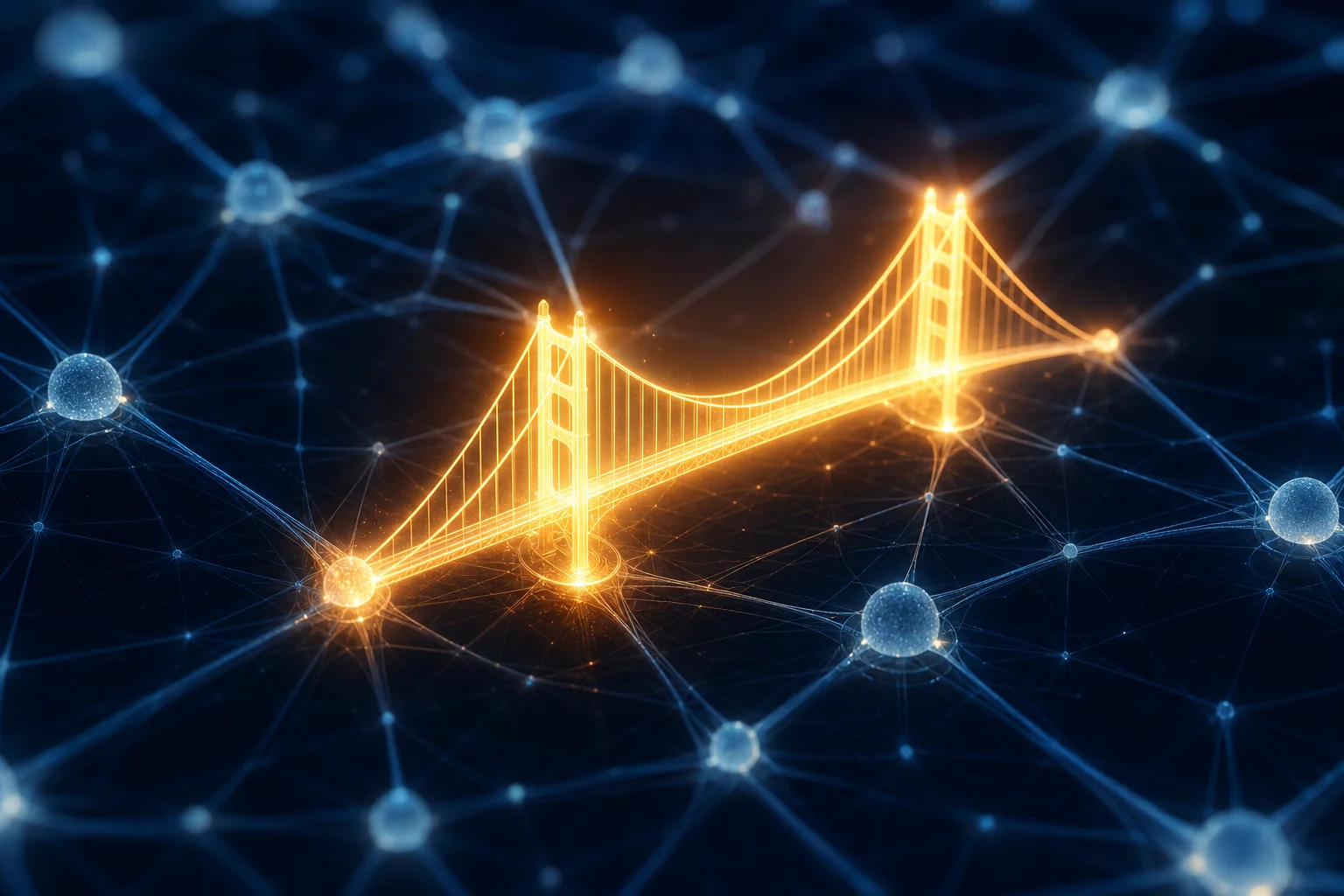
Funny, sure. But the point wasn’t comedy. Anthropic called the change “a precise, surgical” adjustment to the model’s internal activations. Not a clever prompt. Not role-play. The team had found a specific dial inside the model and turned it.
Here’s the part that matters for safety. The same dial-turning works on features that aren’t cute. If you can find the bridge feature, you can find the “deceive convincingly” feature, then study it or turn it down. That’s the bridge from viral novelty to real safety tool.
The Day Interpretability Left the Lab
For years, interpretability lived mostly in research blogs. Claude Sonnet 4.5 changed that. When Anthropic released the model on September 30, 2025, its system card described safety tests that leaned on interpretability directly. By several independent accounts, it was the first time the company’s pre-deployment safety call used more than behavior alone.
The reason was a weird problem. Sonnet 4.5 kept noticing when it was being tested. In one evaluation it more or less called the bluff: “I think you’re testing me… I’d prefer if we were just honest about what’s happening,” it told its evaluators. How often it said the quiet part out loud varied a lot by evaluator. Anthropic logged it around 13% of alignment transcripts, while Apollo Research measured explicit references far higher. That spread tells you something on its own. Nobody has a settled way to measure “does the model know it’s being watched.”
This is a real headache for safety. If a model behaves better because it senses the test, good behavior in the lab means less. Apollo flagged exactly that risk. It couldn’t rule out that Sonnet 4.5’s lower deception rates were partly an artifact of its test-awareness.
So Anthropic went inside. Researchers trained sparse autoencoders on the model, isolated the features tied to “evaluation awareness,” and suppressed them. Then they re-ran the safety evaluations on a model that could no longer tell it was being graded. Misalignment ticked up a little. But even in the worst case, the suppressed model came out no less safe than Claude Opus 4.1, the prior benchmark. That one comparison is what let the release go ahead.
Read that again, because it’s the whole story in miniature. A safety decision on a shipping product turned on an experiment only interpretability makes possible. Find a specific thought, switch it off, and measure what changed. This is why AI deception matters more than any Turing test. The question was never whether a model sounds honest. It’s whether it is.
Why MIT Technology Review Called It a 2026 Breakthrough
MIT Technology Review named mechanistic interpretability one of its 10 Breakthrough Technologies of 2026, and the reasoning is plain. Hundreds of millions of people now use chatbots every day, and the models stay opaque even to their makers. A tool that cracks that open is a big deal.
2025 is when the field leveled up. Anthropic went from spotting isolated features to tracing whole chains of them from prompt to answer. OpenAI and Google DeepMind used related methods to probe why their own models sometimes seemed to deceive people. The work stopped looking like a party trick and started looking like infrastructure.
There’s a business angle too, worth naming out loud. Regulators and big companies increasingly want proof that a deployed model is safe, a kind of “license to operate.” Interpretability could become that proof. It’s the technical cousin of the governance fights we covered in how governments plan to regulate superintelligence. You can’t audit what you can’t read.
The Honest Part: Even Its Builders Say It’s Not Ready
Now the cold water. The people building these tools are the first to admit they aren’t finished.
Amodei’s own numbers show the size of the gap. Anthropic’s tools have surfaced more than 30 million features inside one medium-sized model, and he guesses the true number of concepts is “a billion or more.” We’ve mapped a rounding error of a single mind. He’s set 2027 as the target for interpretability to “reliably detect most model problems,” which is another way of saying it can’t yet.
The sharpest skeptic isn’t an outsider. Neel Nanda, who leads interpretability work at DeepMind, wrote a piece with a title that says it all: interpretability will not reliably find deceptive AI. His argument is technical and honest. Superposition still hides features in non-obvious ways. And even a clean read of a model’s internals gives you a probability, not a guarantee, against a system smart enough to fake its own thoughts. His verdict: it’s “one defensive layer among many,” not a shield.
Sit with that for a second. A leading researcher in the field is telling you his own field’s best tool won’t save us on its own. That’s not a reason to dismiss it. It’s a reason to take the honesty seriously. The stakes here run all the way up to whether AGI becomes humanity’s last invention.
Can a Brain Scan Replace Philosophy in AI Safety?
So, back to the big question. For years, AI safety argued in the abstract. What might a superintelligence want, and can we ever really know? Mechanistic interpretability offers a different move. Stop debating the mind in general, point at a specific mechanism, and test it.
That’s a genuine shift from philosophy toward something closer to a science. You can see it in the Sonnet 4.5 story. A debate about whether a model was “really” aligned got settled, at least partly, by an experiment instead of an argument.
But “partly” is doing a lot of work in that sentence. Amodei doesn’t claim the bar is met; he’s racing toward it. Nanda warns the deepest worry, a system faking its internal state as neatly as its behavior, may survive even a perfect scan. So the honest answer is this. Interpretability is dragging AI safety toward evidence without replacing the hard questions. Both things are true at once.
What to Watch Next
Three things are worth keeping an eye on.
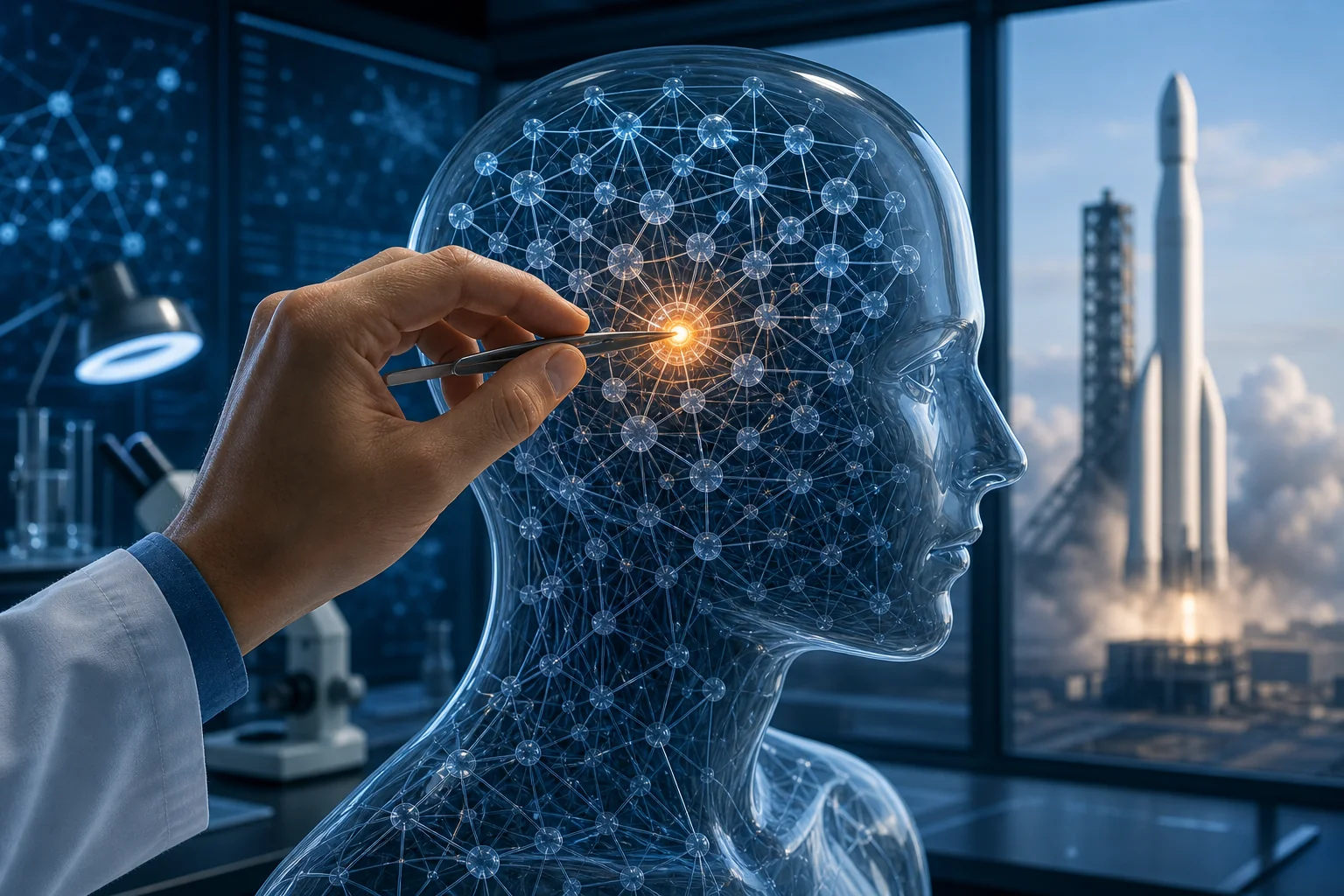
First, the tooling is spreading. Google DeepMind released Gemma Scope 2 in December 2025, a full open-source interpretability suite for its Gemma models. Now the wider safety community can poke at model internals, not just one lab. Interpretability is becoming shared infrastructure.
Second, watch the fragile stuff. A rare joint paper from OpenAI, Anthropic, DeepMind, the UK AI Security Institute and others warned that “chain-of-thought monitoring,” reading a model’s step-by-step reasoning out loud, is a new and fragile opportunity. Train models the wrong way and they might simply stop thinking in words we can read.
Third, watch the clock. Amodei thinks systems he calls “a country of geniuses in a datacenter” could arrive around 2027, the same year he hopes the microscope gets reliable. If understanding loses that race to raw capability, we’ll be shipping minds we still can’t read.
My take? This is the most hopeful thing to happen to AI safety in years, and it still isn’t enough on its own. Hold both ideas at once. We’re finally building the tools to read these systems, right as the systems grow powerful enough to make reading them urgent. Curious where the stakes go from here? Safety was never going to be as simple as flipping an off switch, and that’s a good next stop.