
If you are asking whether we can watch dreams like a movie, the honest answer is: not yet. But the science is not empty either. Researchers can already infer parts of visual experience from brain activity, and they can sometimes reconstruct coarse dream imagery or classify dream-related content in controlled settings. That is a real step forward, just not the full playback fantasy people usually imagine.
The useful distinction is simple. Dream reports come from memory after waking. Dream decoding tries to infer content from neural signals. Dream recording, in the movie sense, would mean capturing the experience as it happens and replaying it with high fidelity. The field is closest to the second idea, not the third.
What people mean by dream recording
Most people use “dream recording” to mean one of three different things.
The first is a dream report: you wake up and describe what you remember. That is valuable, but it is still a human reconstruction. The report depends on memory, language, and how much of the dream survived waking.
The second is dream decoding. Here, researchers look at brain activity and try to infer what kind of content was present. This is where neuroimaging and machine learning matter. A classic study of neural decoding during sleep used fMRI patterns to infer visual imagery during sleep onset, showing that some dream-related content could be classified from brain activity rather than report alone (Neural decoding of visual imagery during sleep).
The third is the thing people usually mean when they ask if they can “watch dreams”: a true recording that plays back the dream like a video file. That is still beyond current science.
That difference matters because a lot of internet coverage talks as if all three are the same. They are not. A reconstruction, a classification, and a literal replay are very different levels of proof.
What scientists can actually decode today
The strongest results come from constrained visual tasks and from sleep-adjacent states, not from free-form dream cinema.
In earlier work on image reconstruction from brain activity, researchers showed that visual stimuli could be approximated using decoders trained on brain responses (Visual image reconstruction from human brain activity). That was an important foundation. It proved the idea that brain data can contain enough information to rebuild some aspects of what someone saw.
More recent work has improved the quality of those reconstructions by combining neural decoding with modern AI. A 2025 paper on image reconstruction through automatic captioning showed that multimodal methods can improve the semantic quality of the output (Improved image reconstruction from brain activity through automatic image captioning). In plain language, the decoder is getting better at turning brain signals into something more interpretable.
That does not mean the output is a dream video. It means the reconstruction is becoming less abstract and more visually meaningful.
One recent study even explored reconstructing visual illusory experiences from human brain activity, which is useful because it sits closer to internal perception than simple image viewing (Reconstructing visual illusory experiences from human brain activity). That is the right direction for dream research, because dreams are internally generated experiences, not external photographs.
The practical comparison is this:
- A text label tells you the broad category.
- A reconstruction tells you something about the shape of the experience.
- A dream recording would need to preserve the flow, detail, and sequence of the dream itself.
We are not there yet.
Why REM dreams are harder than lab images
Dreams are harder than image reconstruction because they are not fixed stimuli. They are generated internally, often with unstable structure, partial recall, and stage-dependent variation.
That is one reason researchers care so much about sleep stage. REM dreams are often vivid and story-like, but they are not the only kind of dream experience. NREM sleep can also contain dream reports, and the content can differ depending on the stage and the waking moment used to collect the report.
A recent meta-analysis found that dream content relates to memory consolidation, especially across NREM sleep, which means dream content is not random noise; it is tied to how the sleeping brain processes information (A meta-analysis of the relation between dream content and memory consolidation). Another recent study found that pre-sleep experiences shape neural activity and dream content in the sleeping brain, including during REM sleep (Pre-sleep experiences shape neural activity and dream content). That is useful because it shows dream content is influenced by what came before sleep, not just by the brain “making up stories” in a vacuum.
EEG also has limits here. A study on Lempel-Ziv complexity found that the measure changes with sleep stage, but does not seem to track dream experience cleanly (EEG Lempel-Ziv complexity varies with sleep stage). That is a good warning sign for anyone hoping there is a simple dream meter. There usually is not.
The hard part is that dreams are private, variable, and incomplete even before you start decoding them.
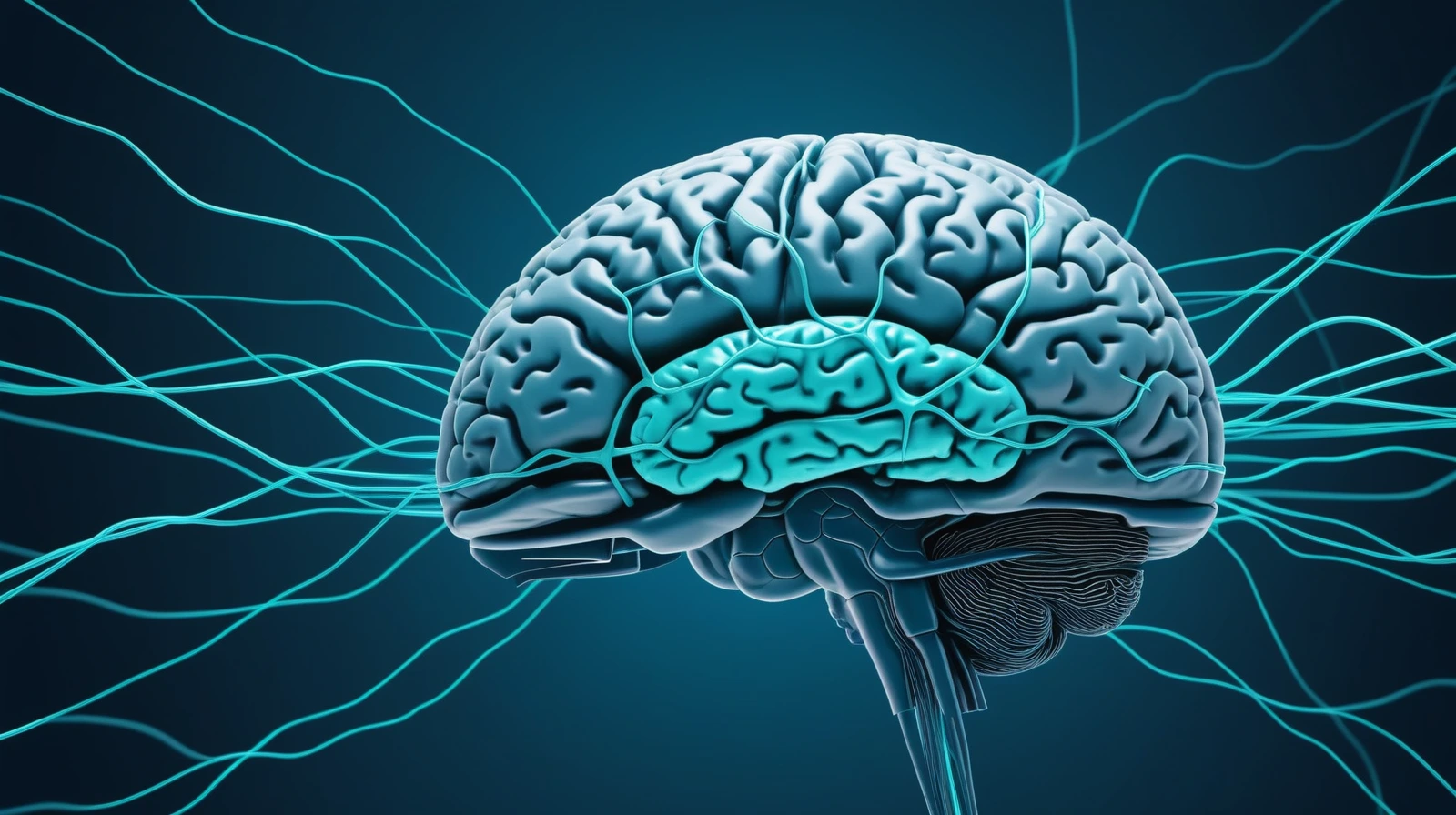
That is why a scanner can sometimes help classify or reconstruct broad content, but not produce a perfect replay. The signal is there. The fidelity is the problem.
What lucid dreaming adds
Lucid dreaming is one of the most useful bridges between dream science and dream visualization.
In a lucid dream, the sleeper knows they are dreaming, and sometimes can influence the dream. That makes verification easier. A lucid dreamer can signal from inside the dream, which gives researchers a cleaner anchor point than a vague post-waking recollection.
A recent electrophysiological paper on lucid dreaming found sensor and source-level signatures associated with the state, which helps researchers separate it from ordinary dreaming (Electrophysiological Correlates of Lucid Dreaming). That is not the same as reading the dream content, but it does make lucid dreams a practical research target.
The comparison is straightforward. Ordinary dreams are harder to study because the only evidence often comes from a report after waking. Lucid dreams can include in-dream signaling or intentional control, which gives scientists a better check on timing and state.
That does not solve dream recording. It does give the field better ground truth.
For sci-fi fans, lucid dreaming is the closest thing we have to an interactive dream interface. For psychologists, it is a methodologically useful state because the subject can sometimes report with more precision. For both groups, it is a bridge, not the destination.
Where dream visualization may go next
The future of dream visualization will depend on three things: better imaging, better decoding, and better definitions.
Better imaging means less noise and more detail. Better decoding means models that can translate brain activity into more meaningful reconstructions. Better definitions mean researchers stop calling every partial inference a “recording.”
The field is already moving in that direction. AI-assisted reconstruction from brain activity is improving. The multimodal approach is improving. And researchers keep finding that pre-sleep experience, memory, and sleep stage all matter more than a simple one-size-fits-all theory would suggest.
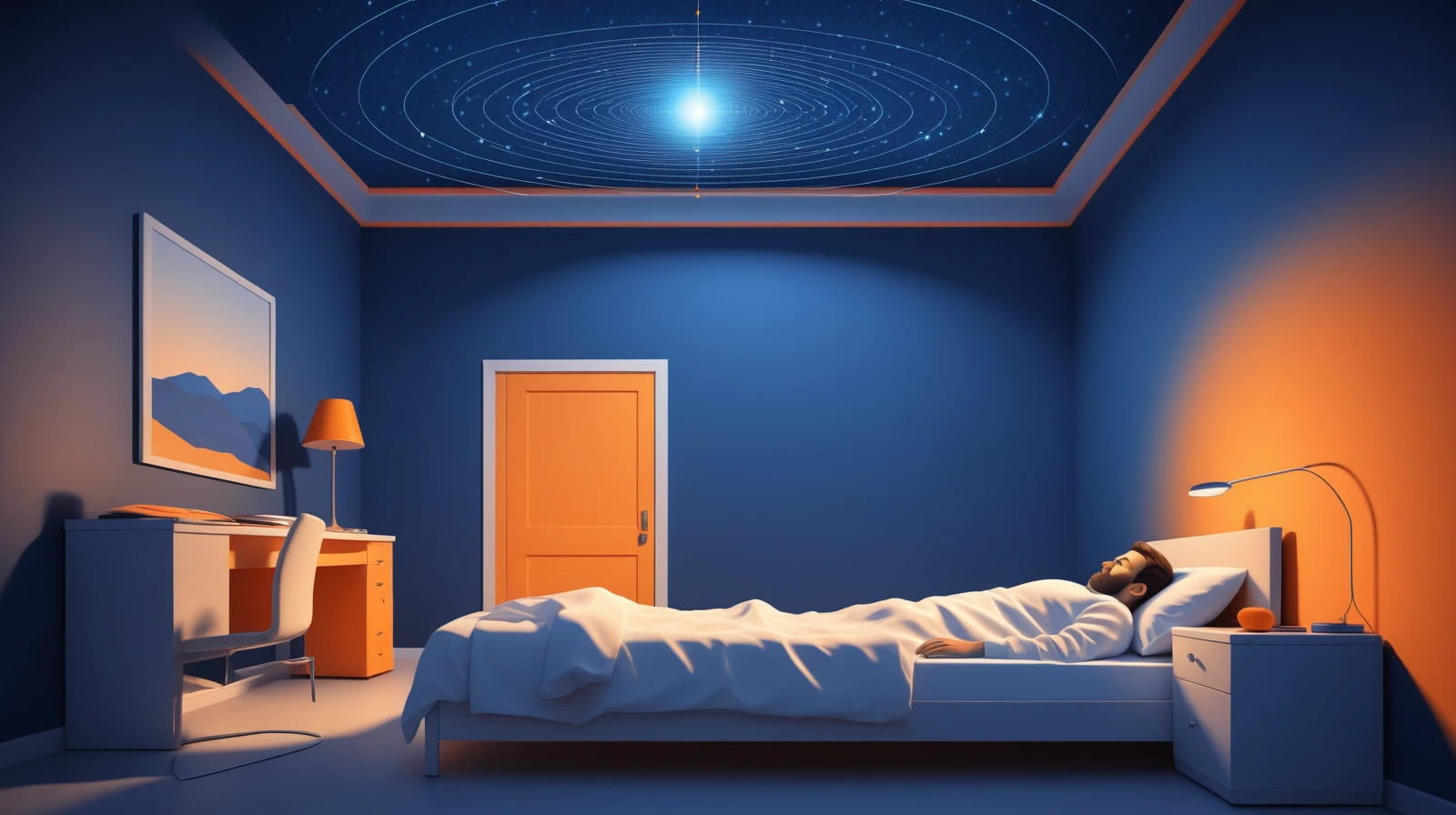
The biggest gap is still fidelity. A dream is not just a picture. It is often a sequence of images, feelings, fragments of speech, shifts in self-awareness, and associative jumps. Reconstructing one piece is much easier than preserving the whole structure.
So the realistic near-term future is not “dream Netflix.” It is better partial reconstructions, better content classification, and better scientific models of how the brain generates dream experience.
What this means for psychology and sci-fi fans
For psychologists, the important point is that dream science is becoming more measurable. That helps with questions about memory consolidation, emotional processing, and consciousness during sleep. It does not mean the subjective dream is no longer important. It means we have a second way to study it.
For technologists, the lesson is that brain decoding works best when the task is constrained. If you define the target narrowly, use good training data, and accept partial reconstruction, you can get real results. If you promise full dream playback, you are ahead of the evidence.
For sci-fi fans, the honest answer is more interesting than a flat yes or no. The science is real enough to suggest that dream visualization will keep improving. But the gap between “we can infer some content” and “we can watch the entire dream as it happened” is still very large.
That gap is where the work is.
Final Thoughts
Dream recording is real as a research direction, but not yet real as a literal playback device. What the science can do today is narrower: infer fragments, reconstruct coarse visual experience, and study how dream content relates to memory, sleep stage, and pre-sleep experience.
That may sound less cinematic than the headline suggests, but it is still a meaningful advance. The brain is not giving up its secrets all at once. Researchers are learning how to ask narrower questions and get better answers.
So the right way to think about dream visualization is not “Can we watch dreams yet?” It is “How much of a dream can we reconstruct before the signal disappears?” That is the frontier.