

If you have ever wondered whether you can learn while you sleep, the honest answer is narrower than the headline suggests. Sleep does not reliably teach you a new language, a new chapter, or a new skill from zero. What it can do is strengthen memories you already formed while awake. That is the real science behind targeted memory reactivation, or TMR: cue the sleeping brain with a sound, scent, or other reminder tied to something you studied earlier, and you may improve how well that memory sticks.
That distinction matters. It keeps the claim useful instead of vague. It also tells you where the practical value is for students and productivity-minded readers: not in replacing study, but in making a small set of learned items easier to recall later.
What people mean by sleep learning
“Sleep learning” is a convenient phrase, but it hides the real mechanism. In ordinary conversation, it suggests the brain can absorb new information while you are unconscious. In the research literature, the question is narrower: can sleep reactivate material learned earlier and make that memory stronger?
Those are not the same thing.
Encoding is the first step. That is when you learn the material in the usual way: reading it, hearing it, rehearsing it, or practicing it. Consolidation comes later. That is when the brain stabilizes and reorganizes what you already learned. Sleep helps most clearly with consolidation, not with brand-new encoding.
That is why many popular explanations oversell the subject. They talk as if sleep is a second classroom. The studies do not support that. The stronger evidence is for targeted memory reactivation, a method that links a cue during sleep to a memory formed earlier while awake.

The practical distinction is easy to see. If you study ten vocabulary words before bed, sleep may help reinforce those words. If you put on an audio track and expect your sleeping brain to learn ten complex ideas it has never seen before, the evidence does not support that outcome.
How targeted memory reactivation works
Targeted memory reactivation, or TMR, is the research term to know. It usually involves pairing material you learn while awake with a cue that can be replayed later during sleep. In practice, that cue is often a sound, though some studies have used smell as well.
The logic is straightforward. If your brain formed an association between a cue and a memory during study, then replaying the cue during a stable phase of sleep may nudge the brain back toward that memory trace. That nudge can improve later recall.
The early human study on targeted reactivation during slow-wave sleep showed that externally triggered reactivation could influence memory performance during deep sleep. Later work made the setup more practical. A 2022 study on automated TMR found that a machine-learning system could identify deep sleep and time cue delivery more carefully. That matters because the cue has to be gentle enough not to wake the sleeper, but present enough to matter.
The strongest version of the technique is not random audio playback. It is timed cueing.
That is where the phrase “neuro-stimulation” often gets used loosely. In this area, the evidence is mostly about sensory cueing, not direct brain stimulation in the cinematic sense. The practical effect comes from when and how the brain is cued, not from blasting the sleeper with stronger input.
The cue timing also explains why the technique can be fragile. If the sound is too loud, sleep gets disrupted and the benefit can disappear. If the cue is too weak or poorly timed, nothing much happens. If the sleeper is in the wrong stage, the result can change again.
What the research actually shows
The most careful studies do not claim one universal sleep-learning trick. They show narrower effects on specific tasks.
One common pattern is paired-associate learning. A person learns a set of item pairs while awake, such as a sound and a location, then some of those cues are replayed during sleep. When tested later, the reactivated items are often remembered better than the non-reactivated ones. The benefit is usually modest, but real.
Another pattern appears in spatial memory. In the automated TMR study, participants learned object locations on a grid, and reactivation during sleep improved recall when the cueing was tuned carefully. That is useful because it looks a lot more like a practical learning task than a pure laboratory puzzle.
Relational learning is another interesting case. A 2024 study reported that memory reactivation in slow-wave sleep can enhance relational learning in humans. Relational learning means remembering how pieces of information connect, not just remembering a single fact. That is closer to real study behavior than a simple yes-no test.
There is also evidence from vocabulary work. A recent home-based closed-loop TMR study reported that vocabulary learning could be promoted during sleep using wearable timing systems. That is the kind of result people usually have in mind when they ask whether sleep learning is real. The important caveat is that the words were learned before sleep. Sleep helped the retention step.
Emotion adds another layer. One older study on emotional memory consolidation found that reactivating emotional material during slow-wave sleep could facilitate consolidation, while reactivation during REM sleep did not produce the same pattern. That does not make REM unimportant. It just means you should be careful with headlines that treat every sleep stage as interchangeable.

The honest summary is simple. TMR can help with memory retention, but the effect depends on the task, the cue, the sleep stage, and the way the cue is delivered. That is much less dramatic than “learn anything while you sleep,” but it is also much more useful.
Why sleep stage matters
Sleep is not one flat state. It has stages, and those stages behave differently.
Slow-wave sleep, also called deep sleep or N3, is where most of the positive TMR results show up. This stage is marked by slow brain activity and large coordinated waves. It seems to be a good window for reactivating learned information without fragmenting sleep too much.
REM sleep, by contrast, is often associated with vivid dreaming, emotional processing, and different kinds of neural activity. That does not mean REM is useless for memory. It does mean the effects can differ from slow-wave sleep, and they are not always better.
The comparison is easier to see with emotional memories. One study found that reactivating emotional material during slow-wave sleep could facilitate consolidation, while reactivation during REM sleep did not produce the same pattern. That does not make REM unimportant. It just means you should not assume one stage solves every memory problem.
The practical takeaway is that the best cueing window depends on what you are trying to improve. If you are working on straightforward recall, slow-wave sleep is usually the more promising target. If you are looking at emotional processing or more complex sleep architecture, REM findings may matter, but the evidence is less clean.
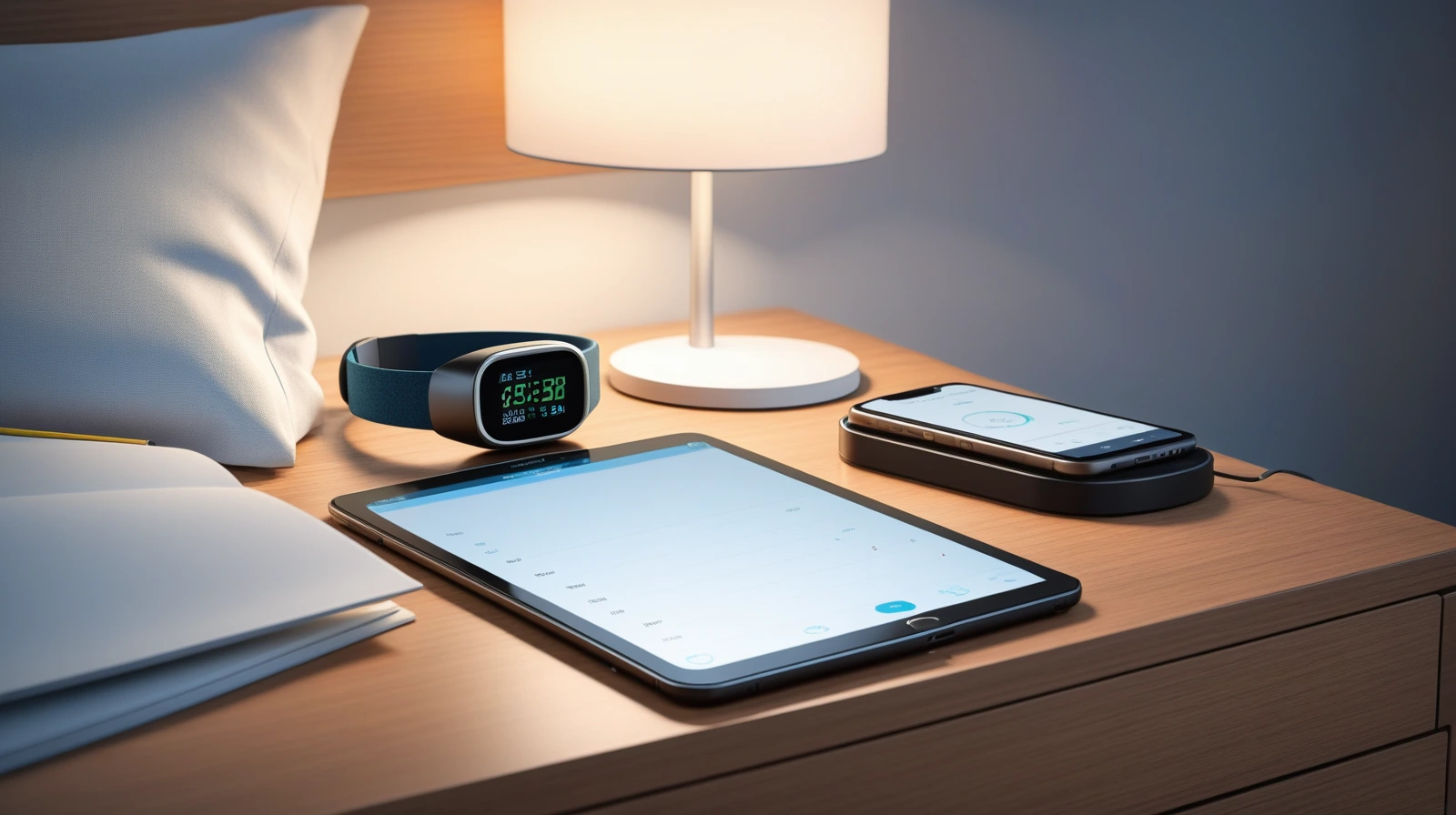
This is also why sleep trackers alone are not enough. A wearable can tell you that you slept for seven hours or that you spent time in a given stage, but it cannot automatically prove that a cue was timed well enough to improve memory. Closed-loop systems are more useful because they try to coordinate cue timing with the actual sleep state.
What sleep learning cannot do
This is the part that keeps the article honest.
Sleep learning cannot reliably teach a person complex new material from scratch. It cannot replace reading, practice, or active recall. It cannot turn a sleeping brain into an open notebook.
Why not? Because the brain still needs the original encoding step. If you have never learned the material while awake, there is nothing meaningful for the cue to reactivate. The cue may be heard, but that is not the same as building a durable memory.
A concrete comparison helps. Studying a list of French words before bed gives the brain something to consolidate. Playing French audio to a sleeping person and expecting fluent vocabulary acquisition asks the brain to do a much larger job without the normal learning steps. The research does not support that leap.
There is a second limit too: not every memory type responds the same way. Simple associations and some spatial or vocabulary tasks have the strongest support. Much richer material, like a full lecture or a multi-step conceptual argument, is a different problem.
So the useful question is not, “Can sleep teach me anything?” The useful question is, “What already-studied material might sleep help me retain better?”
That question produces a much more realistic answer.
Where neuro-stimulation and wearables fit
Wearables are interesting because they make sleep cueing more practical outside a lab.
A basic sleep tracker can record movement, heart rate, or rough stage estimates. That can be helpful, but it is not the same as true cue timing. A closed-loop system tries to detect the right sleep moment and then plays the cue only when the sleeper is in a favorable phase. That is closer to the lab setup that produced the strongest findings.
For readers, the distinction matters. A gadget that merely claims “sleep learning support” may be little more than a timer plus audio playback. A more serious system has to think about cue intensity, timing, and sleep disruption.
That is also why the phrase neuro-stimulation should be used carefully in this context. Most consumer products are not directly stimulating neurons. They are trying to influence sleep-related memory processes through sensory cues and timing. That is a more grounded claim, and it is the one the evidence supports.
If you are evaluating a device, ask three questions:
- Does it target a clearly learned memory, or does it promise passive learning from nothing?
- Does it explain how it avoids waking the user or fragmenting sleep?
- Does it show evidence from actual memory tests, not just sleep-stage charts?
If the answer to those questions is vague, the product is probably overselling the science.
Practical ways students and productivity hackers can use this
The best use of sleep in learning is boring in the best possible way.
First, study before sleep. If the material is important, make sure you have already encoded it while awake. Sleep can reinforce what you just learned, but it cannot replace that first pass.
Second, keep the material narrow. TMR works better when the cue can be tied to a specific set of items. A short vocabulary list, a small set of facts, or a defined spatial task gives the brain a cleaner target than a broad, messy topic.
Third, protect sleep quality. A cue that wakes you up is a bad cue. Sleep fragmentation can erase the benefit and leave you worse off than if you had simply slept undisturbed.
Fourth, think in terms of memory retention, not magical productivity. If sleep helps you recall ten studied items more reliably tomorrow, that is useful. If you expect it to replace a revision session, you will be disappointed.
For productivity hackers, that means the real workflow is still: learn, review, sleep, test. Sleep is part of the memory chain, not a substitute for the rest of it.
Final Thoughts
Sleep learning sounds simple, but the science is more precise and more useful than the buzzword. The real story is targeted memory reactivation: a learned memory gets a gentle cue during sleep, and the brain may reinforce it.
That distinction is worth keeping straight. It means sleep can help you remember what you already studied. It does not mean you can outsource learning to the night.
For students and productivity hackers, that is still a meaningful finding. It tells you where sleep belongs in the learning process, what kinds of cues are plausible, and why the best results depend on timing, sleep stage, and sleep quality. In other words, sleep is part of how memory gets built. It is not the whole building.