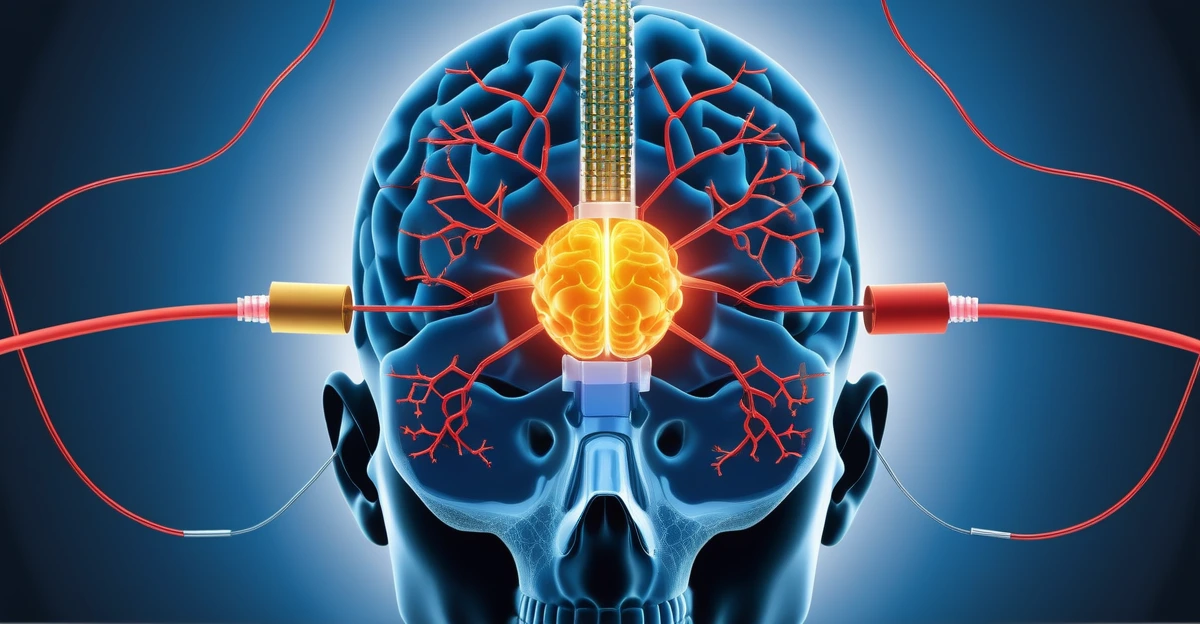


A person who had been unable to speak for years silently tried to form a sentence, and a computer turned those brain signals into flowing speech almost in real time. That is not a movie scene. It is the kind of result researchers are now reporting in serious brain-computer interface work. It also explains why the bigger question keeps surfacing: if neural tech can restore speech, movement, or writing, could it eventually make humans smarter than AI?
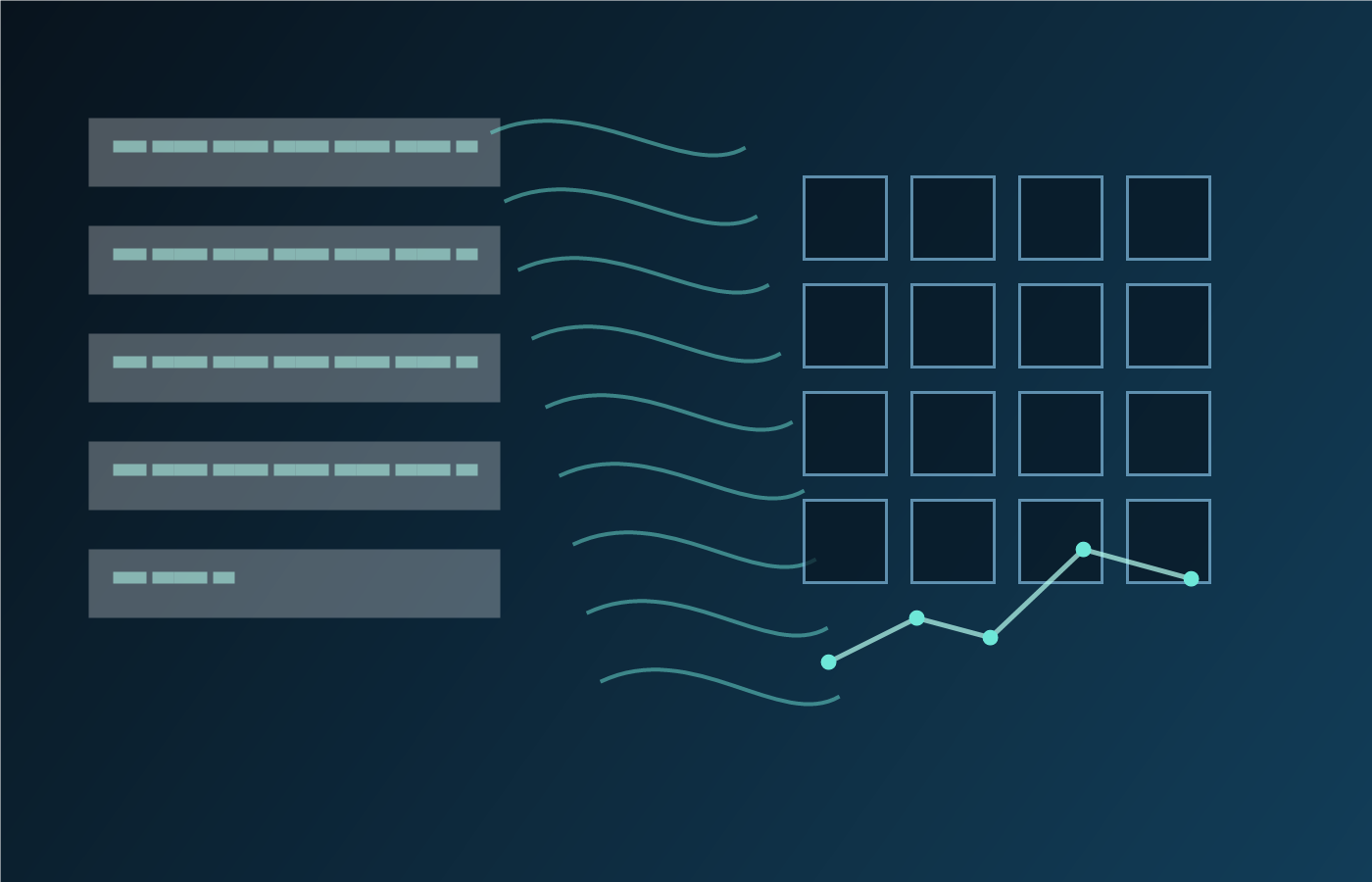
It helps to know how brain-computer interfaces actually read the brain.
This article gives a direct answer. You will see what brain-computer interfaces can actually do today, why upgrading a healthy brain is much harder than headlines suggest, and why the future of intelligence is more likely to be hybrid than human-versus-machine.
First, What Does “Smarter Than AI” Even Mean?
The phrase sounds neat, but it collapses very different abilities into one contest.
A calculator beats almost every human at arithmetic speed. A chess engine beats every human at board evaluation. A large language model can summarize a long report faster than most people can read it. Yet none of those systems decides which report should shape policy, which chess loss should change a friendship, or which number matters in a moral tradeoff. Intelligence is not one ladder. It is a bundle of capabilities that show up differently in different environments.
That is why the better comparison is rarely human intelligence versus artificial intelligence in the abstract. It is usually one kind of intelligence against one task. AI may dominate recall, pattern search, and narrow optimization. Humans still matter for goals, accountability, context, and the ability to notice when the framing itself is wrong. For a broader primer on that split, see AI vs Human Intelligence.
Neural tech does not erase this mismatch by default. Even if a brain-computer interface gives someone a faster route to text, speech, or search, that does not magically turn the brain into a better all-purpose reasoner than frontier AI. It may simply give the person a lower-friction path into tools that are already stronger than humans in narrow domains.
A more useful framing comes from collaboration. Harvard Business School summarized field evidence showing that when AI joins a workflow, better ideas can surface and individuals can work more like teams. That does not prove human-AI combinations always win. It does show why the smarter question may be, “How do people and machines combine well?” rather than, “Who wins outright?”
What Neural Tech Can Actually Do Today
Brain-computer interface, or BCI, is the key term here. A BCI is a system that captures brain activity and converts it into commands for a device. In plain language, it creates a new route from intention to action. The output might be a cursor, a robotic arm, a stream of text, or synthesized speech.
The strongest current evidence lives in communication and control. In a 2021 Nature paper on brain-to-text communication via handwriting, researchers recorded neural activity from a participant with paralysis as he attempted to write letters by hand. The system decoded that intent at roughly 90 characters per minute with high raw accuracy. That is a concrete, measurable achievement, not a vague promise.
An even more vivid example arrived in 2025. According to an NIH summary of a Nature Neuroscience study, a brain-to-voice neuroprosthesis restored flowing speech after paralysis at 47.5 words per minute across a large vocabulary, and 90.9 words per minute on a limited 50-word set, with translation delay of about a quarter of a second. That is close enough to natural conversation to change daily life.
These results deserve excitement, but they also need context. They are narrow, task-specific, and clinical. The systems are trained on one person’s neural patterns. They solve defined problems such as writing or speech output. They do not show a healthy brain suddenly gaining broad reasoning power, judgment, or creativity.
They also depend on AI. The decoder that turns noisy brain signals into letters, words, or speech is itself an AI-heavy system. In that sense, neural tech and AI are already intertwined. If you want another site-level primer on that overlap, read AI Reading Minds: What Neural Tech Can Actually Do.
Regulation tells the same story. The U.S. Food and Drug Administration’s guidance on implanted brain-computer interfaces is centered on patients with paralysis or amputation. That is where the field is most mature. Today’s best BCIs are better understood as powerful new input-output channels than as proof of a coming intelligence-upgrade market.
Why Enhancement Is Much Harder Than Repair
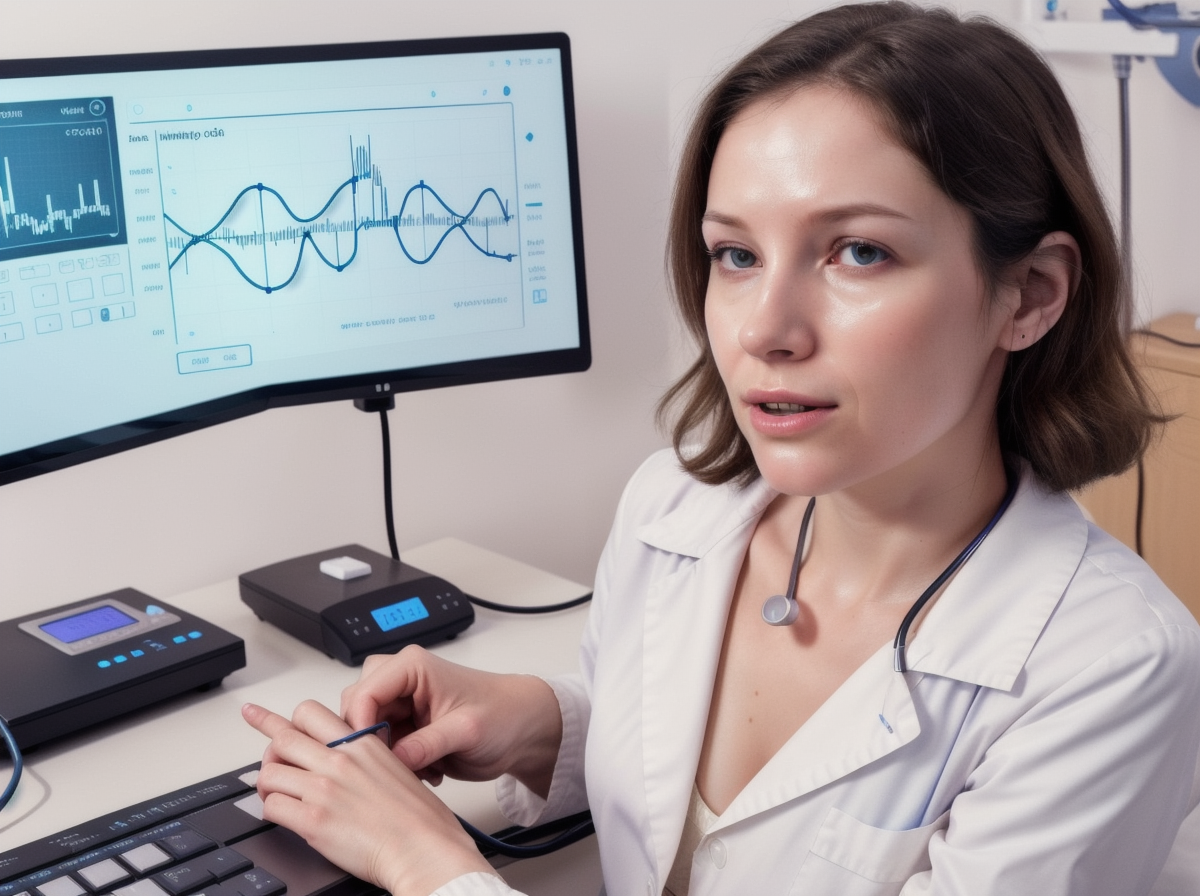
Restoring a lost function and enhancing a healthy brain are different technical problems, different scientific problems, and probably different social problems too.
When someone cannot speak or type, a BCI does not need to make the brain superhuman. It needs to build a usable bridge around a broken path. That is a focused target. Researchers can measure success in words per minute, character accuracy, or command completion. The engineering challenge is still hard, but the goal is clear.
Enhancement is murkier. Smarter in what sense? Better short-term memory? Faster focus switching? Better planning under uncertainty? Higher creativity? Better social judgment? Once the claim moves beyond one task, the evidence usually gets softer.
That is exactly what the healthy-adult neural enhancement literature shows. A recent meta-analysis in Brain Research found that transcranial alternating current stimulation barely improved working memory in healthy adults, and the apparent effect no longer held once publication bias was corrected. This does not mean the area is empty. It means the strong version of the claim is not currently supported.
Small task gains also do not equal general intelligence. Working memory matters, but so do sleep, prior knowledge, emotional regulation, motivation, and social context. A person who performs slightly better on one lab task after stimulation has not suddenly crossed some threshold where they outthink advanced AI systems. That is like confusing a sharper sprint with a new species of athlete.
Healthy brains are dynamic biological networks, not blank hardware waiting for a patch. Change one part and another part adapts. Increase stimulation and you may affect focus, fatigue, or mood differently across users. That makes repeatable, scalable enhancement much harder than it sounds in product demos.
The clean comparison is simple. Repair asks whether technology can restore a missing route. Enhancement asks whether technology can safely re-tune a living, already functional system so it performs above its normal baseline and beyond fast-improving AI. The first is happening now. The second is still largely aspirational.

The Most Plausible Future Is Hybrid Intelligence
If neural tech is unlikely to make healthy humans broadly smarter than AI in the near term, what is the more credible path?
The answer is hybrid intelligence. Neural tech can reduce friction between thought and action. AI can decode, predict, summarize, and personalize. Put those together and the result may be a person who works with external intelligence far more fluidly, not a person whose biological brain suddenly outclasses the machine.
That is already the direction of travel. Nature Medicine’s 2025 analysis of AI-powered brain-computer interfaces argues that AI is likely to be central to the next phase of the field, not just for decoding brain signals but for adapting systems to users and shaping feedback loops. In other words, AI is not merely the competitor in this story. It is part of the interface layer itself.
This matters because the most interesting gains may appear first in speed, expression, and coordination. Think of a future in which a researcher moves from intention to notes, search, draft, and revision with far less typing and clicking. Think of assistive systems that detect hesitation, adapt to fatigue, or offer support at the exact moment a user is getting stuck. Those are not proven consumer products yet. They are reasoned extensions of today’s assistive BCIs and AI systems.
The comparison that fits best is not brain versus model. It is friction-heavy workflow versus friction-light workflow. A smartphone did not make people biologically smarter, but it expanded what one person could do in a few seconds. GPS did not improve the brain’s built-in navigation circuitry, yet it changed how people move through the world. A mature BCI-AI stack could do something similar for communication, research, and certain forms of knowledge work.
That same logic already shows up in ordinary generative AI use. When AI joins a team, people often stop acting like isolated individuals and start acting more like augmented operators. Neural tech could make that coupling tighter. The likely result is not humans becoming smarter than AI in some universal sense. It is humans becoming faster, more expressive, and more effective when working through AI.
For readers who want the broader context, this argument pairs well with Brain-Computer Interfaces and the Future of AI and The Extended Mind. Both make the same larger point: augmentation usually changes systems of thought before it changes biology.

What Would Have to Change Before Humans Could Rival AI This Way?
Several bottlenecks would have to move at once.
The first is bandwidth. Current BCIs decode selected intentions under constrained conditions. They do not capture the full richness of human thought as if the brain were streaming clean prose. Brain activity is noisy, distributed, and deeply context dependent. That is why translating a few high-value signals is already a breakthrough.
The second is safety and durability. Implanted devices require surgery and long-term maintenance. Signal quality can shift. Hardware can age. Tissue can respond. Non-invasive systems avoid surgery but usually lose precision. That tradeoff will shape the field for years.
The third is personalization. A useful decoder has to learn a specific user’s neural patterns and stay accurate over time. That makes a neural interface look less like a universal app and more like a fitted system. Scaling that reliably is hard enough in medicine, where use cases are urgent. It is even harder in consumer enhancement.
The fourth is governance. In November 2025, UNESCO adopted the first global standard-setting instrument on the ethics of neurotechnology. That is not a side note. It is a signal that mental privacy, cognitive liberty, and the commercial use of brain data are already live issues. Once neural data becomes valuable to employers, platforms, insurers, or states, the question stops being Can we do this and becomes Who controls the conditions under which it is done.
That may be the deepest reason the phrase can humans become smarter than AI leads people astray. The decisive constraint may not be whether the hardware works in principle. It may be whether the social contract around neural access remains acceptable at all.
So the direct answer is this: neural tech may help humans act faster, communicate better, and work with AI more effectively. It is not close to proving that healthy humans will broadly outthink advanced AI systems any time soon.
Final Thoughts
Neural tech is already impressive, but not for the reason the boldest headlines imply. Its strongest achievement so far is helping people recover lost channels of speech, writing, and control. That matters more than the fantasy of instant superhuman cognition.
The future of intelligence is likely to be shared rather than singular. People, models, and interfaces will shape one another. The real test is not whether neural tech can help humans beat AI at its own game. It is whether we can build forms of augmentation that expand human agency without giving away privacy, consent, or judgment.