
If you keep seeing headlines about Tesla’s “atom-shaping” AI push, you are not alone in wondering what is real and what is marketing. This breakdown gives you practical signal: what Tesla has officially confirmed about Optimus Gen 3, where AGI claims are still ahead of evidence, which bottlenecks matter most, and what milestones to watch in 2026. You will leave with a clearer map of the technology, the timeline, and the execution risk.
The short version is straightforward. Tesla has published concrete 2026 goals for Optimus Gen 3, including production intent. That is meaningful progress in physical AI. It is not the same as proven AGI.
Why “Atom-Shaping AI” Is Suddenly Everywhere
The phrase accelerated after Elon Musk said Tesla would likely be among the companies that make AGI and “probably the first to make it in humanoid/atom-shaping form,” as reported by Anadolu Agency on March 4, 2026, referencing his X post. Whether readers agree or disagree, the wording spread because it translates a big shift in one line.
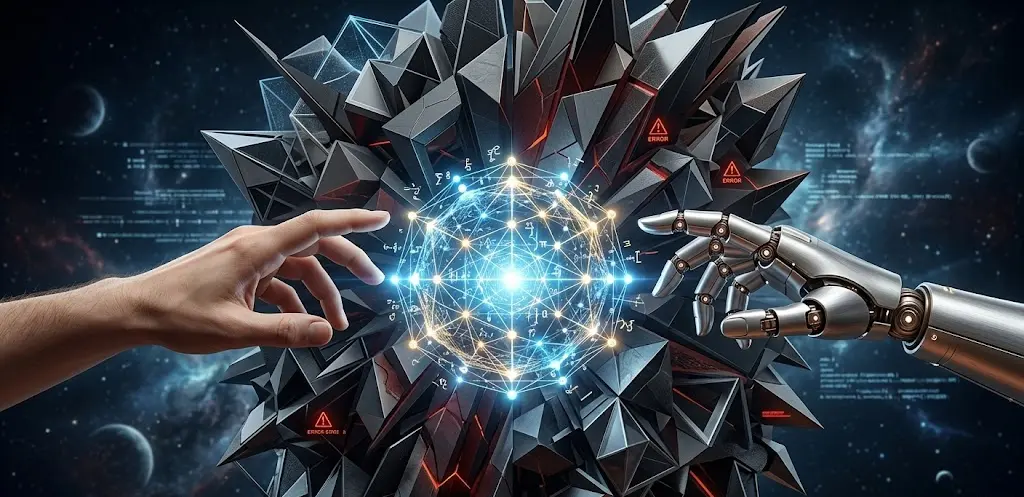
A concrete comparison makes this clearer. A large language model can produce software, text, and analysis in digital space. A humanoid robot has to execute movement in physical space: grip force, balance, contact friction, collision avoidance, and timing under uncertainty. In plain language, one manipulates symbols; the other manipulates matter.
Tesla’s own investor language moved in the same direction. In the Q4 2025 update, the company described Tesla as a “physical AI company” while discussing autonomy and Optimus. That framing is why the keyword “Tesla atom-shaping AI” is drawing broad search interest from AI readers, robotics professionals, and investors.
What Tesla Has Officially Said About Optimus Gen 3
The cleanest approach is to track official statements by date.
- Q3 2025 update: Tesla said first-generation Optimus production lines were being installed in Fremont, with expected volume production in 2026.
- Q4 2025 update: Tesla said it remained on track to unveil Optimus Gen 3 in Q1 2026, called Gen 3 the first design aimed at mass-production volume, and targeted production start before end-2026.
That progression is important because these milestones are not interchangeable.
| Milestone | What it means | Why it matters |
|---|---|---|
| Unveil | Public reveal of hardware/software generation | Shows direction, not manufacturing proof |
| Pilot line readiness | Tooling and process setup | Early manufacturability signal |
| Production start | Initial output under production conditions | First hard execution checkpoint |
| Sustained volume | Reliable throughput over time | Real economic viability |
Many short news posts merge these into one narrative. That hides risk. A robot can look strong in a staged demo and still miss factory economics if intervention rates and downtime stay high.
Tesla’s 2025 Form 10-K adds discipline to the story: it flags uncertainty about Bots commercialization, timelines, and market acceptance. That is normal for an early high-capex product class. Ambitious targets and explicit risk disclosure can coexist.
Tesla also tied Optimus progress to broader AI infrastructure in investor materials, including Cortex expansion and AI5 compute ambitions. The strategic message is clear: combine data, training, inference, and robot embodiment in one stack.
Is This AGI, or “Physical AI” Getting Better?
This is where precision matters most.
- AGI: generally understood as around human-level performance across many domains and contexts.
- Physical AI: AI that perceives, reasons, and acts in real environments through robots or autonomous systems.
- Embodied AI: AI whose intelligence is expressed through a physical body interacting with the world.
NVIDIA’s physical AI definitions and DeepMind’s Gemini Robotics framing point to the same practical truth: physical intelligence is not just chatbot intelligence plus motors. It requires robust perception, planning under uncertainty, and reliable action in noisy environments.
Example comparison:
- A text model can explain how to insert a cable harness.
- A humanoid in a real factory must detect orientation errors, handle part tolerances, avoid collisions, recover from slips, and still hit cycle time targets.
That is why Optimus Gen 3 belongs in AGI conversations without being AGI proof. It can be a path toward broader machine intelligence if it demonstrates transfer across many tasks with low intervention and stable autonomy. Until then, the strongest label is advanced physical AI under active industrial scaling.
The Bottlenecks Tesla Still Has to Clear
Hype does not remove hard constraints. Four bottlenecks are central.
1) Reliability and cycle-time economics
Production robots must run for long shifts with predictable behavior. One weak station can slow a whole line. For readers, this means short clips are low-value evidence; sustained uptime and intervention data are high-value evidence.
2) Data quality in the physical world
Real settings are messy: variable lighting, object variation, sensor noise, and human unpredictability. Scale depends on how quickly the system learns from this variation and transfers skills between tasks.
Tesla’s real-world AI data advantage is relevant here, but transfer efficiency for humanoid manipulation remains an open execution challenge.
3) Integrated hardware supply chain
At scale, every subsystem matters: actuators, hands, control electronics, onboard compute, safety controls, and spares logistics. If one link is constrained, rollout slows. Tesla’s own 10-K risk language supports a cautious interpretation of timeline confidence.
4) Safety and policy readiness
As robot capability rises, governance requirements tighten. The EU AI Act timeline for 2026 and 2027 shows that compliance obligations continue to phase in. Even industrial-first deployments need stronger documentation, monitoring, and incident handling.
A simple comparison: in software, a bug may create inconvenience; in robotics, a bug can stop production or create safety exposure. Governance and engineering maturity must rise together.
How Tesla Stacks Up Against Other Humanoid Players
A better comparison is “deployment quality and repeatability,” not social media reach.
Figure + BMW
Figure’s November 2025 update described growing runtime and task throughput in BMW production context. The exact tasks differ from Tesla’s, but this is still meaningful because it reflects live manufacturing learning rather than lab-only performance.
Boston Dynamics Atlas
Boston Dynamics repositioned Atlas as an all-electric product path and announced pilot deployment plans by January 2026. The company is historically strong in control and mobility robustness. Commercial scale and economics remain the harder test.
Gemini Robotics and generalized embodied intelligence
DeepMind’s Gemini Robotics work emphasizes cross-task embodied reasoning. This is less about near-term factory labor replacement and more about broader intelligence transfer. Tesla’s path is more tightly tied to internal manufacturing utility and scale economics.
The market is not one race with one finish line. It is three overlapping races:
- Reliable factory deployment at useful cost.
- High-robustness motion and manipulation.
- Broad embodied generalization.
Tesla’s ambition is to compete in all three at once. That is why upside and execution risk are both high.

What to Track in 2026 If You Want Signal, Not Noise
Use a milestone checklist, not headline sentiment.
Signals that strengthen the thesis
- Specific Gen 3 capability envelope at unveil (task range, dexterity, autonomy scope).
- Evidence that production-start claims correspond to real production conditions.
- Sustained metrics: uptime, interventions, throughput impact, and defect rates.
- Expansion from narrow repetitive tasks to wider workflow coverage.
- Credible updates linking AI stack improvements to measurable physical task gains.
Signals that weaken the thesis
- Slipping schedules with vague explanations.
- Marketing-heavy communications with minimal operational metrics.
- High demo quality but weak repeatability.
- Narrow success that does not transfer to adjacent tasks.
A concrete comparison: fast software releases can hide defects temporarily. In robotics, defects surface quickly in safety incidents, line stoppages, and maintenance burden.
Sources and Evidence
- Tesla Q4 2025 Update (official)
- Tesla Q3 2025 Update (official)
- Tesla 2025 Form 10-K (official)
- Anadolu report on Musk’s March 4, 2026 statement
- Figure and BMW production update
- BMW humanoid robot trial context
- Boston Dynamics Atlas product update
- DeepMind Gemini Robotics
- NVIDIA physical AI glossary
- EU AI Act implementation timeline
Final Thoughts
Tesla’s atom-shaping AI story should be read as a serious strategic push, not as settled AGI evidence. Optimus Gen 3 milestones in Tesla filings are meaningful and worth tracking closely.
The harder question is not whether the vision sounds compelling. The harder question is whether Tesla can convert embodied AI progress into repeatable factory economics at scale while meeting safety and policy expectations.
If 2026 brings credible production data, the industry conversation will move from possibility to operational impact. If not, the gap between narrative and manufacturable reality will remain the central issue.