
Scientists have developed a system they call Mind Captioning, an AI method that generates descriptive text from brain activity measured with fMRI while people watch or remember video clips. That sentence sounds like science fiction, so it helps to slow down. This article explains what the model actually did, how accurate it was, why the result matters, and where the limits are. The short version is simple: this is a real research advance, but it is not a universal mind-reading machine.
What Mind Captioning is
The study behind Mind Captioning was published in 2025 under the title Mind captioning: Evolving descriptive text of mental content from human brain activity. The researchers were not building a consumer app or a caption tool for ordinary video workflows. They were trying to generate short descriptions of what a person was seeing or recalling by using brain activity measured with fMRI.
That distinction matters. Most AI systems that produce text from media start with something external such as audio, an image, or a video file. Mind Captioning starts with internal brain activity. Instead of turning speech into text, it tries to turn patterns associated with mental content into text.
The easiest comparison looks like this:
- A speech-to-text model listens to sound and writes words.
- A video-captioning model watches a clip and describes what is visible.
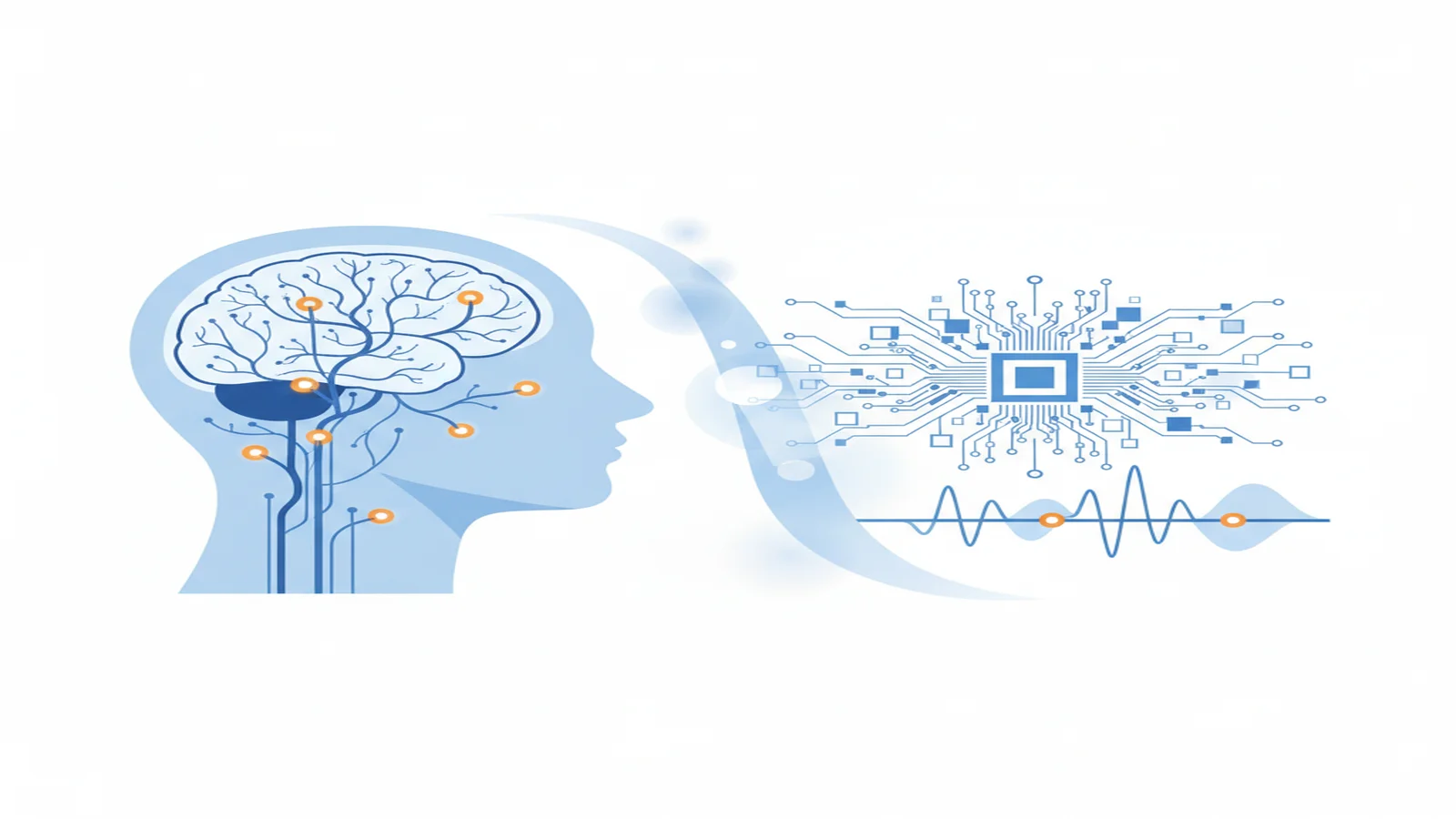
- Mind Captioning takes fMRI-based brain activity and tries to generate a matching description.
That makes the result notable before you even get to the numbers. The system is not just classifying one label from a short list. It is trying to produce flexible descriptive language from measured brain signals.
How the system works
To understand the paper, you need a plain-language picture of fMRI, or functional magnetic resonance imaging. The NCBI Bookshelf overview of fMRI explains that fMRI tracks changes related to blood oxygenation, which researchers use as an indirect measure of brain activity. That means the scanner is not reading words from the brain the way a microphone reads speech. It is measuring a slower physiological signal that correlates with neural processing.
In the Mind Captioning study, participants watched video clips and also performed recall or imagery tasks. While that happened, researchers recorded brain-wide fMRI patterns. The system then linked those patterns to semantic features derived from language descriptions of the video content.
The important step came after that. Instead of stopping at a simple class label such as dog or car, the model used a language-generation process to evolve a description over repeated optimization steps. The full Science Advances text via PMC describes how decoded semantic features were combined with a masked language model to improve candidate text iteratively.
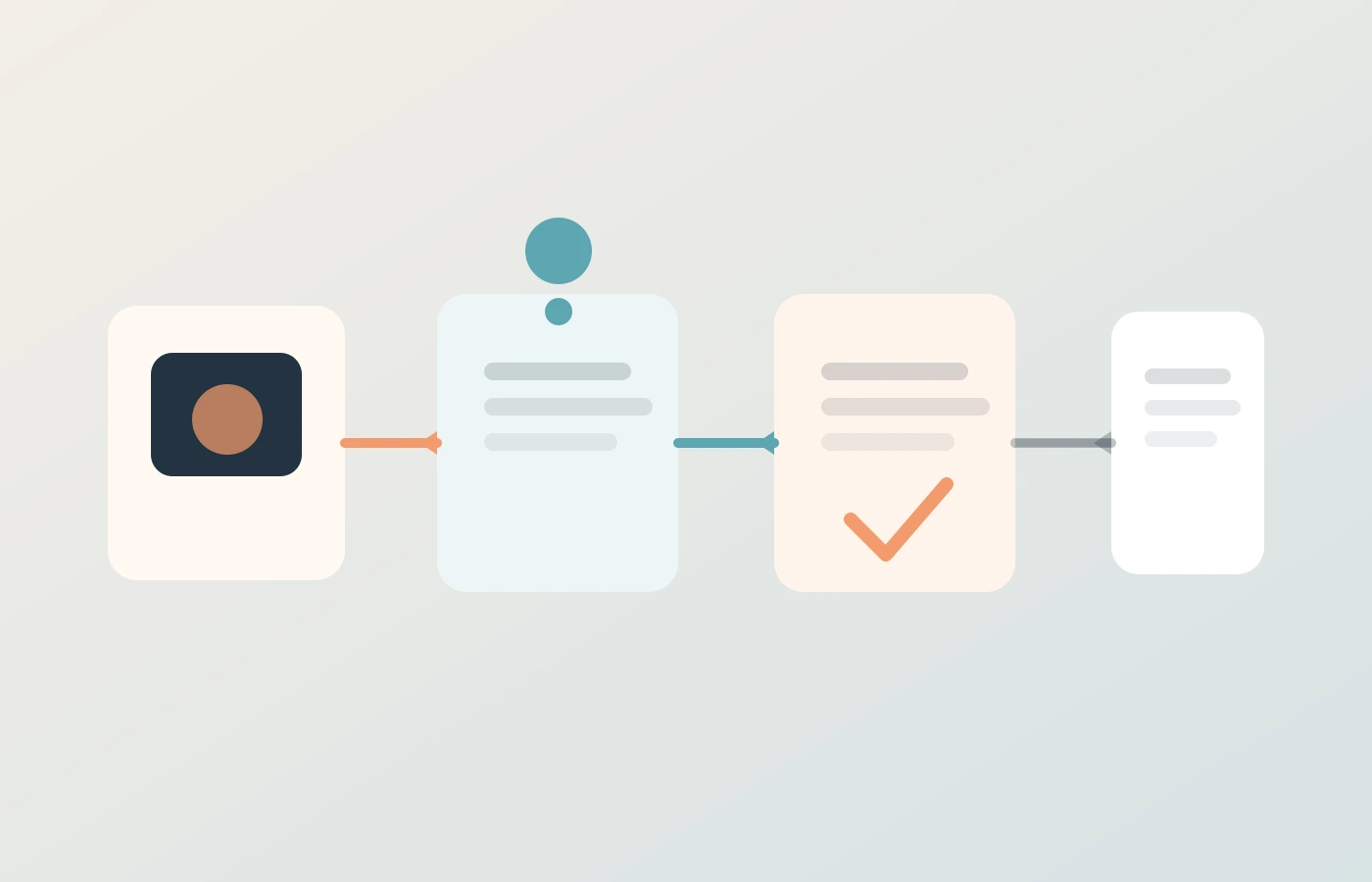
In practical terms, the workflow looked like this:
- A person watched or recalled a scene.
- The scanner recorded whole-brain fMRI patterns.
- The system decoded semantic features from those patterns.
- A language model produced candidate descriptions.
- The description was refined to better match the decoded brain signal.
That is why the study stands out. It is not only mapping brain activity to a category. It is pushing toward brain activity to descriptive language.
What the study actually found
This is the part most likely to get simplified badly, so it is worth being specific.
The study involved six healthy participants. For viewed video content, the system reached about 50 percent accuracy among 100 candidate descriptions in a representative setting, compared with a 1 percent chance level. That does not mean the model wrote perfect free-form captions every time. It does mean the decoded descriptions carried enough semantic information to match the correct scene far above chance.
The recall condition was harder. When participants remembered scenes instead of directly watching them, performance dropped. Even so, the paper reports that stronger subjects reached nearly 40 percent accuracy among 100 candidates, again far above chance.
Those results matter because of the task design. This was not a two-choice test. The model was operating in a one-out-of-one-hundred setting, which makes 50 percent or 40 percent more meaningful than the raw number might sound in isolation.
The qualitative result matters too. The generated descriptions often captured the gist of an event or interaction even when the wording was imperfect. A description could miss an exact object label and still preserve the structure of what happened in the clip. That moves the result closer to semantic understanding than to a simple classifier.
The paper also makes a broader neuroscience claim: the decoding worked without relying only on the canonical language network. In plain language, the useful semantic information was distributed more broadly across the brain than a narrow language-only account would suggest.
Why this matters scientifically
Mind Captioning matters because it pushes brain decoding toward richer language output.
That is different from earlier results that focused on detecting a category, a visual feature, or a narrow task state. Those are important achievements, but they are smaller targets. Mind Captioning tries to generate scene descriptions with enough structure to be compared as language.
A useful comparison is with Whisper, which is a strong model for transcribing speech. Whisper turns audio into text. Mind Captioning tries to turn fMRI-based brain activity into descriptive text. They solve different problems, but the contrast helps. Whisper starts with explicit language in sound. Mind Captioning starts with indirect, distributed signals tied to visual and remembered experience.
That does not make Mind Captioning a general-purpose language interface yet. It does make it a scientifically important step. The study suggests that language can act as a readout for nonverbal mental content, at least under controlled conditions and with the right decoding pipeline.
The paper also hints at a larger idea: some mental content may be practically accessible through descriptive language even when the starting signal is not speech. That is a serious neuroscience claim, not just a dramatic headline.
Why this is not mind reading in the everyday sense
This boundary matters more than the hype.
Mind Captioning is not a tool that can casually read any private thought from anyone at any time. It depends on a large fMRI scanner, slow hemodynamic signals, subject-specific data, and controlled tasks. That already separates it from the everyday idea people hear when they see the phrase mind reading.
The system also needed repeated measurements and careful experimental design. In the paper, test data were averaged across repeated stimulus presentations. That matters because it shows the method is not operating under ordinary noisy conditions such as spontaneous inner speech during daily life.
The task itself was constrained. The model was tested on viewed or recalled video content, not on unrestricted private beliefs, hidden motives, or arbitrary internal monologue. That is a major limit.
Here is the practical comparison:
- Everyday mind reading would mean decoding arbitrary private thought from normal life.
- This study decoded structured content under laboratory conditions from subject-specific fMRI data.
Those are not the same claim. The second is still impressive. It just is not magic.
The real-world promise and the ethical questions
The paper suggests a possible long-term use that is easy to see: a pathway from nonverbal mental content to language output. The authors note that this could matter for people with aphasia or other language-related disabilities. That makes the work more than a curiosity. It hints at a future communication tool.
But it is still far from that outcome. This was a small study in healthy participants using expensive equipment under controlled conditions. It was not a clinical trial, not a medical device, and not a ready-made assistive system.
The ethical concern is real anyway. The paper itself is not an ethics study, but a reasonable inference from the demonstrated capability is that mental privacy becomes more concrete as brain-to-text systems improve. Once a technology can translate some structured brain activity into language, even imperfectly, questions about consent, security, and misuse stop being abstract.
That does not mean the right response is panic. It means the right response is precision. The ethical debate should match the actual capability of the system, not the loudest version of the headline.
What to watch next
If you want to follow this field without getting pulled into hype, watch a few specific milestones.
First, watch for larger and more diverse samples. Six participants are enough for a serious proof of concept, not for broad claims about universal decoding.
Second, watch for less restrictive hardware or more efficient use of current hardware. fMRI is powerful, but it is not practical for everyday communication.
Third, watch for stronger generalization across people and tasks. A major advance would be reducing how much subject-specific calibration is needed.
Fourth, watch for better language generation tied to decoded signals. The authors note that improvements in language models may improve the final description quality. That matters because the language layer is part of what makes this work different from older label-based decoding.
The likely future of Mind Captioning is not one leap into open-ended thought reading. It is a sequence of smaller advances in decoding, language generation, experimental design, and safeguards.
CTA
If this topic matters to your work, the next useful step is to stay with the surrounding questions: how fMRI actually works, what brain-computer interfaces can do today, and why mental privacy and AI ethics become more concrete when systems move closer to the brain.