

Mind and AI: What Machines Reveal About Human Thinking
The conversation around AI gets clearer when you stop treating it as only a software story. It is also a mind story. Modern AI matters because it captures a few parts of intelligence that humans once treated as uniquely ours: pattern recognition, language generation, prediction, and fast learning from feedback. Just as importantly, the places where AI still breaks down tell us something useful about the mind itself.
That is why the best question is not “Will machines become human?” The better question is this: which parts of human thinking can be modeled computationally, and which parts still depend on embodiment, motivation, social context, and conscious experience? Once you frame it that way, mind and AI becomes less of a hype topic and more of a practical guide to better tools, better work, and better judgment.
Why mind and AI belong in the same conversation
The relationship between mind and AI did not begin with chatbots or image generators. It reaches back to the earliest attempts to explain intelligence in formal terms. Alan Turing made the debate concrete by asking whether machine behavior could count as intelligent behavior. McCulloch and Pitts then helped open the computational view of cognition by showing how simplified neurons could be described logically. Those ideas were crude compared with modern systems, but they changed the frame. Intelligence was no longer only a mystery to admire. It became something researchers could try to model, test, and improve.
That history matters because AI has always played two roles at once. It is an engineering field that builds systems people can use, and it is a scientific instrument for probing what intelligence is made of. Every time a machine performs a task once thought to require a mind, researchers learn something about that task. Sometimes the result is surprising humility. Activities humans experience as effortless, such as spotting patterns in huge data streams or finishing a sentence, can be formalized better than expected. Other times the result is useful resistance. Tasks that sound simple in words, such as common sense, social judgment, or grounded understanding, are still stubbornly difficult for machines.
So the link between mind and AI is not accidental. AI keeps testing our assumptions about what intelligence is. It forces us to ask whether thinking is mostly prediction, symbol manipulation, memory, planning, sensory grounding, goal pursuit, or some layered combination of all of them.
What AI can already model about the mind
Pattern recognition and prediction
Current AI is strongest when a cognitive task can be framed as prediction from large amounts of data. Vision systems can classify images, detect defects, and identify patterns that would take humans far longer to scan manually. Recommendation systems infer preferences from behavior. Language models predict plausible next words with startling fluency. These are not cheap tricks. Prediction sits close to the center of many real cognitive tasks. Humans constantly anticipate what another person will say, what a road scene implies, or which numbers in a dashboard deserve attention.
That is one reason AI feels mind-like. It captures a real piece of cognition: the ability to compress experience into expectations. When a model completes code, summarizes a meeting, or proposes the next sentence in a report, it is doing a limited but meaningful form of cognitive work. It is using learned structure to generate a useful next move.
Learning from feedback and goals
AI also resembles one part of the mind when it learns from feedback. Reinforcement learning systems improve by acting, receiving rewards, and adjusting behavior. That is not the whole story of human learning, but it does echo something real. People and animals also adapt through success, error, and repeated interaction with environments.
This is why AI performs well in bounded domains where the objective is clear and the feedback signal is measurable. It can rank options, optimize logistics, detect anomalies, and support repetitive decision patterns once success has been defined. In these settings, AI looks less like magic and more like accelerated cognition. It narrows the search space faster than a person can, which is exactly why it is so valuable inside structured workflows.
Language as compressed knowledge
Large language models changed the public conversation because fluent language feels closer to thought than a chess engine or classifier ever did. When a system can explain a topic, change tone, compare viewpoints, and handle follow-up questions, people naturally begin inferring understanding. That reaction is not irrational. Human beings use language as one of the strongest signals of intelligence, memory, and perspective.
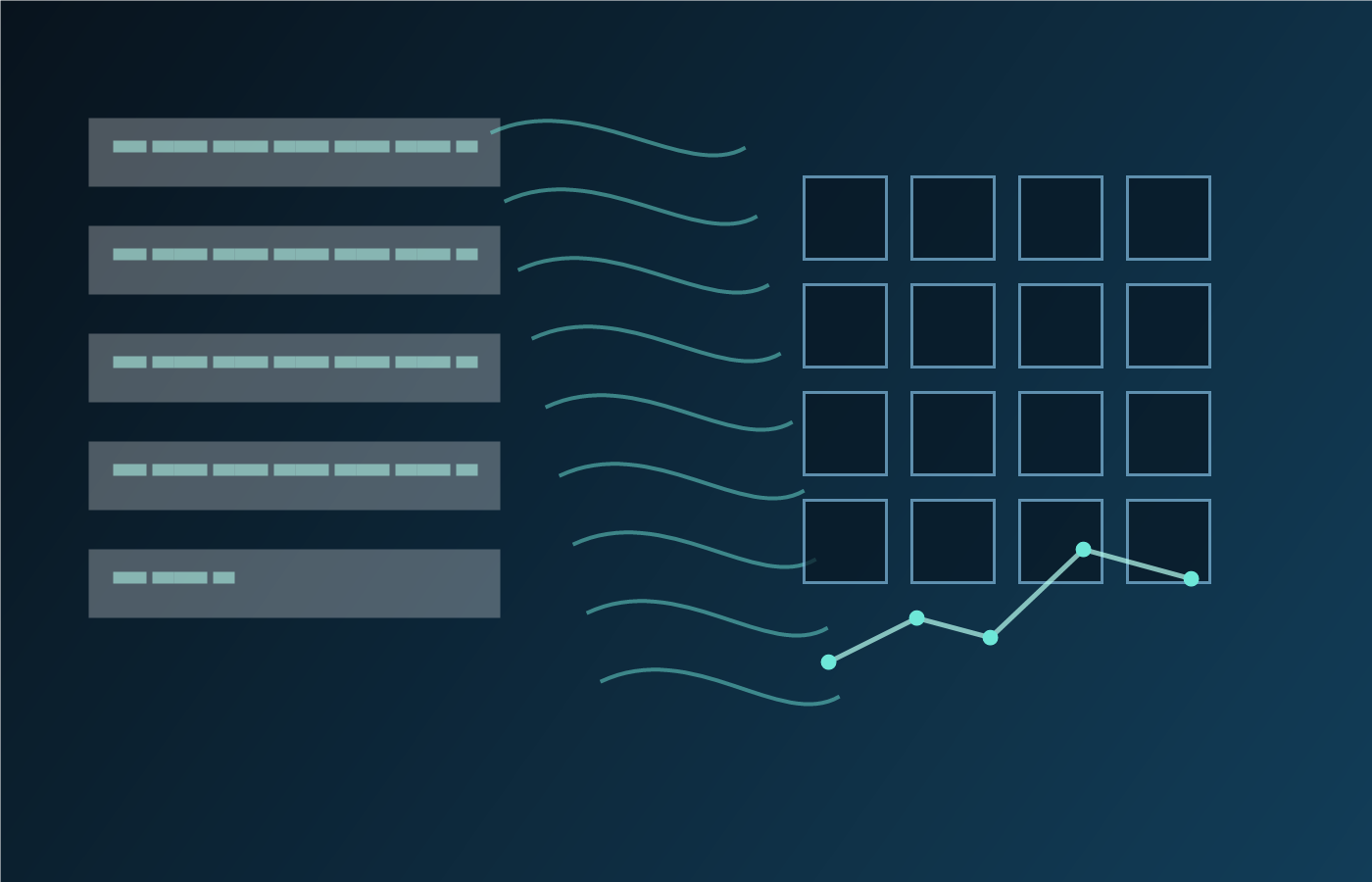
But the deeper lesson is not simply that AI now talks well. It is that these models capture a surprising amount of structure already embedded in human text. They learn patterns of explanation, analogy, argument, and association. That makes them useful for drafting, brainstorming, summarizing, and translating between contexts. In that sense, they model a slice of human cognitive output extremely well, even if they do not reproduce the full process that produces human understanding.
Where the human mind still exceeds current AI
Embodiment and lived context
Human thinking does not float above the world. It is shaped by bodies, environments, perception, action, memory, and emotion. A child learns what “hot,” “heavy,” or “dangerous” means through lived encounters, not by reading a definition alone. A nurse notices posture, hesitation, and fatigue. A manager hears the difference between polite agreement and real commitment. A driver reads weather, traction, timing, and social behavior at a four-way stop.
This kind of embodied intelligence remains a major gap for current AI. Even when a model can speak convincingly about physical experience, it usually lacks direct sensorimotor grounding. It does not grow up inside a body that must stay balanced, avoid pain, manage uncertainty, and deal with irreversible consequences. That difference matters because human common sense is not just a collection of statements. It is a history of being in the world.
Meaning, motivation, and self-direction
Humans do not only optimize externally assigned goals. We carry layered motives: curiosity, fear, duty, belonging, identity, ambition, and care. We negotiate between them, revise them, and sometimes reject the metrics imposed on us. This makes the mind messy, but it also makes it self-directing.
Current AI systems are usually pointed at goals from the outside. A developer chooses the dataset, the loss function, the benchmark, or the reward signal. That is why AI becomes powerful within a defined task but weaker when the task itself is ambiguous, contested, or morally loaded. In real life, many of the hardest problems are not about selecting the best answer from a stable objective. They are about deciding what should count as success in the first place.
Conscious experience and social understanding
The largest conceptual gap is conscious experience. Science still does not have a settled account of consciousness, and there is no credible evidence that today’s mainstream AI systems possess anything like subjective awareness. They produce competent outputs, but competence is not the same thing as experience.
Social understanding is also more than language fluency. Humans infer tone, status, trust, vulnerability, irony, shame, grief, and sincerity through long participation in social life. We are not perfect at it, but we are shaped by consequences, norms, and relationships. AI can mimic the language around these states while still missing the lived stakes behind them. That is why generated text can sound polished and still feel slightly empty, reckless, or misaligned in a high-stakes setting.
Why AI still helps us understand cognition
The limits of AI do not make it irrelevant to the study of mind. In many ways, they make it more useful. AI gives researchers a way to test hypotheses about intelligence through working systems. If a model can perform a task only after seeing enormous amounts of data, that tells us something about the difference between machine learning and human sample efficiency. If a model fails on tasks that humans solve with little formal instruction, that points toward missing ingredients in the architecture.
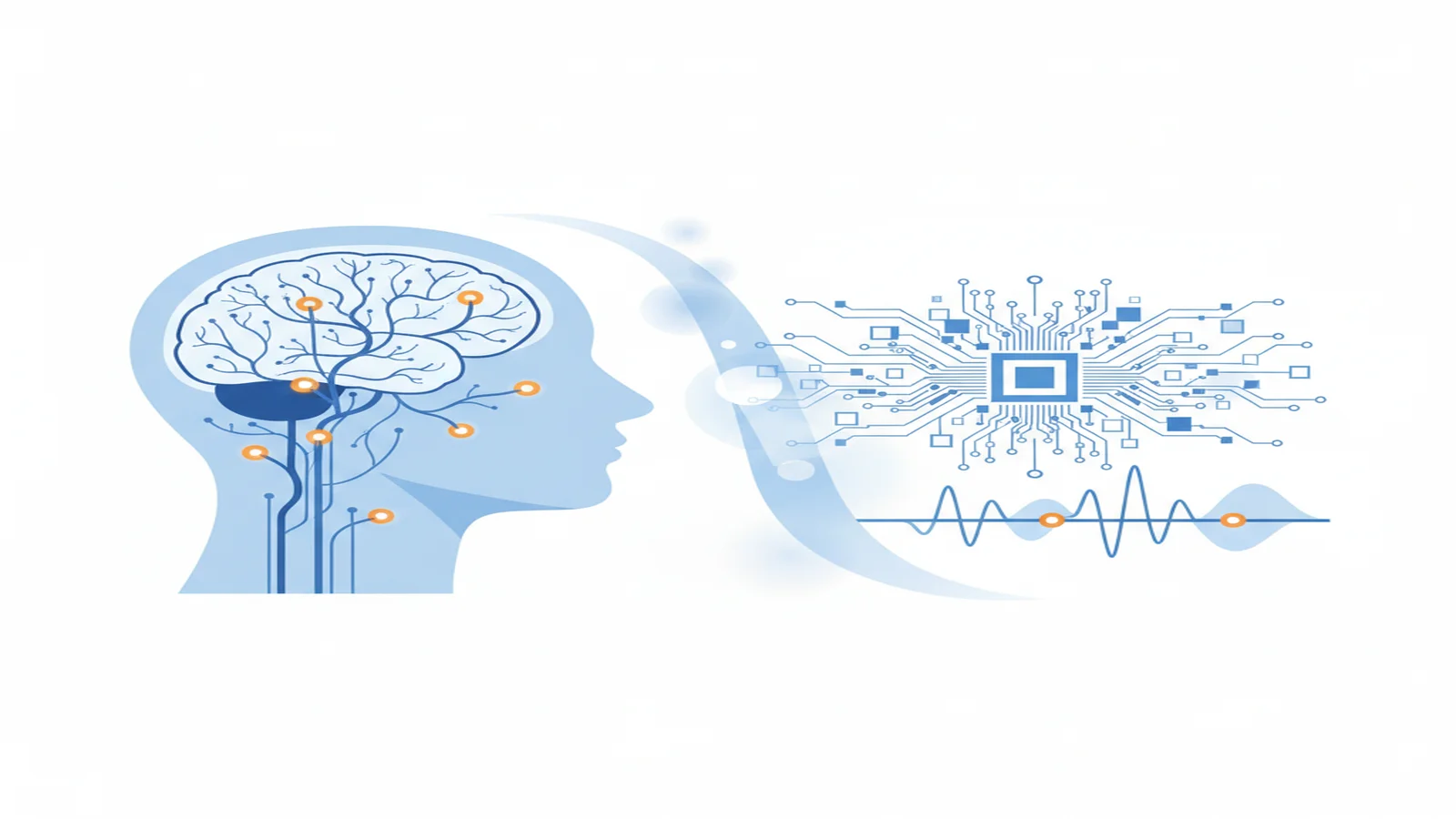
This is one reason neuroscience and AI keep influencing each other. Brain science gives AI ideas about memory, attention, modularity, and efficient learning. AI gives cognitive science explicit models to test, compare, and break. The relationship works precisely because it is imperfect. Machines do not yet think like people in a full sense, but they reveal which ingredients of intelligence can be abstracted and which still resist abstraction.
Large language models also create what some researchers call a reverse Turing test. Instead of asking whether a machine can imitate a person, we increasingly have to ask whether humans are too ready to project understanding onto fluent output. That is a valuable warning. The mind is not just about producing sentences that sound right. It is also about grounding, responsibility, memory over time, and action in the world.
The practical future is partnership, not imitation
For most readers, the strongest conclusion is operational rather than futuristic. The value of AI lies less in perfectly recreating the human mind and more in complementing it. Machines are strong when scale, speed, repetition, and pattern extraction matter. Humans remain strongest where stakes are ambiguous, context is lived, tradeoffs are ethical, and meaning must be owned.
That leads to a better rule for work: use AI for expansion, not abdication. Let it widen options, draft alternatives, summarize complexity, and surface patterns you might miss. But keep human responsibility where interpretation, strategy, care, and accountability matter. An AI assistant can help prepare a diagnosis summary, but a physician still owns judgment. A model can suggest messaging variants, but a strategist still owns positioning. A chatbot can draft a response, but a leader still owns tone and consequence.
The same principle applies to learning. If people use AI only to outsource thinking, they become weaker. If they use it to stress-test ideas, compare perspectives, and accelerate iteration, they can become stronger. The difference is whether AI becomes a substitute for thought or a tool that sharpens thought.
Final takeaway
Mind and AI belongs in the same conversation because each clarifies the other. AI shows that some pieces of intelligence can be modeled, scaled, and made useful. The human mind reminds us that intelligence is not only output quality. It is also lived context, agency, responsibility, and meaning. The more clearly we hold both truths at once, the better we will build tools, make decisions, and stay human in an AI-shaped world.