
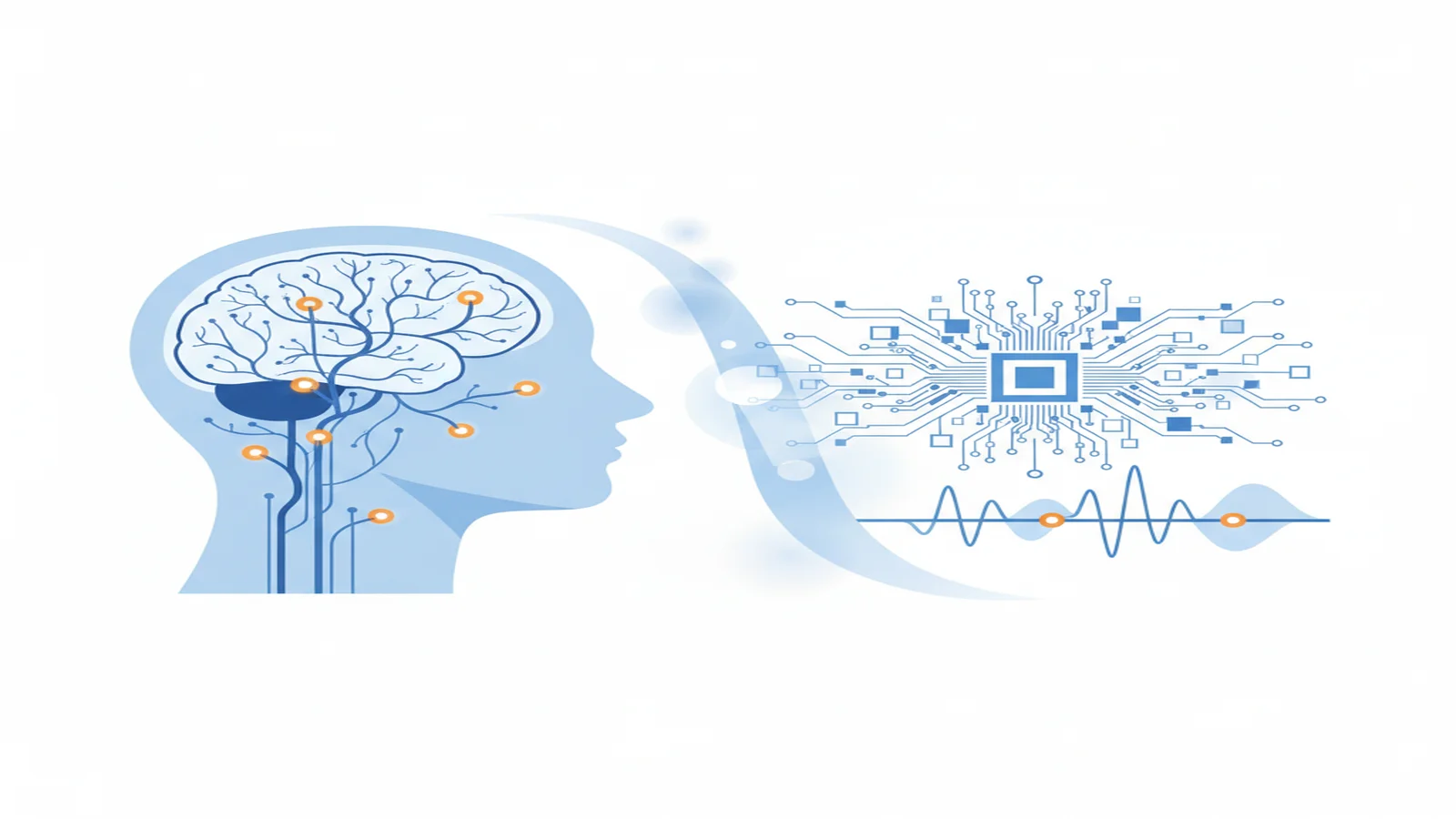
The phrase “AI reading minds” gets used a lot, and almost always imprecisely. It conjures surveillance, telepathy, and science fiction scenarios that haven’t arrived yet. What’s actually happening in labs and clinics is both more specific and, in its own way, more consequential than the headlines suggest.
In the last few years, researchers have used machine learning to decode brain signals into motor commands, words, and semantic meaning with genuine clinical results. A paralyzed patient moved a robotic arm by thinking about it. A non-invasive study reconstructed the general meaning of heard sentences from fMRI scans. These results are documented, peer-reviewed, and already raising questions that won’t stay theoretical for long.
This article explains what neural decoding actually is, what today’s technology can and cannot do, which research holds up, and why the ethical debate belongs in the present — not a future decade.
What “Neural Tech” and “Brain-Computer Interface” Actually Mean
These terms get used interchangeably, but they describe different things.
Neural technology is a broad category: any device or system that measures, interprets, or interacts with the nervous system. That includes implanted electrode arrays, scalp-based EEG headsets, transcranial magnetic stimulation, and neurofeedback software.
Brain-computer interface (BCI) is a specific subset — a direct communication pathway between the brain and an external device. A BCI might read signals out (translating motor intent into cursor movement) or send signals in (using electrical stimulation to restore sensation).
Neural decoding is the computational step inside a BCI: using machine learning to interpret what raw brain signals mean. This is where AI enters the picture.
Think of it this way: the electrode picks up the signal. The AI model is trained to understand what that signal means. Both are necessary, and they are very different problems.
The Main Signal Types
Not all brain signals are equal. This table is worth keeping in mind when you encounter any neural tech claim:
| Signal type | Source | Invasive? | Resolution |
|---|---|---|---|
| Single-unit spikes | Implanted electrode array | Yes | High (individual neurons) |
| ECoG | Electrode grid on brain surface | Minimally | Medium-high |
| EEG | Scalp electrodes | No | Low-medium |
| fMRI | Scanner (blood oxygen levels) | No | High spatial, low temporal |
| MEG | Scanner (magnetic fields) | No | Medium-high temporal |
The most dramatic decoding results use either implanted electrodes or clinical-grade scanners. Consumer EEG headbands operate at a fundamentally lower resolution. These are not the same class of technology.
What Research Has Actually Demonstrated
Here is what stands up to peer-reviewed scrutiny.
Motor Control From Brain Signals
The BrainGate consortium — a collaboration between Brown University, Massachusetts General Hospital, and other institutions — has conducted human trials since 2004 in which paralyzed participants had electrode arrays implanted in the motor cortex.
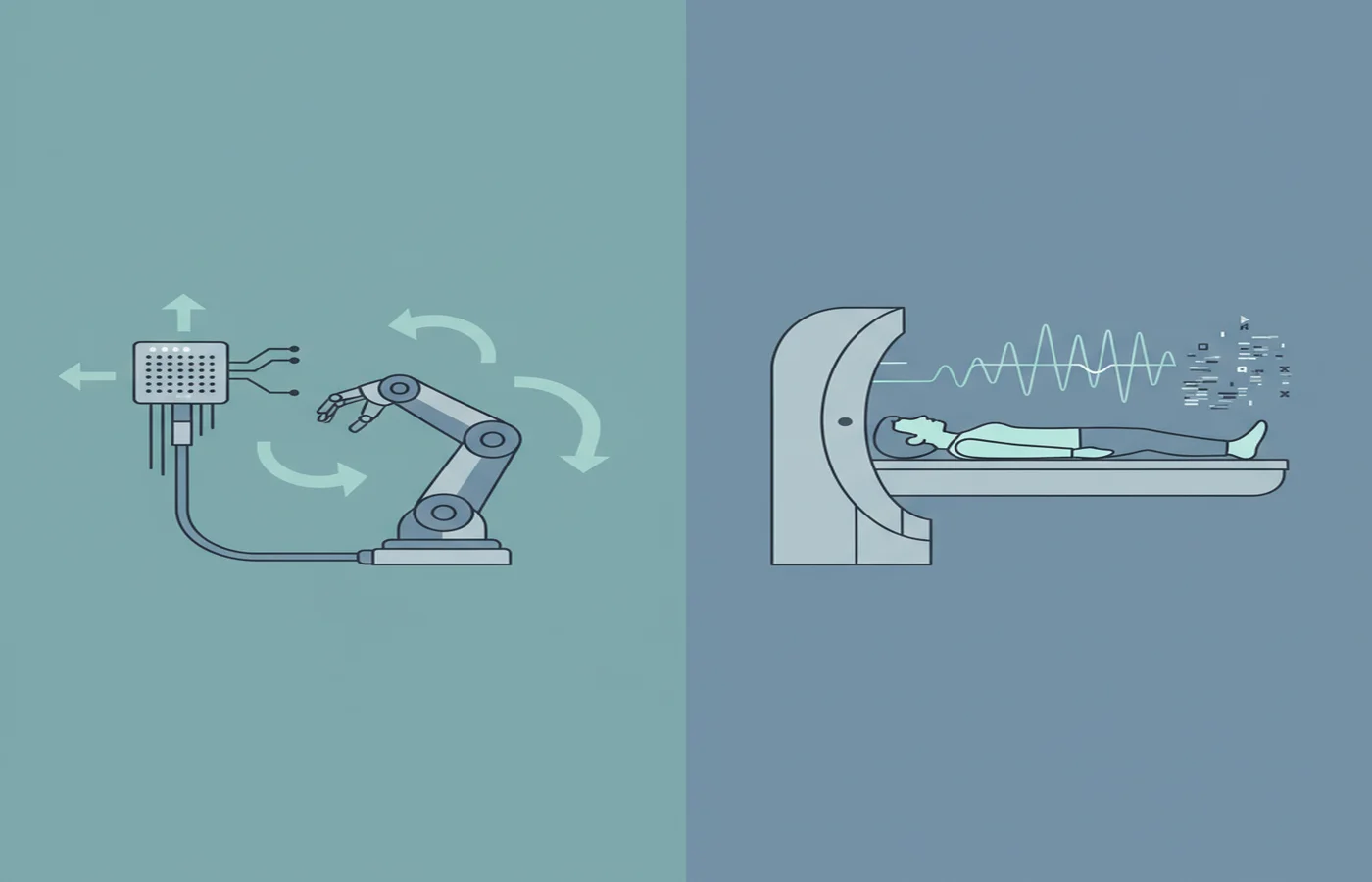
In a 2012 paper in Nature, Hochberg and colleagues reported that two BrainGate2 participants achieved three-dimensional robotic arm control using neural signals alone. One participant poured her own drink for the first time in nearly 15 years. Follow-up studies have documented maintained function over multi-year periods (Hochberg et al., 2012).
What AI is doing here is classifying intended movement patterns — recognizing that a particular neural firing pattern corresponds to “reach forward” versus “turn left.” It is not reading abstract thoughts.
Language Decoding From Brain Signals
In 2023, researchers at the University of Texas at Austin published a study in Nature Neuroscience on decoding continuous speech from non-invasive fMRI data. The system used a transformer-based language model to reconstruct the general meaning of sentences a participant heard or silently imagined. Under controlled conditions, the model matched the semantic meaning of decoded output to the target sentence roughly 80% of the time (Tang et al., 2023).
The language model was doing significant interpretive work. Without a constrained language prior, raw fMRI decoding produced mostly noise. The AI layer was the enabling component for semantic decoding.
That same year, Meta’s AI Research team published a related result using MEG — magnetoencephalography — which captures brain magnetic fields at millisecond resolution. Their model matched decoded speech to the correct audio clip above chance without requiring surgical implantation (Défossez et al., 2023).
Both results are notable. Neither means a scanner can read your private thoughts in real time. The fMRI study required hours of calibration data per participant, and accuracy drops significantly outside controlled conditions.
Less-Invasive Implants: Synchron and Neuralink
Synchron developed the Stentrode, inserted into a blood vessel near the motor cortex rather than requiring open-brain surgery. The company received FDA Breakthrough Device designation in 2021 and published peer-reviewed results in JAMA Neurology (2023) showing ALS patients controlling computers, messaging, and banking apps via the device (Oxley et al., 2023).
Neuralink’s first human implant in January 2024 received enormous public attention. Patient Noland Arbaugh demonstrated cursor control and game play using the device — consistent with what BrainGate documented years earlier, though Neuralink uses a higher electrode count and fully wireless design. Peer-reviewed clinical publication remains limited.
A fair comparison: BrainGate has the longest peer-reviewed clinical track record. Synchron has the most clinically viable less-invasive approach. Neuralink has the highest public profile. Each represents different technical priorities, not a single ranked hierarchy.
What AI Brings to Neural Decoding That Wasn’t Possible Before
Earlier BCIs relied on hand-coded signal processing. Engineers manually identified features in neural recordings — specific frequency bands, firing rates, signal amplitudes. This worked for simple motor categories but scaled poorly to more complex outputs.
Deep learning changed that. Neural networks can find meaningful patterns in high-dimensional, variable brain signal data that hand-engineered features miss. They adapt to noisy, shifting signals. They can combine information across data modalities.
The Tang et al. study makes the contribution concrete. The researchers used a large language model to constrain the decoded output space to sequences that make semantic sense. Without that layer, raw fMRI signal produced unusable output. AI wasn’t just automating existing signal processing — it was the mechanism that made semantic decoding possible at all.
This distinction matters when evaluating neural tech claims. Strong AI involvement doesn’t mean general reasoning or understanding. It means powerful pattern recognition applied to a specific, well-defined input-output problem. Exploring AI vs human intelligence in depth helps separate capability from hype.
The Significant Limitations (Often Left Out)
Most coverage of neural tech leaves this section out. That is a mistake.
Individual calibration is still required. Current neural decoders are trained on each person’s brain data separately. A model trained on one participant’s neural signals does not transfer to another without retraining. Universal neural decoding does not exist today.
High resolution requires invasive procedures or clinical scanners. The results that generate the most coverage use either surgically implanted electrodes or facilities-grade fMRI and MEG systems that are expensive, slow, and not portable. Consumer EEG headsets cannot approach this signal quality.
Controlled settings are not real-world settings. Lab conditions involve still participants, defined tasks, multiple calibration sessions, and stable equipment. Neural signals change with fatigue, stress, medication, movement, and ambient noise. Field performance degrades substantially.
Neural data creates a new permanence problem. Once a decoder is trained on your brain data, that model encodes information derived from your neural patterns. You cannot revoke the underlying data the way you change a password or close an account. This is a category of data permanence that existing privacy law was not built to handle.
Why the Ethical Questions Are Already Urgent
Clinical trials are running now. This is not a problem to revisit when consumer BCIs go mainstream.
Mental Privacy
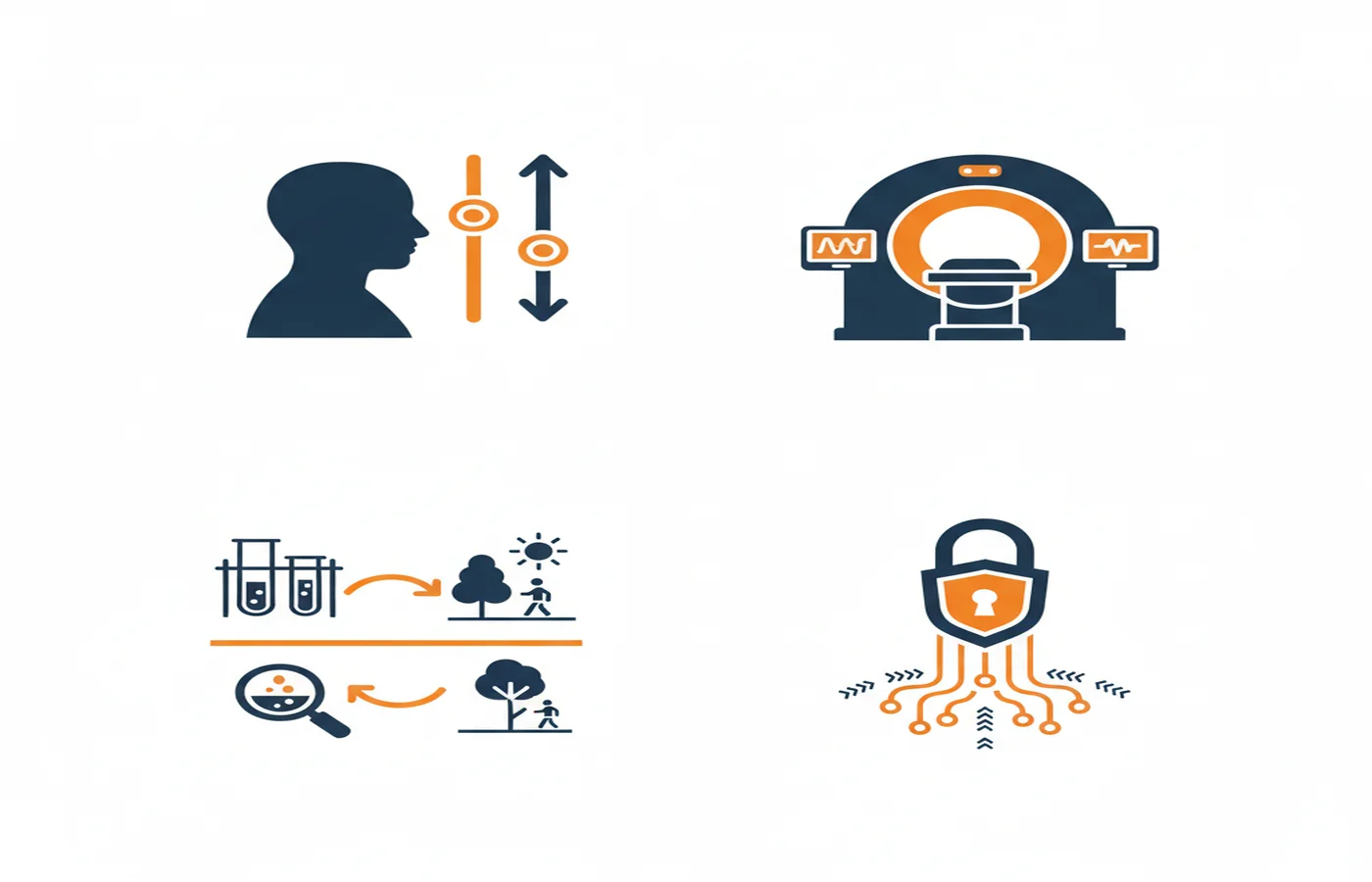
In 2017, neuroethicists Marcello Ienca and Roberto Andorno published a paper in Life Sciences, Society and Policy proposing four new human rights for the neurotechnology era: cognitive liberty, mental privacy, mental integrity, and psychological continuity (Ienca & Andorno, 2017).
Cognitive liberty is the right to mental self-determination — to decide what enters and exits your own mind. Mental privacy covers the right to keep brain data from being accessed or decoded without meaningful consent. Mental integrity addresses protection from harmful neural interference. Psychological continuity covers protection of personal identity against unauthorized external manipulation.
These are not abstract philosophical categories. They are responses to capabilities that already exist in early form.
Cognitive Liberty and Two-Way BCIs
The ethical complexity increases with two-way BCIs. A device that reads brain signals can, in principle, also deliver signals — influencing mood, attention, or memory through targeted stimulation. Deep brain stimulation already does this therapeutically for Parkinson’s and treatment-resistant depression. But the same capability applied without full consent, or at scale, raises qualitatively different questions about manipulation and identity — questions that connect to deeper debates about what AI consciousness would even mean.
Regulatory Gaps and Early Protections
Chile passed the world’s first constitutional neurorights amendment in 2021, embedding protections for mental integrity and cognitive liberty into national law. The Neurorights Foundation, led by Columbia University neuroscientist Rafael Yuste, has been engaging governments to develop similar protections globally.
The EU AI Act classifies AI used in biometric identification and sensitive real-time surveillance contexts as high-risk. Neural data is increasingly treated as sensitive biometric data under GDPR-adjacent frameworks. Specific legal protections for implanted neural decoders are still being built. The window to build them before the technology expands is narrowing.

What’s Next and What to Watch
Wireless, less-invasive implants. Synchron’s endovascular approach shows that useful neural control doesn’t require open-brain surgery. As this design matures, the barrier to implantation may fall meaningfully.
Neural foundation models. Researchers at multiple institutions have published early work on large pre-trained models for brain signal data — analogous to foundation models in language AI — that could reduce per-user calibration requirements. Still early, but a significant direction.
Consumer-grade devices. EEG headsets are already on the market and can measure rough attention and relaxation proxies. Their marketing routinely outpaces their technical capability. Understanding the resolution gap between consumer EEG and clinical systems is important for calibrating any claim made about them.
Closed-loop systems. Future BCIs may not just read signals passively. They may respond in real time — adjusting stimulation based on detected brain state. This moves from monitoring to active feedback, which raises the ethical stakes considerably and makes the legal frameworks under development even more important. For context on what broader AI agency might mean, see this overview of what is AGI.
Final Thoughts
“AI reading minds” is real technology in a specific, bounded sense: machine learning can decode brain signals into clinically useful information, and that capability is advancing. It is not real in the sense of covert, generalized thought surveillance — at least not with today’s hardware requirements and calibration constraints.
The gap between those two descriptions is where the actual work lives. Technically: reducing calibration requirements, improving real-world robustness, developing less-invasive hardware. On the policy side: building frameworks that protect mental privacy before the technology outpaces the rules designed to govern it.
The researchers, clinicians, ethicists, and policymakers working on this right now are setting conditions that will shape the field for a long time. Understanding what the technology actually does — not the sensationalized version — is the starting point for thinking clearly about any of it. For a broader look at where this all points, the debate around superintelligence risks is worth reading alongside this one.
Sources
- Hochberg et al. (2012). Reach and grasp by people with tetraplegia using a neurally controlled robotic arm. Nature.
- Tang et al. (2023). Semantic reconstruction of continuous language from non-invasive brain recordings. Nature Neuroscience.
- Défossez et al. (2023). Decoding speech perception from non-invasive brain recordings. Nature Machine Intelligence.
- Oxley et al. (2023). Motor neuroprosthesis implanted with neurointerventional surgery. JAMA Neurology.
- Ienca & Andorno (2017). Towards New Human Rights in the Neurotechnology Age. Life Sciences, Society and Policy.
- Neurorights Foundation, Columbia University.
- EU AI Act overview.