

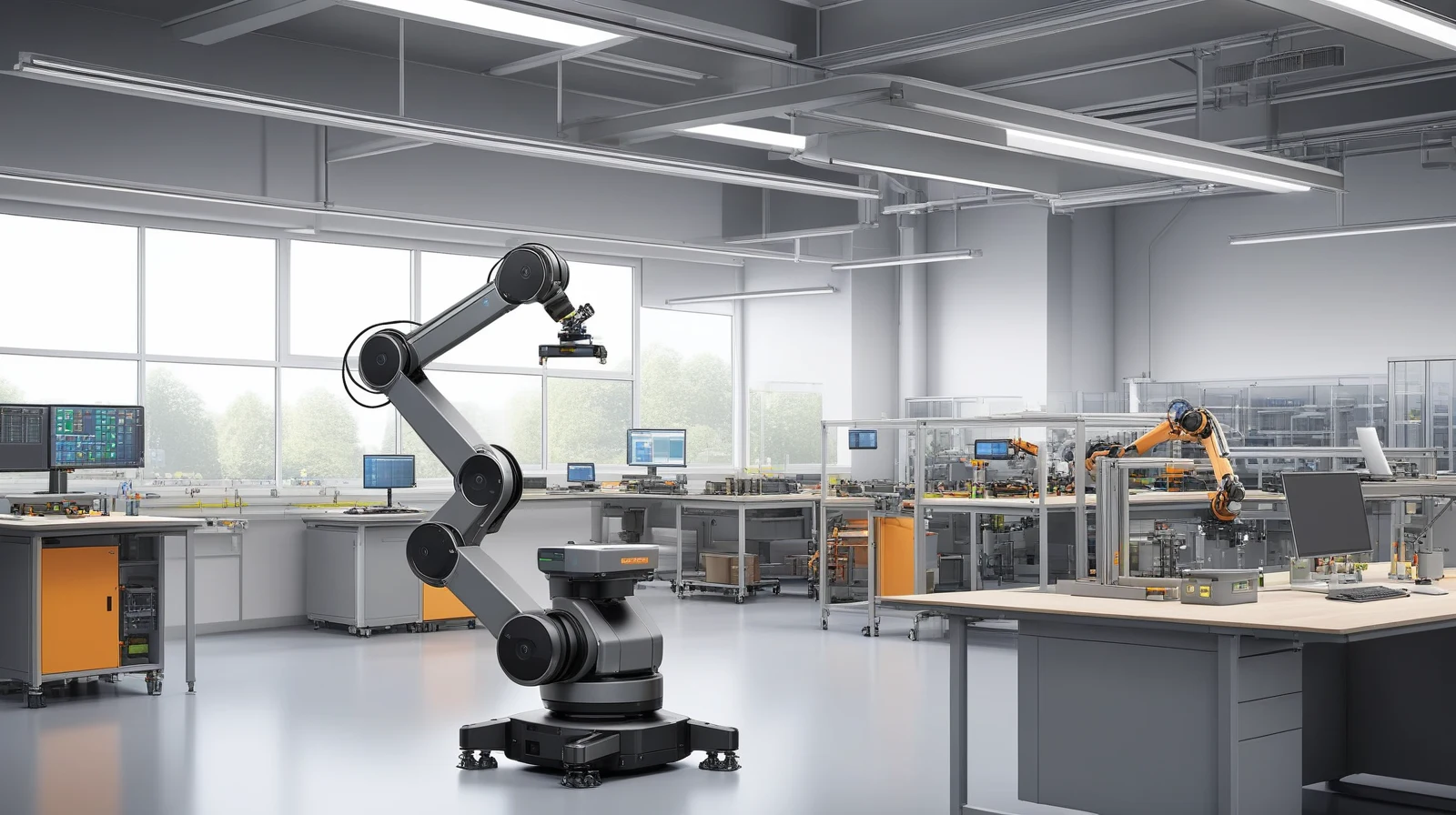
If you want a practical answer to whether robots are becoming real coworkers, start with cobots. Short for collaborative robots, they are built for tasks that happen near people rather than far away behind a fence. That does not mean a humanoid will take the next desk. It means more workplaces will use robots in shared work areas, labs, stockrooms, and production cells. This guide explains what collaborative robots actually are, why companies are buying more of them, where human-robot teamwork works well, and what both office workers and factory owners should watch next.
What collaborative robots actually are
A collaborative robot is an industrial robot designed for work situations where people and robots may share space, share time, or directly interact in the same process. In plain language, a cobot is meant to work closer to people than the classic industrial robot locked in a guarded cell.
That does not mean every cobot works shoulder to shoulder with a person all day. The International Federation of Robotics updated its cobot position paper on December 4, 2024 and made an important point: many collaborative robots are used in setups where direct contact is not the goal. A cobot may slow down when someone approaches, pause while a worker loads a part, then resume when the area is clear.
A simple comparison helps. A traditional industrial robot is usually chosen for speed, payload, and repeatability inside a guarded cell. Payload means how much weight the robot can handle, including the tool at the end of its arm. Repeatability means how precisely it can return to the same point over and over. A cobot usually gives up some speed and strength in exchange for easier programming, a smaller footprint, and safer operation near people.
The label still causes confusion. A3’s September 10, 2025 safety-standard update argues that collaboration describes the application, not just the robot arm. NIST makes the same point in its AMS 100-41 guide for small and medium-sized manufacturers. The arm, the gripper, the part being moved, the speed, and the worker’s path all shape the real risk. A robot moving empty plastic trays is one safety problem. A robot swinging a sharp tool or heavy metal part is another.
So the useful question is not “Is this a cobot?” It is “Is this whole job designed for safe human-robot teamwork?”
Why cobots are rising now
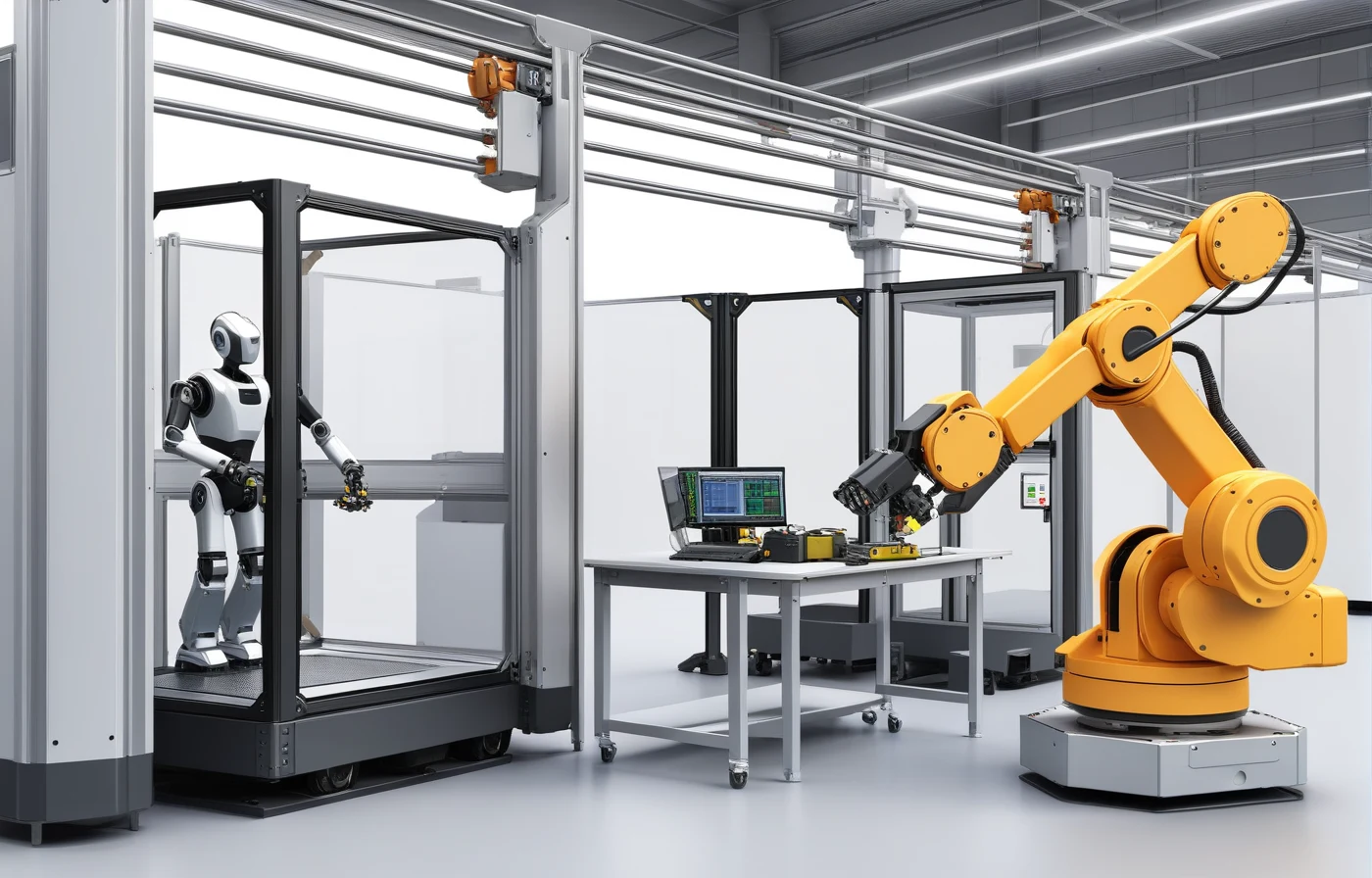
Cobots are growing inside a much larger automation wave. IFR reported on September 25, 2025 that factories installed 542,000 industrial robots in 2024, the second-highest annual total on record. Robotics is no longer a niche capital project. In many industries, it is becoming standard operating infrastructure.
Cobots are rising within that trend because they solve a specific problem. Many companies do not need the fastest robot possible. They need a robot that can be deployed in a changing environment, taught by non-specialists, and used in tasks where full hard guarding would be expensive or awkward. IFR’s 2024 cobot update said collaborative robots represented 10.5% of industrial robots installed worldwide in 2023. That is still a minority share, but it is large enough to show that cobots are now a serious part of the market rather than a side category.
North America points in the same direction. On May 22, 2025, A3 announced its first public collaborative-robot tracking report, noting that companies in the region ordered 1,052 cobots in Q1 2025, equal to 11.6% of all robot orders that quarter.
Why now instead of a decade ago? The public sources converge on three reasons. First, production is less static. A shop making short runs of different parts has a harder time justifying a large, rigid automation cell. Cobots fit lower-volume, higher-mix work better than many older automation setups.
Second, software has lowered the skill barrier. IFR has repeatedly pointed to easier programming, low-code tools, hand-guided teaching, and packaged automation kits as adoption drivers. That matters for smaller firms that do not employ a robotics specialist.
Third, labor pressure has changed the economics of repetitive work. NIST’s AMS guide notes that small manufacturers often want automation because they need to stay competitive without rebuilding entire lines. In that setting, cobots are attractive because they can automate one slice of a job without demanding a total plant redesign.
Where cobots work best today
Cobots work best where the motion is repetitive, the environment is reasonably structured, and people still add value nearby. NIST’s manufacturing automation resources point to common uses such as machine tending, automated visual inspection, material handling, and side-by-side assistance with repetitive or hazardous tasks.
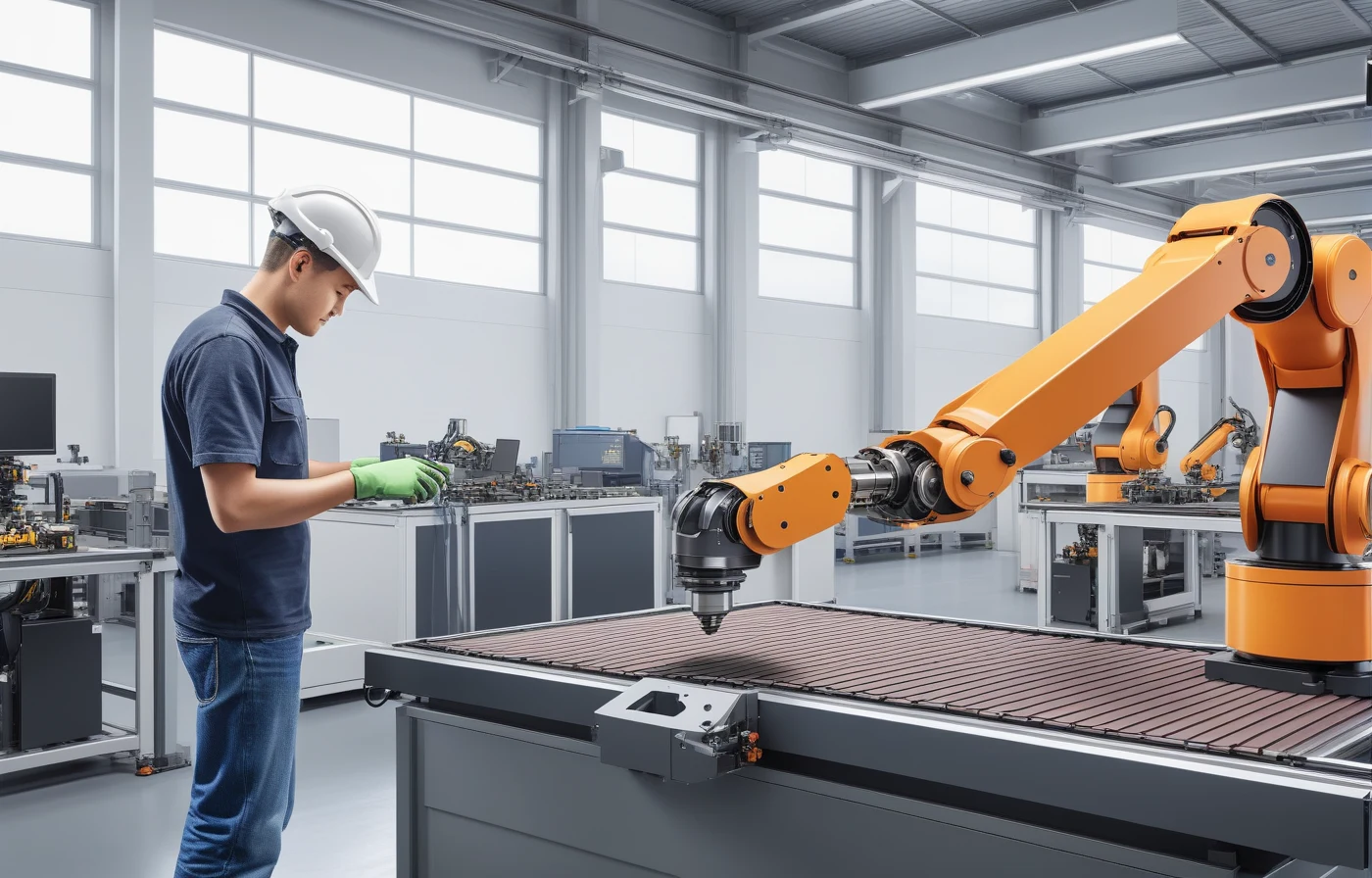
Take CNC machine tending as a concrete example. A worker may open the machine, load a raw part, start the cycle, unload the finished part, and repeat that sequence all shift. A cobot can handle that loading and unloading pattern with consistent timing. The person can then focus on setup, measurement, tool changes, and troubleshooting. The robot handles the repeatable motion. The worker handles the variation.
Pick-and-place, packaging, dispensing, simple assembly, and end-of-line palletizing are also common fits for the same reason: the task has clear positions, clear paths, and repeatable timing.
Where do cobots struggle? Start with jobs that demand very high speed or very heavy loads. IFR’s cobot briefing is explicit that collaborative robots complement rather than replace conventional industrial robots. If the job is welding large parts at scale, moving heavy components, or squeezing every second out of a stable high-volume line, a traditional robot inside a guarded cell may be the better answer.
Messy variation is another weak fit. If parts arrive in unpredictable orientations, surfaces change constantly, or the job depends on moment-to-moment judgment, the robot system gets complex fast. Vision, fixturing, advanced gripping, and extra safety controls can help, but they do not erase the problem.
This is where buyers get misled by good demos. A cobot can look effortless in a clean test cell. Real production is rarely that tidy. If the process is cluttered, interrupted, or inconsistent, the integration challenge rises with it.
What human-robot teamwork really looks like
The phrase “human-robot teamwork” sounds futuristic. In practice, it is usually very ordinary. The robot handles the part of the job that benefits from consistency. The human handles the part that benefits from judgment, adaptation, and awareness of the wider process.
Imagine a workstation for screwdriving an equipment housing. The cobot picks up the driver, applies the programmed pattern, and repeats it with stable torque and timing. A technician places the housing, checks for cosmetic defects, swaps unusual variants, and catches anything that does not look right. That is the real pattern in many successful deployments. The robot removes repetitive motion. The person remains responsible for the work that changes.
Safety is the other half of teamwork, and this is where the jargon usually loses people. The core ideas are simpler than the terminology suggests.
Four safety concepts in plain language
Safety-rated monitored stop, now often described in newer standards as monitored standstill, means the robot stops and holds position when a person enters a defined area.
Hand guiding means a worker physically guides the robot arm to teach a movement during setup.
Speed and separation monitoring means sensors watch the distance between person and robot. If someone gets too close, the robot slows down or stops.
Power and force limiting means the system is designed so that if contact happens, the force stays within defined limits.
A3’s 2025 standards explainer notes that the recognized collaborative technologies include hand guiding, speed and separation monitoring, and power and force limiting, while the updated terminology shifts focus toward the collaborative application as a whole. The exact wording may evolve. The practical lesson does not: safety in collaborative work is engineered and verified. It is not a personality trait of the robot.
OSHA’s robotics standards page adds another useful reality check. There is no robotics-specific OSHA standard. Instead, employers are expected to apply existing machinery, lockout/tagout, electrical, and guarding rules along with recognized consensus standards such as ISO 10218 and ISO/TS 15066. That matters because many robot accidents happen outside the normal cycle, during setup, testing, adjustment, maintenance, or restart after a fault.
The NIOSH Center for Occupational Robotics Research frames the issue the same way from the worker-safety side: robots can reduce strain and remove people from dangerous exposures, but new risks appear when robotic systems operate near human workers. Good teamwork is never just about throughput. It is about risk reduction as well.
What factory owners should check before investing
If you own or run a factory, the most useful advice is blunt: start with the workcell, not the robot brochure.
NIST’s AMS 100-41 guide is especially clear on this point. Choose the workcell first, estimate the cost-benefit case, check the task requirements, and only then pick a robot system. Many disappointing automation projects reverse that order and pay for it later.
Here is the better screening list.
Check task structure. Is the job repetitive enough to automate without constant reprogramming?
Check payload, reach, and repeatability. If the robot cannot safely handle the part, reach every required position, or hit the needed tolerance, the project will struggle before it starts.
Check cycle time honestly. A cobot that works safely near people may still be too slow for the throughput you need.
Check end-of-arm tooling. The gripper, suction system, driver, or inspection head often decides whether the cell works in the real world.
Check support. NIST notes that integrator access, vendor service, and maintenance support can make the difference between a good ROI case and an expensive headache.
Check human involvement. The right question is rarely “How do I remove the worker?” It is more often “What level of human involvement gives me the best mix of speed, quality, flexibility, and safety?”
Then budget for the costs buyers like to ignore: training, safety validation, commissioning time, and process change. A cobot may reduce guarding in some applications, but it does not remove the need for a risk assessment.
Sometimes the best answer will not be a cobot at all. If the task is heavy, stable, and speed-critical, a conventional industrial robot in a guarded cell may beat a cobot on output and cost per part. If the task is extremely simple and fixed, basic automation may beat both. The goal is not to buy the most modern-looking machine. The goal is to improve the process.
What office workers should realistically expect
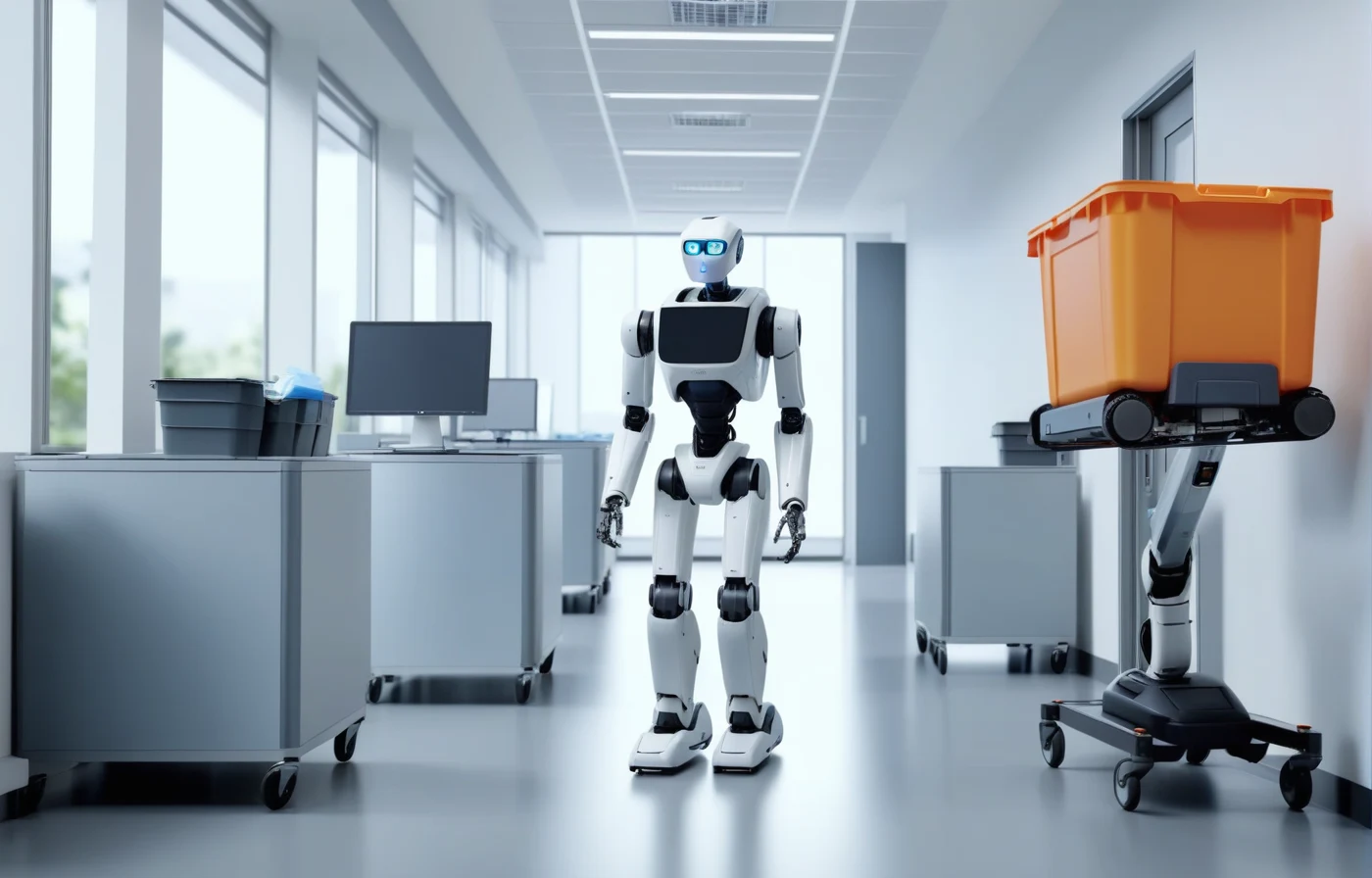
The phrase “robot coworker” invites a misleading picture. For most office workers, the first robot coworker will probably be nearby rather than desk-side.
It may show up in the stockroom, mailroom, lab, hospital corridor, front-desk logistics flow, or cleaning operation. IFR reported on October 7, 2025 that the number of professional service robots sold worldwide reached almost 200,000 units in 2024, up 9% year over year. Transport, hospitality, and cleaning were among the leading categories. That is a useful clue about where workplace robotics is spreading outside classic factory cells.
Even in manufacturing businesses, office-adjacent teams feel the shift. Planning, quality, maintenance, procurement, and engineering staff increasingly work around automated systems that generate more data, require tighter scheduling, and need clearer exception handling.
That changes human work, but not in one neat direction. Some tasks disappear. Others become more supervisory. People spend less time on repetitive handling and more time on coordination, quality decisions, escalation, and process improvement.
So if you are asking whether your next coworker will be a robot, the grounded answer is yes, but probably not in the cinematic way. More likely, you will work in an environment where robots handle more physical movement and routine support work around the edges of your role.
The limits matter as much as the promise
Cobots matter because they expand the range of jobs that can be automated near people. That is real progress. It is also easy to oversell.
They are not automatically cheap. Integration, tooling, sensing, safety design, and downtime still cost money.
They are not automatically fast. Traditional industrial robots still dominate many high-throughput applications for a reason.
They are not automatically fence-free. Depending on the tool, the part, the speed, and the layout, extra guarding or sensing may still be required.
And they are not a substitute for process thinking. A weak process with a new robot is still a weak process.
Readers who keep that balance in mind will understand the rise of cobots better than readers who only hear the sales pitch.
Final Thoughts
The rise of cobots is not really about robots becoming more human. It is about automation becoming easier to place closer to human work. Collaborative robots matter because they let companies automate more tasks without forcing every job into a fully isolated cell.
That makes them important, but not mystical. The best cobot projects are usually the least dramatic ones: a machine gets loaded more consistently, a worker spends less time on dull motion, a process becomes easier to scale, and safety is engineered on purpose instead of assumed. If robots are becoming coworkers, that is what the change looks like in real life.