
If you want better concentration or memory without implants, wearable neurotechnology is one of the most interesting categories to watch. It is also one of the easiest to misunderstand. A neurofeedback headband, a stimulation headset, and a sleep-memory wearable may all look like versions of the same idea, but they work through different mechanisms and the evidence behind them is not equally strong. This guide gives you the practical payoff up front: what these devices actually do, where the strongest evidence sits today, and how to separate a credible focus or memory claim from optimistic marketing.
The short answer is that non-implant neurotech is real, but the benefits are narrower than the product pages usually suggest. Some approaches show modest gains on specific attention or working-memory tasks under defined protocols. Others look much less convincing once sham controls or real-world use are taken seriously. If you want the implant side of the field, MindoxAI already has a broader guide to brain-computer interfaces and the future of AI. This article stays with the wearable, non-implant end of the spectrum.
What counts as wearable neurotechnology?
The first useful distinction is between devices that read brain-related signals and devices that try to change them. Most search results blur those together, which makes the rest of the conversation less useful than it should be.
| Category | What it does | Plain-English comparison | Main promise |
|---|---|---|---|
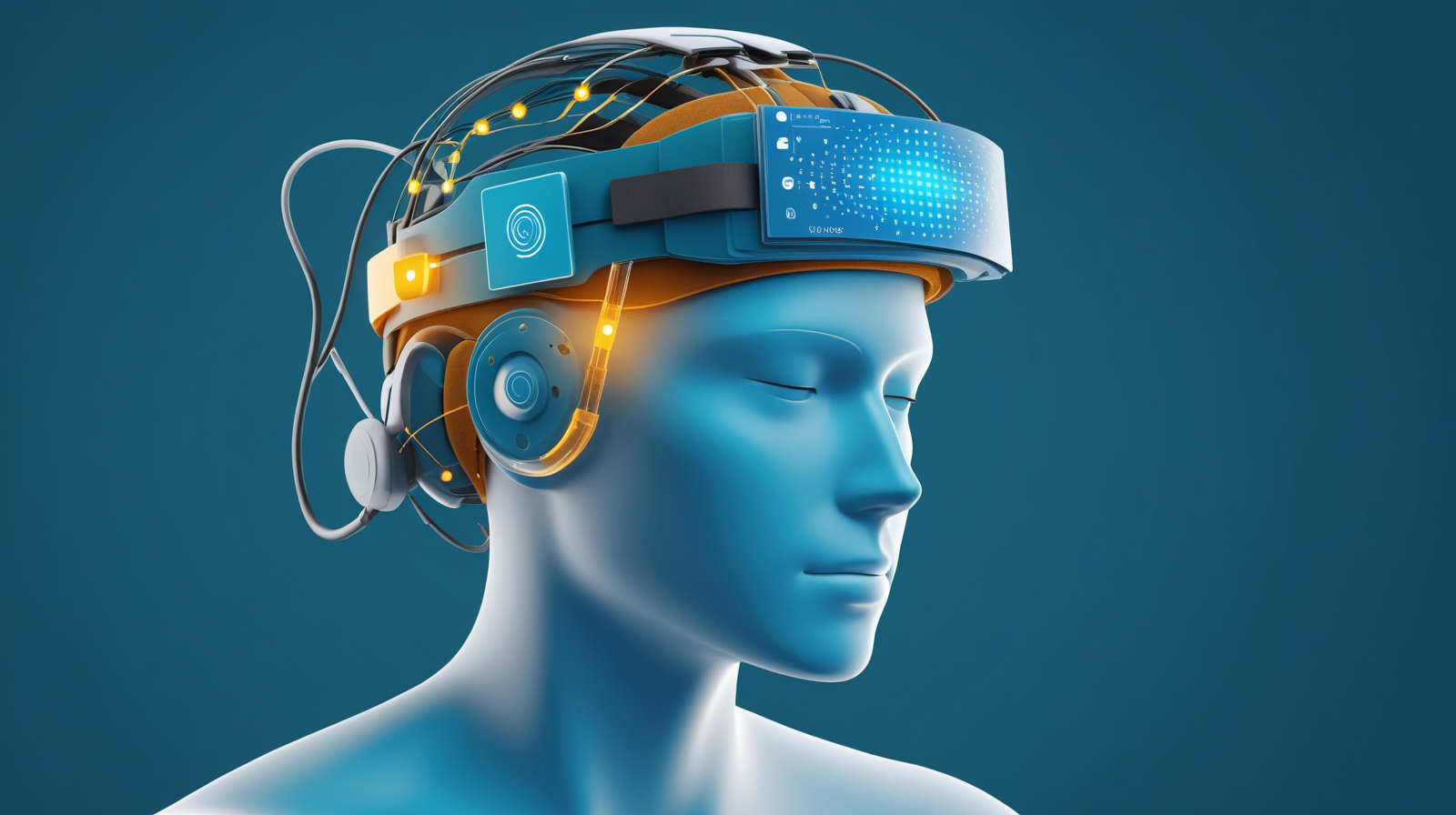
| Neurofeedback wearables | Measure signals such as EEG and return feedback through an app, sound, or visual cue | A mirror or dashboard | Train attention or state regulation over repeated sessions |
| Brain stimulation wearables | Apply weak current through the scalp, usually with tDCS or tACS-style protocols | An active input rather than a readout | Modulate neural activity linked to focus or working memory |
| Sleep-memory wearables | Track sleep and time cues such as sounds to slow-wave sleep phases | A metronome for sleep timing | Support overnight memory consolidation |
That distinction matters because brainwave modulation is an umbrella term, not a verdict. A neurofeedback wearable may show you when your attention-related EEG pattern is moving toward a target and ask you to learn from that feedback. A stimulation headset may apply current to influence oscillations or excitability directly. A sleep device may wait for a slow-wave phase and then deliver a sound pulse at the right moment. Those are three very different bets on how to improve cognition.
A practical comparison helps. Neurofeedback is like learning from a mirror. The device reflects a signal and the user tries to discover what mental state moves the signal in the desired direction. Stimulation is different. It is closer to nudging the timing of a network from the outside. Sleep-focused memory devices take a third route by trying to improve the conditions under which learning is stabilized overnight. If you want the more invasive version of this conversation, MindoxAI’s piece on Neuralink and the next phase of brain-computer interfaces shows how different the implant tradeoffs look.
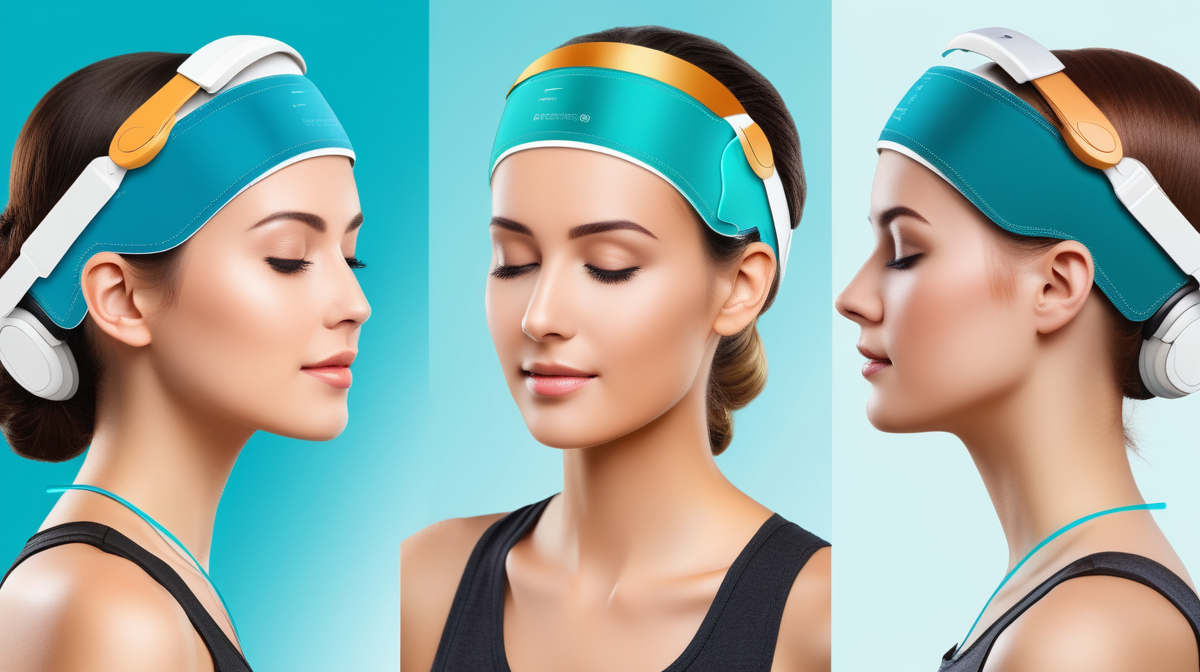
What the evidence says about focus enhancement
Neurofeedback can help attention, but the effect is smaller than the hype
For healthy adults, the best current evidence on focus enhancement comes from neurofeedback meta-analysis rather than from individual device pages. A 2026 systematic review and meta-analysis found that neurofeedback improved attentional performance overall in healthy adults, but the benefit was small and the sham-controlled subset was not clearly significant. That second point matters. If a result weakens when compared against sham, the safest interpretation is not that the method is useless. It is that the effect is fragile and can easily be inflated by expectation, novelty, or extra engagement with the task itself. Source
That is already a more nuanced answer than most readers get. It means neurofeedback wearables should be treated as a plausible training tool, not a guaranteed focus switch. Someone practicing repeated attention tasks with a device may improve. But the evidence does not support the stronger claim that any healthy user can put on a headband and reliably create a deeper state of concentration on demand.
Consumer headbands are not the same as clinic-grade protocols
The gap between mechanism and outcome becomes even clearer in consumer-grade products. A 2025 meta-analysis of mindfulness-based consumer neurofeedback found no evidence of cognitive improvement versus controls, with the effect on cognition essentially near zero. It did report a small reduction in psychological distress, which may still be useful for some users, but that is not the same thing as improved memory, faster learning, or reliably better task focus. The same paper also noted that most included studies did not assess adverse effects at all. Source
This is where a lot of focus enhancement marketing overreaches. Consumer headbands are often presented as if they sit on the same evidence base as research-grade systems or supervised therapeutic protocols. They do not. Even in clinical populations, positive results depend on careful session design and close outcome measurement. A randomized trial of home-based tDCS for adult ADHD is a useful comparison here: it studied a defined treatment population under a real protocol. That is very different from a healthy student buying a headband to study longer. Source
The practical takeaway is simple. If your goal is focus enhancement, neurofeedback wearables belong in the category of possible but not dependable. They make the most sense when you have a narrow task, a way to track change, and realistic expectations about effect size.
What the evidence says about memory boosters
The word memory hides several different processes, and wearable neurotech does not affect all of them in the same way. The cleanest split is between working memory during the day and memory consolidation during sleep.
Daytime working memory: direct stimulation is the more promising lane
If the question is whether wearable neurotech can help you hold and manipulate information in real time, direct stimulation currently has the stronger evidence base. A 2023 meta-analysis of tACS in healthy adults found a significant, moderate, but heterogeneous improvement in working-memory performance over sham, with results shaped by task domain, cognitive load, number of sessions, and stimulation region. In other words, the average effect was positive, but it was not uniform. Source
A newer 2025 meta-analysis of theta-tACS reached a similar broad conclusion while adding a useful warning. The overall effect was still positive, but publication-bias correction reduced the apparent size of the benefit. That does not erase the signal. It does mean the field is not mature enough to support broad consumer promises. Protocol choice still matters too much. Source
This is a good example of how `memory boosters` should be read in this category. The realistic claim is not that stimulation makes people generally smarter. The realistic claim is that certain stimulation protocols may modestly improve specific working-memory tasks under specific conditions. That is useful, but it is much narrower than the category label suggests.
Sleep-memory wearables are interesting, but not settled
Sleep-focused wearables tell a different story. Their appeal comes from a strong idea: slow-wave sleep plays an important role in memory consolidation, so a device that detects those rhythms and times sound cues to them may be able to improve learning overnight. Some studies support that idea. For example, a 2024 study on closed-loop auditory stimulation during sleep reported gains in language and discovery learning, which helps explain why this corner of the market keeps attracting attention. Source
But the category does not yet support confident everyday claims. A 2025 home-setting study found that closed-loop auditory stimulation increased slow-oscillation amplitude, which means the physiology changed, but it did not improve measurable memory performance or vigilance. That is exactly the kind of distinction most readers need. Physiological change is not the same as useful behavioral gain. Source
The practical lesson is that sleep-memory wearables are best described as promising but inconsistent. They may become more useful as signal detection, timing, and personalization improve. Right now, they are better understood as an active research direction than as a proven consumer shortcut to better recall.
How to judge a wearable neurotech claim before you buy
You can filter most wearable neurotech claims with a short checklist.
- Ask what the device actually does. Does it read EEG and return feedback, apply current, or time cues during sleep? If the mechanism stays vague, the evidence probably will too.
- Check the outcome, not just the branding. Focus, reaction time, working memory span, delayed recall, and stress are not interchangeable endpoints.
- Look for sham controls. This is one of the strongest ways to separate a real effect from expectation, novelty, or placebo-like `neurosuggestion`.
- Check the protocol length. One-session lab effects do not automatically justify claims about everyday use.
- Check the participant group. Results in adults with ADHD, stroke, or cognitive decline should not be casually mapped onto healthy students or professionals.
- Look for adverse-event reporting and exclusions. If a study barely discusses side effects, that is a weakness, not a reassuring sign.
Safety deserves its own line because it is often handled badly in both directions. Updated international guidance on low-intensity transcranial electrical stimulation reported no serious tES-related adverse events across more than 300,000 sessions, while also noting that mild effects such as tingling, burning sensations, headache, and fatigue are common. The same guideline says safety is well established up to 4 mA and 60 minutes per day within the studied range, but it also stresses screening, adverse-event tracking, and the fast growth of home-based use. That is a mature safety message: broadly reassuring under informed protocols, not a reason to switch off judgment. Source
If you want a simple rule, use this one: the more a device promises to improve many areas of cognition at once, the less specific the evidence usually is.
Who is most likely to benefit and who should be skeptical
The best fit for wearable neurotechnology is someone running a narrow experiment with a measurable target. A student might ask whether a device helps sustain attention during the same 40-minute reading block across two weeks. A high-performer might test whether a protocol reduces attentional drift during a recurring analysis task. A biohacker might track one working-memory measure under a consistent schedule instead of trusting vague impressions.
That is the right mindset because negative results still teach you something. If nothing changes on a stable task, you can stop without inventing a story around the device.
The weaker fit is the person hoping wearable neurotech will compensate for bad sleep, overloaded routines, unmanaged stress, or diffuse motivation problems. These tools may be able to modulate a narrow cognitive process. They are much worse at fixing the conditions around cognition. If the foundations are poor, a wearable usually becomes an expensive side quest.
Extra skepticism is warranted when a company promises better focus, better memory, deeper meditation, better sleep, and better mood in the same breath. That kind of bundle usually says more about category marketing than about evidence quality. For readers who want the bigger augmentation question beyond wearables, MindoxAI’s piece on can neural tech make humans smarter than AI is the right follow-up. If you want the boundary between genuine signal decoding and public imagination, see AI reading minds: what neural tech can actually do. Those articles help frame why careful claims matter so much in this space.
Final Thoughts
Wearable neurotechnology is a serious category, but it is not a clean shortcut to better cognition. The strongest evidence today supports a narrower story: some non-implant approaches can produce modest gains in attention or working memory under the right conditions, while broad consumer claims still outrun the data.
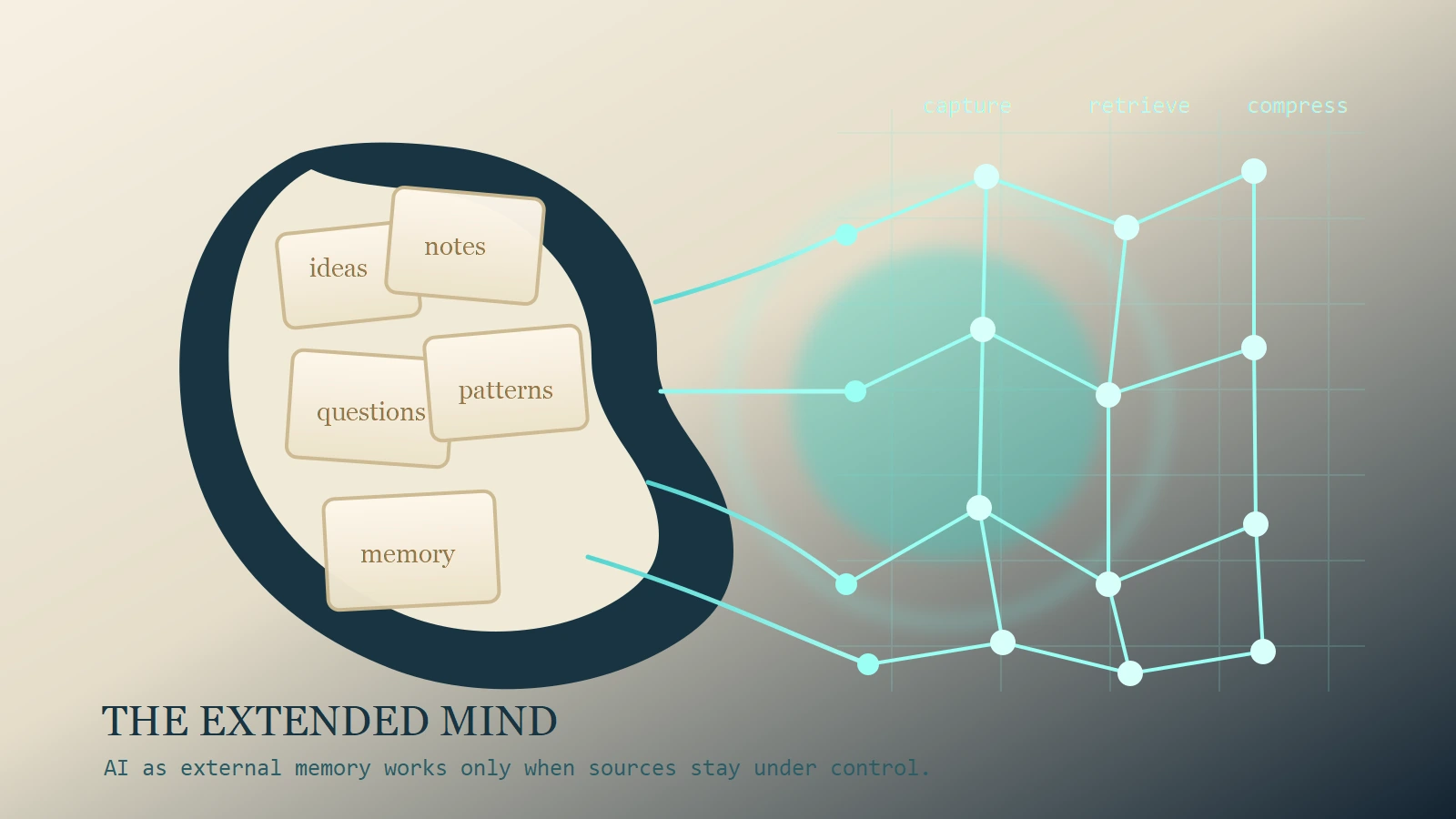
That is the most useful way to approach the field. Treat wearable neurotech as a targeted experiment, not a general brain upgrade. If the device class, protocol, and outcome line up, it may be worth exploring. If the promise is vague and the evidence is soft, the smartest move is skepticism. That logic also fits the broader idea behind the extended mind: cognitive augmentation tends to work best when the tool solves one clear bottleneck instead of pretending to solve the whole mind.